The Collar Still Jingles in My Mind: Understanding Phantom Sounds in Pet Loss Grief
As an Amazon Associate, I earn from qualifying purchases. This helps support K9 Hearts' mission to provide grief support resources for those who have lost their beloved dogs.
For months after Charlie died, I kept hearing his collar jingle. I'd be washing dishes and hear that familiar metallic sound—the one that meant he was walking across the kitchen floor toward me. My heart would lift for a split second before reality crashed back in. There was no collar. There was no Charlie. Just silence and the ghost of a sound my brain couldn't let go.
I thought I was losing my mind. Then I learned that phantom sounds—hearing your deceased dog's collar, their breathing, their bark, their nails on the floor—are one of the most common and least discussed aspects of pet loss grief.
Your brain doesn't just miss your dog emotionally. It misses them sensorially. And that sensory grief creates experiences that can feel unsettling, even frightening, if you don't understand what's happening.
If you're hearing sounds that aren't there, feeling phantom presences, or experiencing other sensory echoes of your dog, you're not going crazy. You're grieving with your whole nervous system. Let me walk you through what's happening and why.
The Science Behind Phantom Sounds
From a neurological perspective, phantom sounds make perfect sense, even though they feel disturbing when you experience them.
Your Brain Creates Patterns
For years—or even just months if your dog was young like Charlie—your brain encoded specific sound patterns as deeply meaningful. The jingle of tags meant your dog was near. The sound of breathing meant companionship. The click of nails meant they were following you.
These weren't just background noise. They were safety signals, connection cues, and love made audible.
When those sounds suddenly disappear, your brain doesn't immediately delete the neural pathways associated with them. Instead, in moments of stress, distraction, or deep longing, your brain can essentially "replay" those patterns. You hear what you expect to hear, what you're listening for, what you desperately want to hear.
Grief Heightens Sensory Sensitivity
When you're in acute grief, your nervous system is often in a state of hypervigilance. You're scanning your environment constantly—sometimes consciously, often unconsciously—for any sign of your dog.
This heightened sensitivity can create false positives. A similar sound—keys jingling, someone else's dog in the distance, even the wind chimes outside—can trigger your brain to interpret it as your dog's collar, your dog's bark, your dog's presence.
Auditory Hallucinations in Grief Are Normal
The term "hallucination" sounds alarming, but experiencing phantom sounds during grief is so common that it's considered a normal part of acute bereavement. Studies show that a significant percentage of bereaved people—whether grieving humans or animals—report sensory experiences of the deceased.
These aren't signs of mental illness. They're signs that your brain is processing an enormous loss and hasn't yet fully integrated the reality that those sounds are gone forever.
The Specific Sounds That Haunt Us
Different sounds carry different emotional weight. Here are the ones I hear most often from grieving dog parents:
The Collar Jingle
This is the most commonly reported phantom sound, and it makes sense why. Dog tags jingling is a sound of presence, of movement, of "I'm here with you." It's also a sound you heard dozens or hundreds of times every single day.
The absence of that sound creates a kind of auditory void. Your home is quieter than it's ever been, and your brain tries to fill that silence with what should be there.
Some people find comfort in preserving their dog's collar in a way that honors that sound. Display frames that hold both a photo and your dog's collar let you see and touch that precious item—and yes, sometimes gently shake it to hear that sound one more time when you need to. [Amazon affiliate link for photo and collar display frame]
Breathing and Snoring
If your dog slept in your room, you spent years falling asleep to the sound of their breathing. That rhythm became part of your sleep environment, a comforting white noise that signaled safety and companionship.
When that sound disappears, sleep often becomes difficult. Not just because of grief, but because your auditory environment has fundamentally changed.
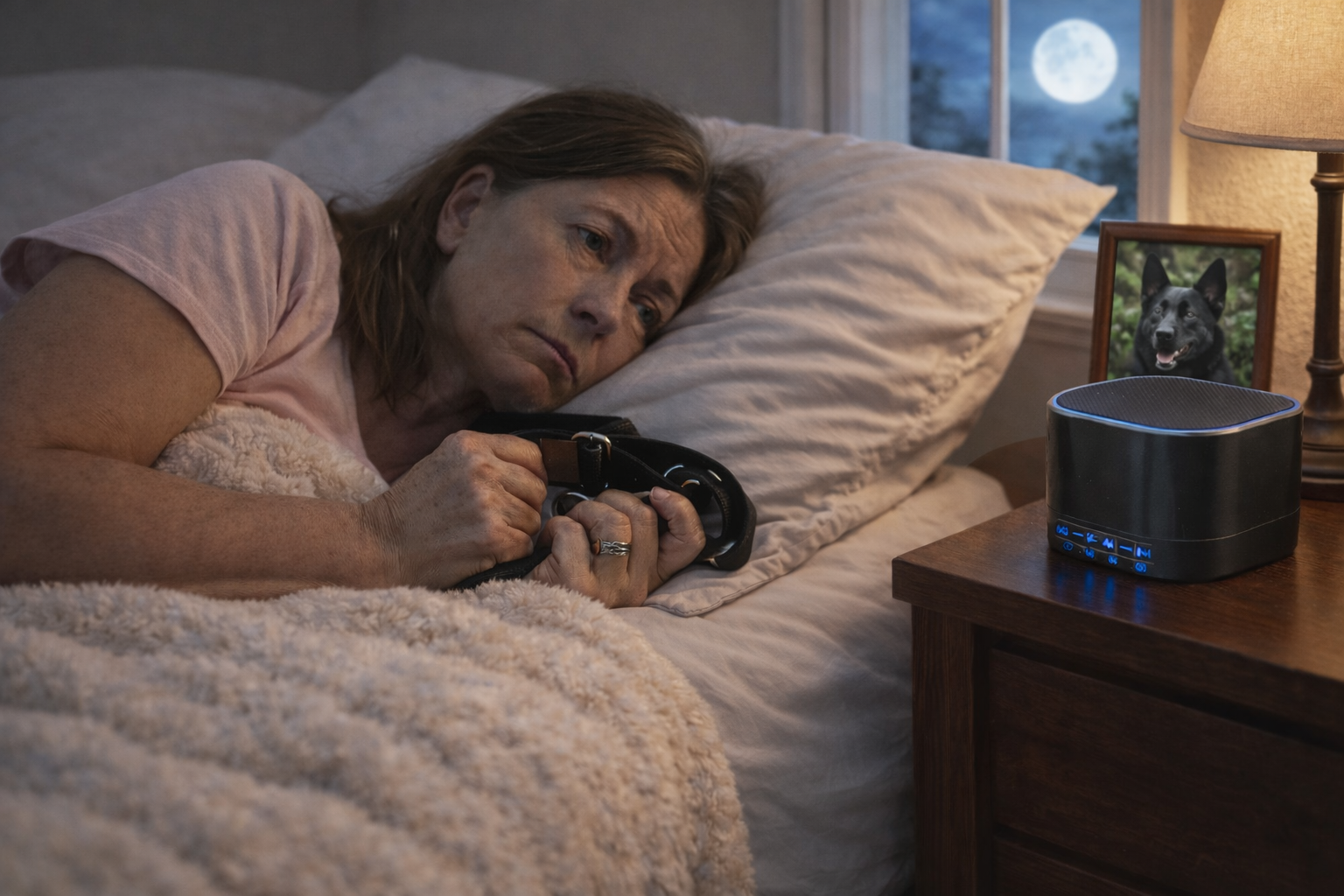
Many people find that white noise machines help fill the silence left by their dog's breathing, not as a replacement but as a way to soothe the nervous system that's listening for sounds that won't come. [Amazon affiliate link for white noise machine: https://a.co/d/0jgH1HNT ]
White Noise Machine
Many people find that white noise machines help fill the silence left by their dog's breathing, not as a replacement but as a way to soothe the nervous system that's listening for sounds that won't come.
Buy on Amazon https://a.co/d/0jgH1HNT ]
Nails on the Floor
The click-click-click of dog nails on hardwood or tile is a sound of movement and routine. It meant your dog was following you, going to their food bowl, heading to the door for a walk.
Phantom nail clicking often happens when your brain is on autopilot—when you're doing something routine like making coffee or getting ready for bed. Your muscle memory expects that sound, and sometimes your brain obliges by creating it.
Barking at the Door
If your dog barked when someone came to the door, that sound became part of your home's soundscape. Even months or years after loss, some people report hearing their dog's distinctive bark when the doorbell rings.
This phantom bark can feel both comforting and heartbreaking—a reminder of their protective presence and a sharp awareness of their absence.
The Sound of Their Movement in Sleep
Dogs shift positions, sigh, make small sounds as they dream. If your dog slept near you, these sounds became part of the ambient noise of nighttime.
People often report hearing these small sounds in the weeks and months after loss—the shift of weight on a dog bed that's no longer there, the deep sigh of contentment, the small dream-whimpers.
Why These Sounds Feel So Visceral
Phantom sounds aren't just intellectually confusing—they're emotionally destabilizing. Here's why they hit so hard:
They Create Hope and Crushing Disappointment
Every phantom sound triggers a split-second of hope. Your dog is here. They're back. It was all a nightmare and they're actually fine.
Then reality crashes in, and you re-experience the loss all over again. That repeated cycle of hope and disappointment is exhausting and can make grief feel like it's not progressing.
They Make You Question Your Sanity
When you hear something that isn't there, it's natural to wonder if you're losing your grip on reality. Especially if you're already dealing with grief brain—the fog, the memory issues, the difficulty concentrating—phantom sounds can feel like evidence that you're falling apart.
You're not. Your brain is doing exactly what brains do during profound loss. But it still feels unsettling.
They Prevent Acceptance
Part of grief work involves accepting the reality of the loss. But when your brain keeps presenting evidence that your dog is still here—through sounds, sensations, or visual tricks—that acceptance becomes harder to reach.
You can't fully integrate "my dog is gone" when part of your sensory system keeps insisting "no, they're right here."
How to Navigate Phantom Sounds With Compassion
If you're experiencing phantom sounds, here's how to approach them with self-compassion rather than fear:
Acknowledge Them Without Judgment
When you hear your dog's collar jingle or breathing, acknowledge it: "My brain just played Charlie's collar sound. That makes sense. I miss that sound so much."
This acknowledgment does two things: it validates your experience (you're not crazy), and it gently reminds your brain of the reality (the sound isn't actually happening).
Don't Fight the Experience
Trying to force yourself to stop hearing phantom sounds rarely works. Your brain isn't doing this deliberately, and you can't think your way out of it.
Instead, let the experience happen. Notice it. Feel the emotions that come with it. Then gently redirect your attention to what's actually present in your environment.
Create Intentional Sensory Connections
Rather than being ambushed by phantom sounds, some people find comfort in creating intentional sensory experiences with their dog's belongings.
Keep your dog's collar somewhere you can access it. When you're missing that sound, hold it in your hands. Feel the weight. Run your fingers over the tags. If it helps, shake it gently and listen to the jingle. This gives your brain a real sensory experience instead of a phantom one, which can be grounding.
Journal Your Sensory Memories
Writing about the specific sounds, smells, and physical sensations associated with your dog can help your brain process and organize these memories. Rather than randomly triggering phantom experiences, you're deliberately engaging with sensory memory in a structured way.
My guided journal, Charlie's Last Walk, includes prompts specifically for exploring sensory grief—the sounds you miss, the physical presence you're longing for, the way grief lives in your body. Working through these prompts can help externalize what you're experiencing. [Amazon link: https://a.co/d/5eYkH7U]
Other Sensory Experiences of Grief
Phantom sounds are just one aspect of sensory grief. You might also experience:
Visual Tricks
Seeing a shape out of the corner of your eye that looks like your dog. Catching movement that isn't there. Looking at their empty bed and swearing you see them lying there for a split second.
These visual phantom experiences follow the same neurological pattern as auditory ones—your brain filling in what it expects to see.
Phantom Touch
Feeling your dog's weight against your leg while you're sitting on the couch. Sensing their head on your lap. Reaching down to pet them and being shocked when your hand meets empty air.
Touch memory is powerful and persistent. Your body remembers the physical presence of your dog and sometimes recreates those sensations.
Smell Memory
Grief researchers have found that smell is one of the most powerful triggers of memory and emotion. Many people report occasionally catching a whiff of their dog's scent—even when logically they know it's impossible.
Some people preserve an unwashed blanket or piece of bedding specifically because it still carries their dog's scent. While that scent will eventually fade, having access to it in the early months can provide comfort and help your brain process the loss more gradually.
The Phantom Routine
This isn't technically sensory, but it's related. Your body goes through the motions of dog-care routines even when your dog is gone. Reaching for the leash at walk time. Listening for their bowl to be emptied. Moving carefully around the space where their bed used to be.
These phantom routines are your muscle memory trying to honor patterns that defined your daily life.
When Phantom Experiences Become Concerning
For most people, phantom sounds and other sensory experiences gradually decrease over weeks and months. As your brain slowly integrates the reality of loss, these experiences become less frequent and less intense.
However, if you're experiencing any of the following, it might be helpful to seek professional grief support:
Phantom experiences that are increasing rather than decreasing over time
Inability to distinguish between phantom sounds and real sounds
Distress so severe that you're avoiding your home or normal activities
Phantom experiences accompanied by other symptoms of complicated grief (inability to function, thoughts of self-harm, substance use to numb the pain)
Professional grief counseling, particularly with someone who understands pet loss, can help you process these experiences and move toward healing.
Honoring the Sounds You Miss
Rather than trying to forget the sounds that haunt you, some people find healing in honoring them:
Create a Memorial That Includes Sound
Some memorial wind chimes are designed to hold a portion of your dog's ashes, creating a gentle sound memorial that transforms silence into something beautiful. The chimes don't replace your dog's sounds, but they fill the quiet with something that honors their memory. [Amazon affiliate link for memorial wind chimes]
Record Your Memories While They're Vivid
If you have video or audio recordings of your dog—their bark, their breathing, even the sound of their collar—preserve these. Someday you might want to hear those sounds again, not as phantom experiences but as intentional acts of remembrance.
Write About What You're Listening For
Journaling specifically about the sounds you miss can help externalize the longing. Describe the exact pitch of their bark, the rhythm of their breathing, the weight of their paw steps. This descriptive writing honors your sensory memory while also acknowledging the loss.
The Sound of Silence
Eventually, the phantom sounds will fade. Your brain will stop filling the silence with what used to be there. And that's its own kind of loss—a secondary grief when even the echoes begin to disappear.
But here's what I've learned: the silence doesn't mean you've forgotten. It doesn't mean the love has faded. It just means your brain has finally integrated the reality that your dog's physical presence is gone.
The love, though? That doesn't make sound. That lives in a different place entirely—one that grief can't touch.
Charlie's collar sits in a small shadow box on my shelf now, alongside his photo and one of his favorite toys. Some days I open the box and shake the collar gently, just to hear that sound one more time. Other days I just look at it and remember.
The phantom sounds have mostly stopped now. But the memory of them—the evidence of how deeply my brain and body missed him—that's something I actually treasure. It's proof of how much he mattered.
About K9 Hearts Memorial Services
Based in Port Orchard, Washington, K9 Hearts offers compassionate grief support and healing legacy art specifically designed for those navigating the loss of a beloved dog. Founded by Paige, who holds a B.S. in Psychology and M.A. in Forensic Psychology with nearly 30 years of experience working with children and families through crisis, trauma, and loss, K9 Hearts combines professional expertise with deep personal understanding of pet loss grief.
Our custom Legacy Art transforms your favorite photo of your dog into a healing memorial piece that celebrates their life and honors the sensory memories you hold dear. Click here to visit K9 Hearts Legacy Healing Art
Learn more at www.k9hearts.com