

Loving a Dog with a Broken Body: Navigating Medical Decisions When There Are No Good Answers
As an Amazon Associate, I earn from qualifying purchases. This helps support K9 Hearts' mission to provide grief support resources for those who have lost their beloved dogs. We only recommend products we genuinely believe may help you on your journey.
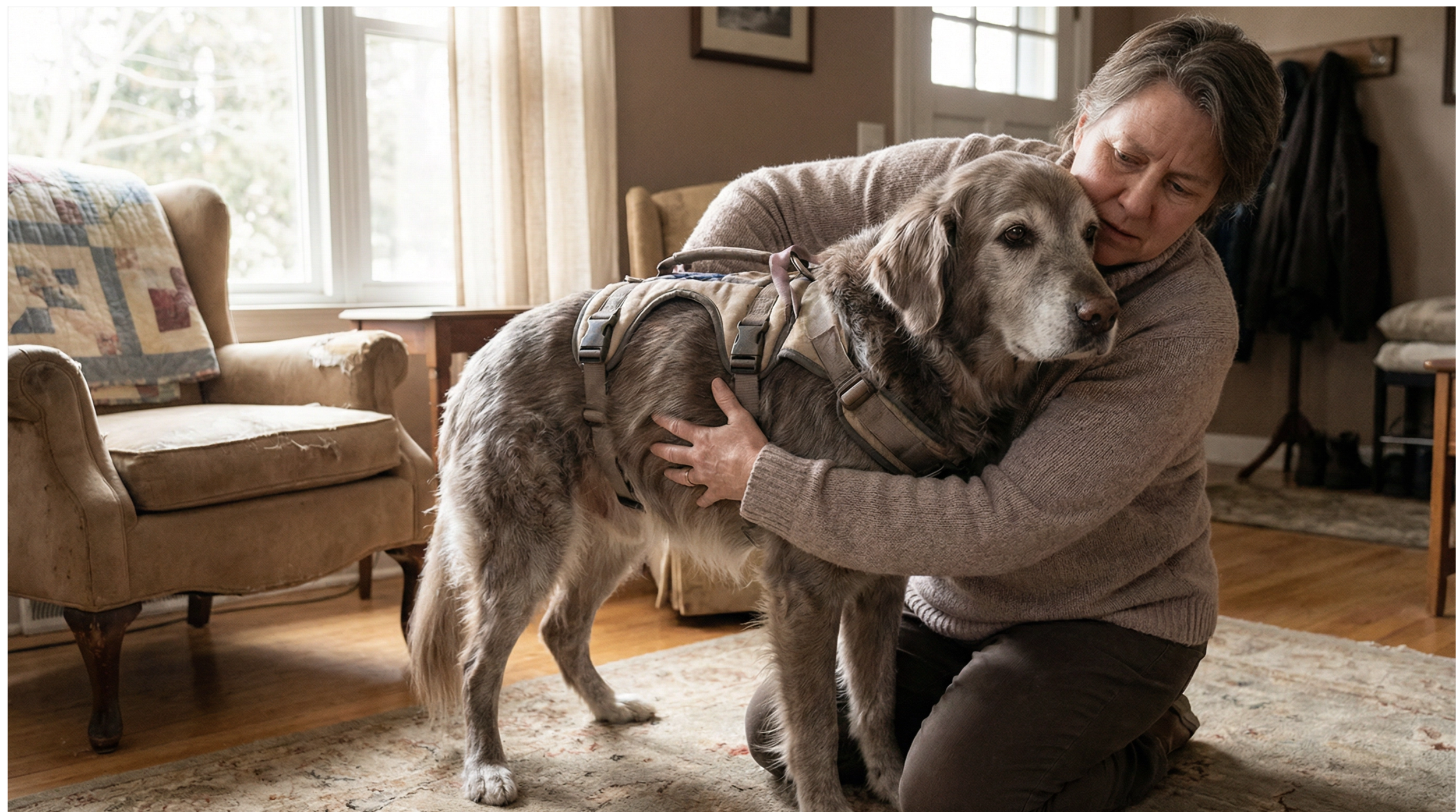
The hardest decisions we make for our dogs are often the greatest acts of love we can give them.
The veterinarian laid out Charlie's X-rays across the illuminated screen. Osteochondritis dissecans in both elbows. Degenerative joint disease. Bilateral hip dysplasia. Elbow dysplasia. All four legs. Three years old.
"What are our options?" I asked, though I could already read the answer in her eyes.
"Pain management. Surgery might help one joint, but we can't fix them all. And with his age..." She trailed off. We both knew what she wasn't saying. This wasn't a problem we could solve. It was a progressive decline we could only slow.
That was the moment I learned that some of the hardest decisions in life aren't between good and bad. They're between terrible and slightly less terrible, between more suffering now or more suffering later, between quality and quantity when you can't have both.
If you're facing medical decisions for a dog with chronic illness, degenerative conditions, or terminal diagnosis, you're living in that impossible space between hope and reality. Let me walk with you through what I learned when Charlie's broken body forced me to make choices I was never ready to make.
The Unique Cruelty of No Good Options
When your dog is sick, you want your vet to fix it. You want treatment plans that restore health. You want decisions that lead to recovery.
But when your dog has a progressive degenerative condition, or terminal cancer, or organ failure, or genetic betrayal like Charlie had, there is no "fix." There's only management, mitigation, and eventually, the decision to let go.
This is its own particular hell.
Every Choice Feels Wrong
Should you pursue aggressive treatment that might buy a few more months but could reduce quality of life? Or should you focus on comfort, knowing you're giving up time you might have had?
Should you spend thousands on surgery that might help one problem while three others continue to deteriorate? Or should you accept that the money won't change the ultimate outcome?
Should you medicate heavily to reduce pain, even if it means your dog seems less like themselves? Or should you under-medicate and watch them suffer?
There are no right answers. Every path forward involves loss, suffering, and the terrible awareness that you're making life-and-death decisions for a being who can't tell you what they want.
You're Constantly Assessing Quality of Life
When I woke up each morning with Charlie, my first thought wasn't "good morning." It was "how is he today?" I was running mental quality-of-life scales before I even got out of bed.
Can he stand without obvious pain? Is he interested in breakfast? Will he walk to the door or do I need to carry him? Are his eyes bright or dull? Is there still joy, or just endurance?
This constant assessment is exhausting. You're trying to be objective about the most subjective, emotionally loaded question possible: does my dog still have enough good to outweigh the bad?
The Timeline Is Both Urgent and Unknowable
With terminal or degenerative illness, you know the end is coming. But you don't know when. Could be weeks. Could be months. In rare cases, could be years.
This uncertainty makes every decision feel both urgent and premature. Should you do this surgery now while they're still strong enough? Or wait and see if they decline faster than expected? Should you plan that final goodbye for next week? Or is that giving up too soon?
You're trapped between acting too early and waiting too long, and there's no way to know which mistake you're making until it's already made.
The Decisions You'll Face (And How to Navigate Them)
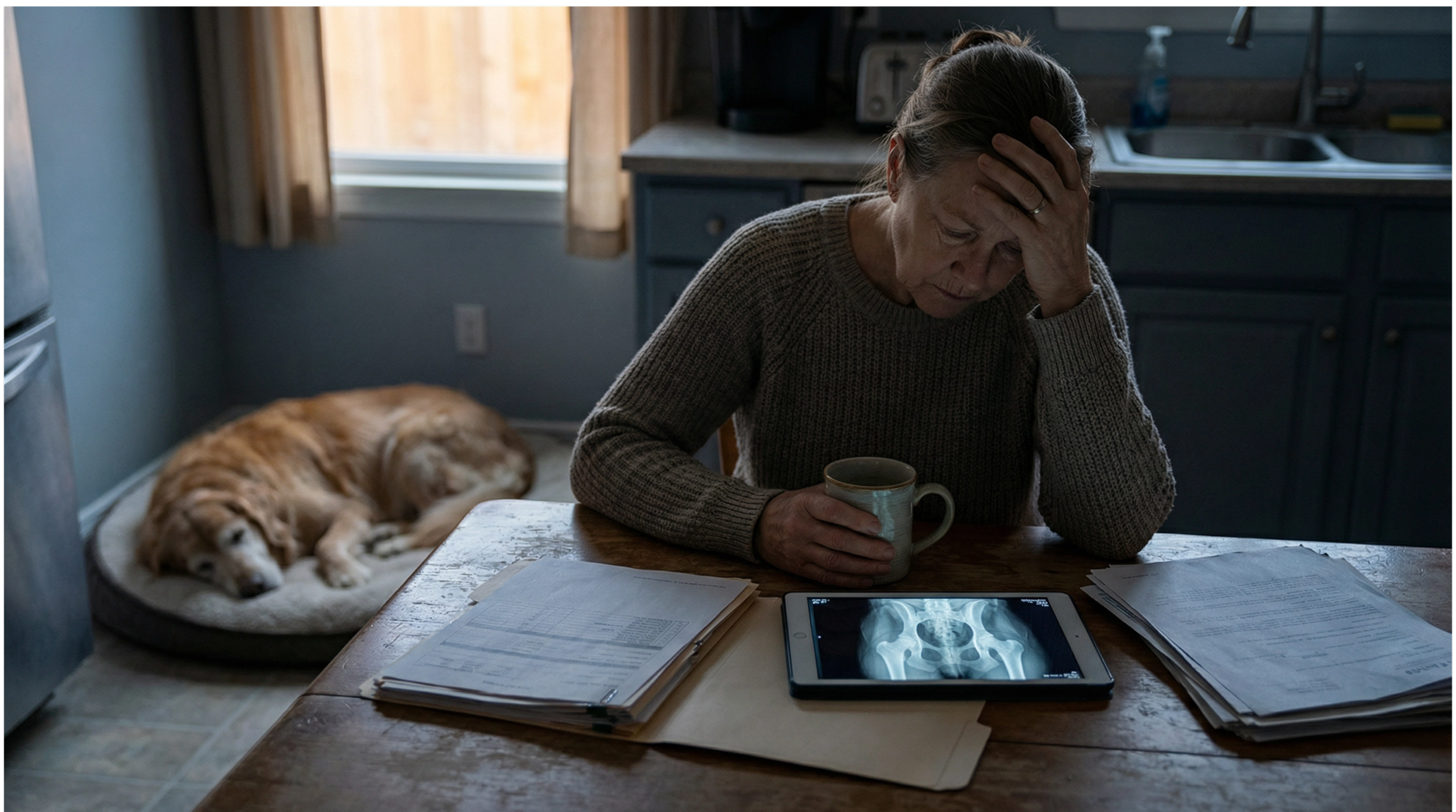
No guidebook prepares you for these decisions, but love and their quality of life will always point the way forward.
Let me walk you through the specific decision points you might encounter, with the framework I wish I'd had when I was facing them with Charlie.
Diagnostic Testing: How Much Do You Need to Know?
When your dog first shows symptoms, the impulse is to test everything. Blood work, X-rays, ultrasound, MRI, biopsies. You want answers.
But here's the hard question: will the information change what you do?
If additional testing might reveal a treatable condition, it's worth pursuing. But if you already know it's degenerative or terminal, sometimes more testing just adds stress and cost without changing the path forward.
Questions to ask:
Will this test reveal treatment options we don't already know about?
Is the test itself painful or stressful for my dog?
Can I afford the test, and if I can't, does that change whether I should do it?
Am I pursuing this test for my dog's benefit or because I need certainty?
There's no shame in choosing comfort over complete diagnostic certainty. Sometimes "we don't know exactly what's wrong, but we know it's serious" is enough information to make compassionate decisions.
Treatment Intensity: Aggressive vs. Palliative
This is perhaps the hardest decision: how aggressively do you treat?
Aggressive treatment might include surgery, chemotherapy, radiation, intensive medication protocols. These approaches can extend life, sometimes significantly. But they often come with side effects, stress, and reduced quality of life during treatment.
Palliative care focuses on comfort rather than cure. Pain management, appetite stimulation, gentle support. The goal isn't to fight the disease—it's to maintain the best quality of life possible for whatever time remains.
With Charlie, we tried a middle path: conservative surgical intervention on one elbow, pain management for the rest, physical therapy to maintain mobility. It bought us some time, but it didn't fix the underlying genetic failures.
Framework for deciding:
What's my dog's tolerance for medical intervention? (Some dogs handle it well; others find it traumatic)
What's the realistic best-case outcome of aggressive treatment?
What's my financial and emotional capacity to support intensive treatment?
If this were me, what would I want?
That last question—"if this were me"—can be clarifying. Not because dogs are people, but because it forces you to think about dignity, comfort, and quality versus quantity.
Pain Management: Finding the Balance
Managing your dog's pain is crucial, but it's also complicated. Pain medications can have side effects—sedation, nausea, organ damage with long-term use. You're constantly balancing pain relief against other quality-of-life factors.
Signs your dog might be in pain:
Reluctance to move, jump, or climb stairs
Changes in appetite
Restlessness or difficulty settling
Panting when not hot or exercised
Withdrawal from interaction
Aggression or irritability (especially if previously gentle)
Dogs are masters at hiding pain. You have to watch closely, learn their subtle signals, and trust your gut when something feels off.
Considerations for pain management:
Work with your vet to find the right medication and dosage
Keep a daily log of pain levels and medication effects
Be willing to adjust frequently as your dog's condition changes
Consider complementary approaches (gentle massage, heat therapy, mobility aids)
A well-cushioned orthopedic dog bed can significantly improve comfort for dogs with joint issues or mobility problems. The supportive foam reduces pressure points and makes rest more restorative. [Amazon affiliate link for orthopedic dog bed]
Mobility Support: When and How Much
As degenerative conditions progress, many dogs need help moving. This might mean carrying them, using ramps or stairs, or employing mobility harnesses and slings.
The question becomes: at what point is assisted mobility still quality of life versus just prolonging the inevitable?
There's no universal answer. Some dogs maintain joy and engagement even with significant mobility support. Others seem defeated by their limitations, regardless of the help you provide.
Watch for:
Does your dog still want to go places, even if they need help getting there?
Are they engaged and responsive, or just going through motions?
Is the assistance causing fear or resistance?
Mobility harnesses that support your dog's hindquarters or front end can help them maintain independence and dignity longer. Look for adjustable, padded options that distribute weight comfortably. [Amazon affiliate link for dog mobility harness]
The Euthanasia Decision: Too Early vs. Too Late
This is the decision that haunts every pet parent facing progressive or terminal illness: when is it time?
Too early, and you've stolen precious time you both could have had. Too late, and your dog suffered unnecessarily at the end. The window of "just right" feels impossibly narrow and completely invisible until you've already passed through it.
Quality of life scales can help:
Most veterinary quality-of-life assessments look at factors like:
Pain level
Hunger and hydration
Hygiene (can they keep themselves clean?)
Happiness (do they still show joy?)
Mobility (can they move around comfortably?)
More good days than bad days
But here's what the scales don't capture: your intimate knowledge of your specific dog. You know what brought them joy. You know what they valued. You know when the light in their eyes changes from "I'm struggling but still here" to "I'm just enduring."
Trust that knowledge. Trust your relationship. If you're asking the question "is it time?"—and asking it from a place of concern for your dog, not fear of loss—then it's probably close to time.
The Emotional Labor of Medical Decision-Making
Beyond the logistics, there's an enormous emotional toll to managing your dog's complex medical situation:
Decision Fatigue Is Real
When you're making constant assessments and decisions—should we increase this medication, try that treatment, wait one more week, schedule the appointment—your decision-making capacity gets depleted.
This is why it's crucial to:
Establish a relationship with a vet you trust, so you're not starting from scratch with every decision
Create decision-making frameworks in advance when possible
Give yourself permission to make "good enough" choices rather than perfect ones
Accept support from people who can help you think through options
Guilt Lives in Every Direction
If you pursue aggressive treatment, you might feel guilty about the stress it causes your dog. If you choose comfort care, you might feel guilty about not fighting harder. If you euthanize, you wonder if you gave up too soon. If you wait, you wonder if you let them suffer too long.
This is the terrible truth: when there are no good options, guilt follows every path. The only way through is to accept that you'll feel guilty regardless, and that guilt doesn't mean you made the wrong choice. It just means you loved them enough to carry the weight of impossible decisions.
Financial Stress Compounds Grief
Veterinary care for chronic or terminal illness is expensive. Medications, specialist visits, diagnostics, treatments—costs add up quickly.
The financial stress of trying to afford care while watching your dog decline creates a unique suffering. You're grieving your dog while also grieving your financial stability, and feeling guilty about even thinking about money when a life is at stake.
If financial limitations are affecting your decisions, please know: you're not a bad pet parent. You're a human being with finite resources making the best choices you can within real constraints. Choosing humane euthanasia because you can't afford treatment that might buy limited time is a valid, loving choice.
Creating a Framework for Decision-Making
When I was navigating Charlie's illness, I developed a framework that helped me make decisions with a bit more clarity:
The Three Questions
Before any major decision, I asked myself:
Is this choice in Charlie's best interest, or am I doing this for me? (Both can be valid, but I needed to be honest about the motivation)
What would I choose if this were a human I loved in the same situation? (This helped me think about dignity and quality versus just quantity)
Can I live with this choice, even if it turns out to be wrong? (Because there's no certainty—only decisions made with love and best available information)
Document Your Journey
Keeping a journal of your dog's condition, your decisions, and your reasoning can help in several ways:
It creates an external record so you're not just relying on memory and emotion
It helps you track patterns you might not notice day-to-day
It gives you evidence that you were thoughtful and loving in your choices, which can ease guilt later
It honors the depth of what you're going through
My guided journal, Charlie's Last Walk, includes specific prompts for navigating medical decisions and anticipatory grief—the period when you're grieving while your dog is still alive but declining. Having structured space to process these impossible choices can bring clarity when everything feels overwhelming. [Amazon link: https://a.co/d/5eYkH7U ]
After the Decision: Living With What You Chose
Whether you chose aggressive treatment, comfort care, or euthanasia, you'll likely spend time questioning your decisions after your dog is gone.
Second-Guessing Is Part of Grief
"What if I had tried that other treatment?" "What if I had let go sooner?" "What if I had waited just one more week?"
These questions are normal. They're painful, but they're part of processing loss when the decisions were complex and uncertain.
The truth is, you'll never know what the alternate path would have brought. You made choices with the information, resources, and emotional capacity you had at the time. That has to be enough.
Honor the Love That Informed Every Choice
Every decision you made—whether it turned out "right" or not—came from love. You were trying to balance your dog's needs, their comfort, their dignity, and your own capacity to provide care.
That love is what matters. Not whether you made the objectively perfect choice (which doesn't exist), but whether you made choices guided by deep care for your dog's wellbeing.
Create Memorial Spaces That Honor the Journey
When you've walked through complex medical decisions with your dog, creating memorial spaces that acknowledge the full journey can bring healing.
Personalized memorial garden stones can hold your dog's name, dates, and a short message that captures not just the loss but the love and the fight you both endured. [Amazon affiliate link for personalized memorial garden stones:[YOUR-AMAZON-LINK-HERE]
At K9 Hearts, we create Legacy Art that celebrates your dog's spirit—not their illness. Our Forest Healing Portrait places your dog in a peaceful, whole setting that honors who they were beyond their broken body. Click here to view K9 Hearts Healing Legacy Art.
A Final Word on Impossible Choices

There are no perfect answers when every option breaks your heart—only the choice that puts their peace first.
Charlie's broken body forced me to make decisions I never wanted to make. Every choice felt wrong in some way. Every path forward involved loss.
But here's what I learned: there is no perfect decision when you're loving a dog with a body that's failing them. There's only the best choice you can make with incomplete information, finite resources, and a heart that's breaking.
You're doing the hardest thing—staying present with suffering, making choices that carry life-and-death weight, and loving your dog through their decline even when it's crushing you.
That's not failing them. That's the deepest love there is.
Whatever choices you make, know this: your dog feels your love. That love matters more than whether you chose treatment A or B, whether you let go on Tuesday or Thursday, whether you spent thousands or hundreds.
The love is what they'll carry. The love is what you'll carry. And the love is enough.
About K9 Hearts Memorial Services
Based in Port Orchard, Washington, K9 Hearts offers compassionate grief support and healing legacy art specifically designed for those navigating the loss of a beloved dog. Founded by Paige, who holds a B.S. in Psychology and M.A. in Forensic Psychology with nearly 30 years of experience working with children and families through crisis, trauma, and loss, K9 Hearts combines professional expertise with deep personal understanding of pet loss grief.
Learn more at www.k9hearts.com