Creating a Memory Box for Your Heart Dog
Learn how to create a meaningful memory box for your heart dog with this compassionate guide. Includes psychological insights, step-by-step instructions, and recommended materials for honoring your dog's legacy during grief.
When Charlie Brown passed away at just three years old, I found myself drowning in a sea of grief with nowhere to anchor. As someone with a background in psychology and nearly 30 years working with families through crisis and loss, I knew intellectually that creating tangible memorials could help with grief processing. But knowing and doing are two different things when your heart is shattered.
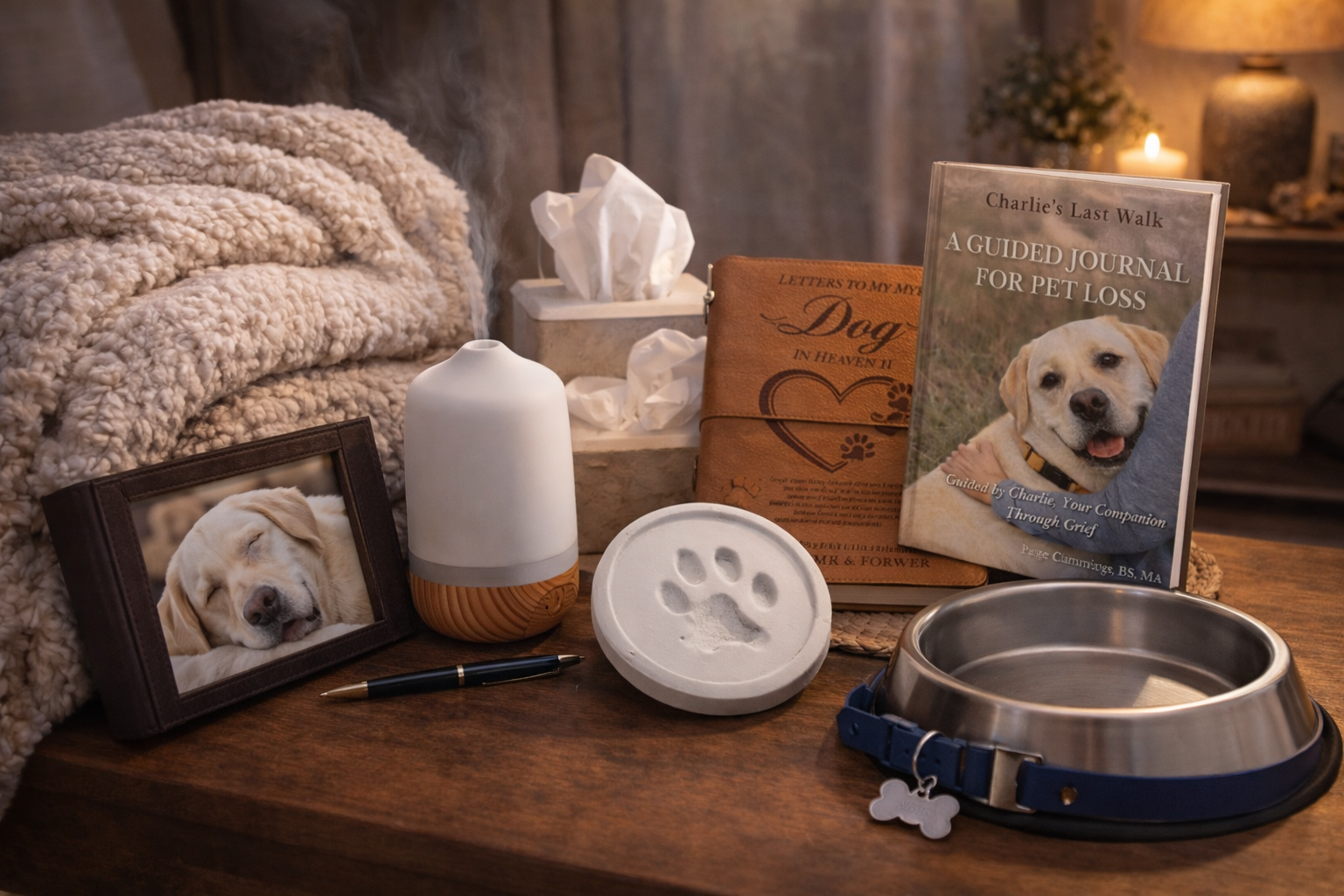
One of the most healing practices I discovered was creating a memory box—a sacred space where I could keep Charlie's collar, his favorite toy, photos, and the countless small things that carried his presence. This wasn't just about storage. It was about intentionally creating a container for my grief, a place where love could live alongside loss.
If you're navigating the grief of losing your heart dog, or if you're in that tender space of anticipatory grief while your dog is still with you, creating a memory box can be a powerful healing ritual. Let me walk you through this process with both the psychological foundation and the practical steps.
Why Memory Boxes Matter: The Psychology Behind the Practice
From a therapeutic perspective, memory boxes serve several critical functions in grief processing:
Externalization of Grief: When grief feels overwhelming and abstract, having a physical container gives it boundaries. You're not trying to hold everything inside yourself. The box holds some of it for you.
Continuing Bonds: Modern grief theory recognizes that healing doesn't mean "letting go" or "moving on." It means finding ways to maintain a connection with those we've lost while also moving forward with our lives. A memory box honors this reality—your heart dog remains part of your story.
Sensory Connection: Grief lives in our bodies, not just our minds. Being able to touch your dog's collar, smell their blanket, or see their photo engages multiple senses and can actually help your nervous system process the loss more completely than words alone ever could.
Ritual and Intention: The act of creating the box itself becomes a ritual—a way of saying "this matters, you mattered, and I'm honoring what we had together."
What to Include in Your Memory Box
There's no right or wrong answer here. Your memory box should reflect your unique bond with your dog. That said, here are some items that many people find meaningful:
Physical Items From Your Dog
Collar and tags (hearing them jingle can be both painful and comforting)
A favorite toy or the last toy they played with
Their leash
A piece of their bedding or a blanket that still carries their scent
Fur clippings (if you have them)
Paw print impressions
Photos and Documentation
Favorite photos from different life stages
Veterinary records or medical cards (these tell the story of their life)
Adoption papers or registration documents
Cards or notes from friends and family after your dog's passing
Memory Items You Create
Letters you've written to your dog
Journal entries about specific memories
A list of all the silly nicknames you called them
Descriptions of their quirks and personality traits
Drawings or artwork inspired by them
Ceremonial Items
A candle you light when you open the box
Flowers or dried petals from their memorial service
A special stone or object from a meaningful place you walked together
Choosing the Right Memory Box
The container itself matters. This isn't just a cardboard box shoved in a closet (though if that's all you have, that's okay too—the contents matter more than the container). When you're ready, choosing a beautiful box can be part of the healing ritual.
Recommended Memory Boxes
For a Classic, Timeless Look:
A wooden memory box with a hinged lid offers durability and dignity. Look for boxes made from solid wood (not composite) that are large enough to hold multiple items but not so large they feel empty. Boxes measuring around 12" x 8" x 6" work well for most people. Many wooden boxes can be personalized with engraving later if you choose.
Click on the link to get this timeless memorial box on Amazon. https://a.co/d/0gl4zKp9
For a Decorative, Display-Worthy Option:
Shadow boxes serve double duty—they're memory boxes that can also be displayed on a wall or shelf. Choose one with enough depth (at least 2-3 inches) to hold three-dimensional items like collars and toys, not just photos. Shadow boxes with a hinged glass front let you see your treasures while keeping them protected.
[INSERT YOUR AMAZON AFFILIATE LINK: Search "deep shadow box hinged glass" on Amazon]
For Protecting Delicate Items:
If you're storing photos, letters, or other paper items in your memory box, consider adding acid-free tissue paper. This prevents yellowing and deterioration over time, ensuring these memories stay preserved. Archival quality matters when you're protecting something precious.
[INSERT YOUR AMAZON AFFILIATE LINK: Search "acid-free tissue paper archival" on Amazon]
For Paw Print Keepsakes:
If you don't already have a paw print, clay impression kits let you create one while your dog is still with you (if you're in anticipatory grief) or can sometimes be used shortly after passing. These become treasured additions to memory boxes. Look for non-toxic, easy-to-use clay that air-dries without baking.
[INSERT YOUR AMAZON AFFILIATE LINK: Search "pet paw print kit clay" on Amazon]
The Process: Making Your Memory Box a Healing Ritual
Creating a memory box isn't just about gathering items and putting them in a container. The way you approach this process matters. Here's how to make it truly therapeutic:
Step 1: Choose Your Timing
There's no "right time" to create a memory box. Some people do it immediately after their dog passes. Others wait weeks or months. Some create one while their dog is still alive, knowing the end is near. Trust your own timeline. If you're not ready, that's okay. The box will wait until you are.
Step 2: Create Space for Your Emotions
Set aside uninterrupted time when you won't be rushed. This isn't a task to squeeze in between errands. Light a candle, play music that feels right, make tea. Create an environment where tears are welcome and memories can surface without interruption.
Step 3: Gather Items Slowly
You don't have to complete your memory box in one sitting. In fact, it's often better if you don't. Gather items over days or weeks. Each item you add can be its own small ceremony of remembrance.
Step 4: Write As You Go
Consider keeping a notebook nearby. As you handle your dog's collar or look at photos, memories will surface. Write them down. These written memories can go in the box or become part of a companion journal where you process your grief more fully.
Step 5: Include Future Items
Your memory box isn't sealed forever. You can continue adding to it. Maybe you'll write a letter to your dog on the anniversary of their passing. Maybe a friend will send you a photo you didn't have. The box can grow as your grief transforms.
Storing and Accessing Your Memory Box
Where you keep your memory box is personal. Some people keep it on a bedroom shelf where they see it daily. Others tuck it away in a closet and bring it out when they need it. Neither approach is better—what matters is what serves your healing.
In the early days after Charlie died, I kept his box on my nightstand. I opened it almost every night. Over time, I moved it to a shelf in my office. Now I open it less frequently, but when I do, the ritual still matters. The grief has softened, but the love hasn't diminished.
If you have other pets or small children, consider where the box will be safe from curious paws or hands. This doesn't mean hiding it away in shame—grief deserves visibility—but protecting sacred items from accidental damage is practical self-care.
When the Box Isn't Enough: Additional Support
Creating a memory box is one tool in grief recovery, but it's not the only one you'll need. Grief is complex, non-linear, and deeply personal. Some days the box will bring comfort. Other days, even opening it feels too hard.
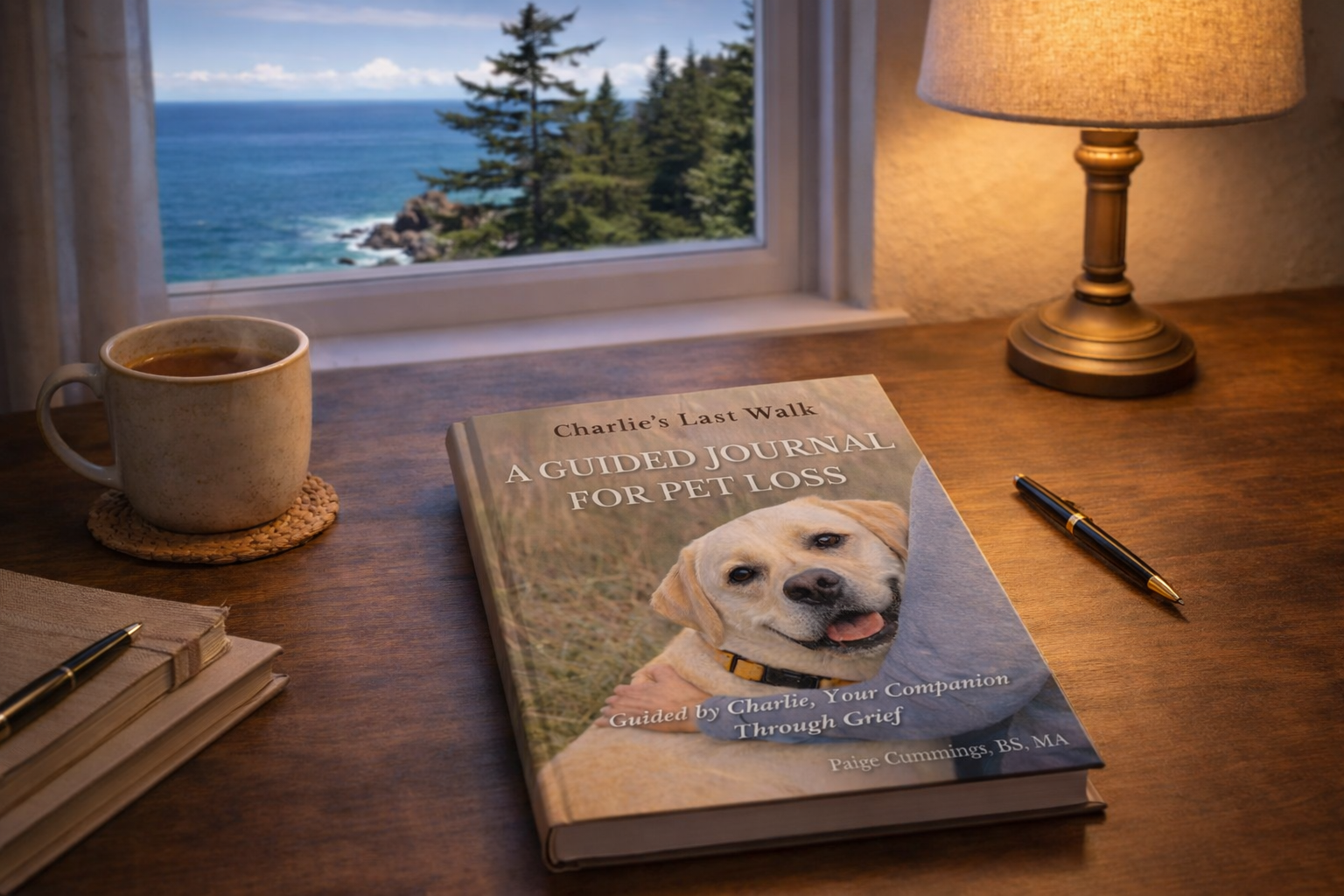
If you're finding that grief is overwhelming your daily functioning, or if you're struggling with decision fatigue about end-of-life choices, consider working through a structured grief journal specifically designed for pet loss. I created Charlie's Last Walk: A Guided Journal for Pet Loss based on evidence-based grief models and my own experience losing Charlie. It walks you through the messy, non-linear reality of pet loss grief with compassion and psychological grounding.
Additionally, if you want to honor your dog's memory in a way that brings more beauty into your daily environment, custom memorial portraits can complement your memory box beautifully. At K9 Hearts, we create Legacy Art that celebrates the joy your dog brought to your life, not just the sadness of their absence.
Your custom memorial portraits can be kept in a frame with their collar. https://a.co/d/06MsxZCY
A Final Thought on Healing
Your memory box is not about "getting over" your grief or "moving on" from your dog. It's about creating a sacred container where love and loss can coexist. It's about giving yourself permission to remember, to grieve, and to honor the profound bond you shared.
Charlie taught me that heart dogs don't leave us—they simply walk ahead, clearing the path with love. Your memory box is a way of keeping that path visible, of remembering that the love you shared still matters, still counts, still shapes who you are.
Take your time with this. Be gentle with yourself. And remember that grief is love that has nowhere to go. The memory box gives it somewhere to live.
About K9 Hearts Memorial Services
Based in Port Orchard, Washington, K9 Hearts offers compassionate grief support and healing legacy art specifically designed for those navigating the loss of a beloved dog. Founded by Paige, who holds a B.S. in Psychology and M.A. in Forensic Psychology with nearly 30 years of experience in crisis counseling and trauma support, K9 Hearts combines professional expertise with deep personal understanding of pet loss grief.
Learn more at www.k9hearts.com
The Best Journals for Pet Loss Grief: Finding Your Healing Companion
Choosing the right grief journal matters. Compare different approaches to pet loss journaling, understand what makes a journal truly therapeutic, and find the companion that fits your healing journey.
When I sat down to write after losing Charlie, I discovered something surprising: most grief journals weren't designed for the reality of pet loss. They either treated it like a minor disappointment or assumed grief followed a neat, linear path from denial to acceptance. Neither reflected what I was actually experiencing.
As someone with a background in psychology and nearly 30 years working with families through trauma and loss, I knew better. Grief doesn't move in straight lines. Pet loss grief, in particular, carries its own unique challenges—disenfranchised grief, decision fatigue around end-of-life care, and the physical void left when your daily routine suddenly has a dog-shaped hole in it.
If you're looking for a grief journal to help you process the loss of your dog, you need one that understands these realities. Let me walk you through what to look for, review different approaches, and help you find the right companion for your healing journey.
Why Journaling Helps With Pet Loss Grief
Before we talk about specific journals, let's address why journaling matters in grief recovery. This isn't just about "writing your feelings down"—there's actual psychological research supporting this practice.
Narrative Processing: When you write about traumatic or emotionally overwhelming experiences, you're helping your brain organize and make sense of what happened. Grief can feel chaotic and fragmented. Writing creates coherence.
Externalization: Getting thoughts and feelings onto paper literally moves them outside of you. This doesn't make them disappear, but it can create psychological space and relief from the constant internal churning.
Tracking the Non-Linear Path: One of the most validating aspects of journaling is being able to look back and see your own patterns. You realize you're not "failing" at grief—you're spiraling through it, which is exactly how it works.
Continuing Bonds: Modern grief therapy recognizes that healing doesn't mean severing the connection with who or what you lost. Journaling lets you maintain that bond while also moving forward with your life.
What to Look for in a Pet Loss Grief Journal
Not all grief journals are created equal. Here's what actually matters when you're choosing one:
Evidence-Based Structure
Look for journals that reference actual grief models—Worden's Tasks of Mourning, Kübler-Ross's stages (but understood as non-linear), or Continuing Bonds theory. Be wary of journals that promise to "move you through" grief in a set timeframe. Grief doesn't work on schedules.
Pet-Specific Content
Generic grief journals don't address the unique aspects of losing a pet: decision-making around euthanasia, anticipatory grief while your dog is still alive, the physical absence in your daily routine, or the social dismissal many people face ("it was just a dog"). Your journal should acknowledge these realities.
Non-Prescriptive Prompts
The best journals offer prompts as invitations, not commands. If a prompt doesn't resonate, you should feel free to skip it or adapt it. Rigid journal structures can add stress when you're already overwhelmed.
Space for Non-Linear Processing
Your journal should allow you to jump around, revisit earlier themes, and circle back to emotions you thought you'd "finished with." Grief isn't linear. Your journal shouldn't be either.
Types of Grief Journals: Different Approaches
Let me walk you through the main categories of pet loss journals available, so you can understand which approach might work best for you.
Guided Journals with Structured Prompts
These journals provide specific questions or writing prompts to help you explore different aspects of your grief. They're helpful if you find blank pages intimidating or if you're not sure where to start.
Best for: People who want direction and structure, those new to journaling, or anyone who feels overwhelmed by open-ended writing.
Watch out for: Journals that are too rigid or prescriptive. You want guidance, not rules.
Many guided journals for pet loss are available on Amazon with varying approaches. Look for ones with good reviews that specifically mention feeling "understood" or "validated" rather than just "helpful."
[When you have your affiliate link, insert here: Search Amazon for "pet loss grief journal guided prompts"]
Memory and Remembrance Journals
These focus primarily on recording memories, stories, and details about your dog's life. They're less about processing grief emotions and more about celebration and preservation.
Best for: People who want to honor their dog's legacy, those who find comfort in remembering happy times, or anyone creating a keepsake for family members.
Watch out for: If you're in acute grief, purely celebratory journals might not give you space to process the harder emotions. They work better as supplements to other grief work.
[When you have your affiliate link, insert here: Search Amazon for "pet memorial journal memories"]
Combination Journals: Memory Plus Processing
Some journals blend both approaches—space for memories alongside prompts for emotional processing. This can be powerful because you're honoring both the joy your dog brought and the grief their loss has left.
Best for: Most people, honestly. The combination approach mirrors the reality that grief and love coexist.
Therapeutic Workbooks
These are more intensive, often based on specific therapeutic models like CBT or narrative therapy. They include exercises, worksheets, and structured activities beyond just journaling prompts.
Best for: People who want a deeper dive, those comfortable with psychological frameworks, or anyone who has found therapy helpful in the past.
Watch out for: These can feel clinical if that's not your preference. Make sure the tone resonates with you before committing.
[When you have your affiliate link, insert here: Search Amazon for "pet loss grief workbook therapy"]
What Makes Charlie's Last Walk Different
I created Charlie's Last Walk: A Guided Journal for Pet Loss specifically because I couldn't find what I needed when I lost Charlie. Here's what makes it different:
Non-Linear by Design: The journal follows the emotional arc of Charlie's story, which means you'll encounter acceptance before denial, hope mixed with devastation, and guilt revisited multiple times. This mirrors how grief actually works, not how we wish it worked.
Grounded in Evidence: Every prompt is informed by established grief theory—Worden's Tasks, Continuing Bonds, and understanding of complicated grief. But I translated the academic framework into compassionate, accessible language.
Anticipatory Grief Included: There's an entire section dedicated to the time before loss, when you're watching your dog decline and making impossible decisions. Most journals skip this entirely.
Excerpt-Based Prompts: Each prompt is preceded by an excerpt from my memoir about losing Charlie. You're not journaling in isolation—you're walking alongside someone who has been exactly where you are.
Permission to Spiral: The journal explicitly gives you permission to skip prompts, return to earlier sections, and move through it in whatever order serves your healing. There's no "wrong way" to use it.
The journal is available on Amazon in paperback, with a digital interactive PDF coming soon.
[INSERT LINK: https://a.co/d/5eYkH7U]
Supporting Your Journal Practice: Additional Tools
Journaling itself is powerful, but a few simple additions can enhance the practice:
Quality Pens That Feel Good to Write With
This might sound minor, but the physical act of writing matters. Using a pen that glides smoothly across the page can make journaling feel less like a chore and more like a ritual. Look for gel pens or rollerballs in comfortable weights.
[When you have your affiliate link, insert here: Search Amazon for "smooth gel pens journaling"]
A Reading Stand or Pillow
If you're working through a guided journal, having a stand to hold it open can reduce physical strain. Grief is exhausting enough—your body doesn't need extra stress from hunching over a closed book.
[When you have your affiliate link, insert here: Search Amazon for "book stand reading pillow"]
A Meaningful Bookmark
Something small, but choosing a bookmark that feels significant—maybe with an inspirational quote or an image that resonates—can make returning to your journal feel like coming back to a sacred space.
[When you have your affiliate link, insert here: Search Amazon for "inspirational bookmarks grief"]
A Dedicated Space
Consider creating a small journaling corner in your home. This doesn't have to be elaborate—a comfortable chair, good lighting, maybe a candle. Having a consistent place to write can signal to your brain that this is protected time for processing.
When to Journal and When to Rest
Here's something important: you don't have to journal every day. Some grief educators will tell you consistency matters, and that's true to an extent. But forced journaling when you're not ready can create resistance.
Listen to your body and emotions. Some days you'll need to write. Other days you'll need to sleep, walk, stare out the window, or just be. All of those are valid parts of grief.
The journal will be there when you're ready. Grief doesn't have a deadline.
Beyond Journaling: Additional Support
Journaling is one tool in grief recovery, but it's not the only one. If you're finding that writing alone isn't enough, consider:
Memorial art that brings beauty into your daily environment while honoring your dog's memory. At K9 Hearts, we create custom Legacy Art that celebrates the joy your dog brought to your life.
[INSERT LINK: https://www.k9hearts.com/healing-legacy-art]
Support groups specifically for pet loss, where you can connect with others who understand the magnitude of this grief.
Professional counseling, particularly with therapists who specialize in grief and loss. There's no shame in needing additional support.
A Final Word on Finding Your Journal
The "best" journal is the one you'll actually use. Trust your instincts. If you flip through a journal and it resonates, that matters more than any expert recommendation.
Your grief is unique. Your healing path will be too. The journal that serves you might not be the one that serves someone else, and that's exactly as it should be.
Charlie taught me that healing isn't about "getting over" grief—it's about learning to carry it with grace. The right journal can be a companion on that journey, holding space for both your sorrow and your love.
About K9 Hearts Memorial Services
Based in Port Orchard, Washington, K9 Hearts offers compassionate grief support and healing legacy art specifically designed for those navigating the loss of a beloved dog. Founded by Paige, who holds a B.S. in Psychology and M.A. in Forensic Psychology with nearly 30 years of experience in crisis counseling and trauma support, K9 Hearts combines professional expertise with deep personal understanding of pet loss grief.
Learn more at www.k9hearts.com