


Anticipatory Grief
Your Grieving Before
You Have to Say Goodbye
If your dog is getting older or living with a serious illness, your heart may already be hurting.
You might be crying more often. You may be feeling the guilt for thinking about the future. You may be even wondering if something is wrong with you.
Nothing is wrong with you.
This experience has a name.
It’s called anticipatory grief.
-
You’re crying while your dog is still alive.
-
You feel guilty for thinking about life after them.
-
Every bad day makes you wonder if it’s time.
-
You feel anxious every time your dog sleeps longer than usual.
-
You can’t enjoy today because you’re worried about tomorrow.
-
If you nodded at more than one of these, you may be experiencing anticipatory grief.
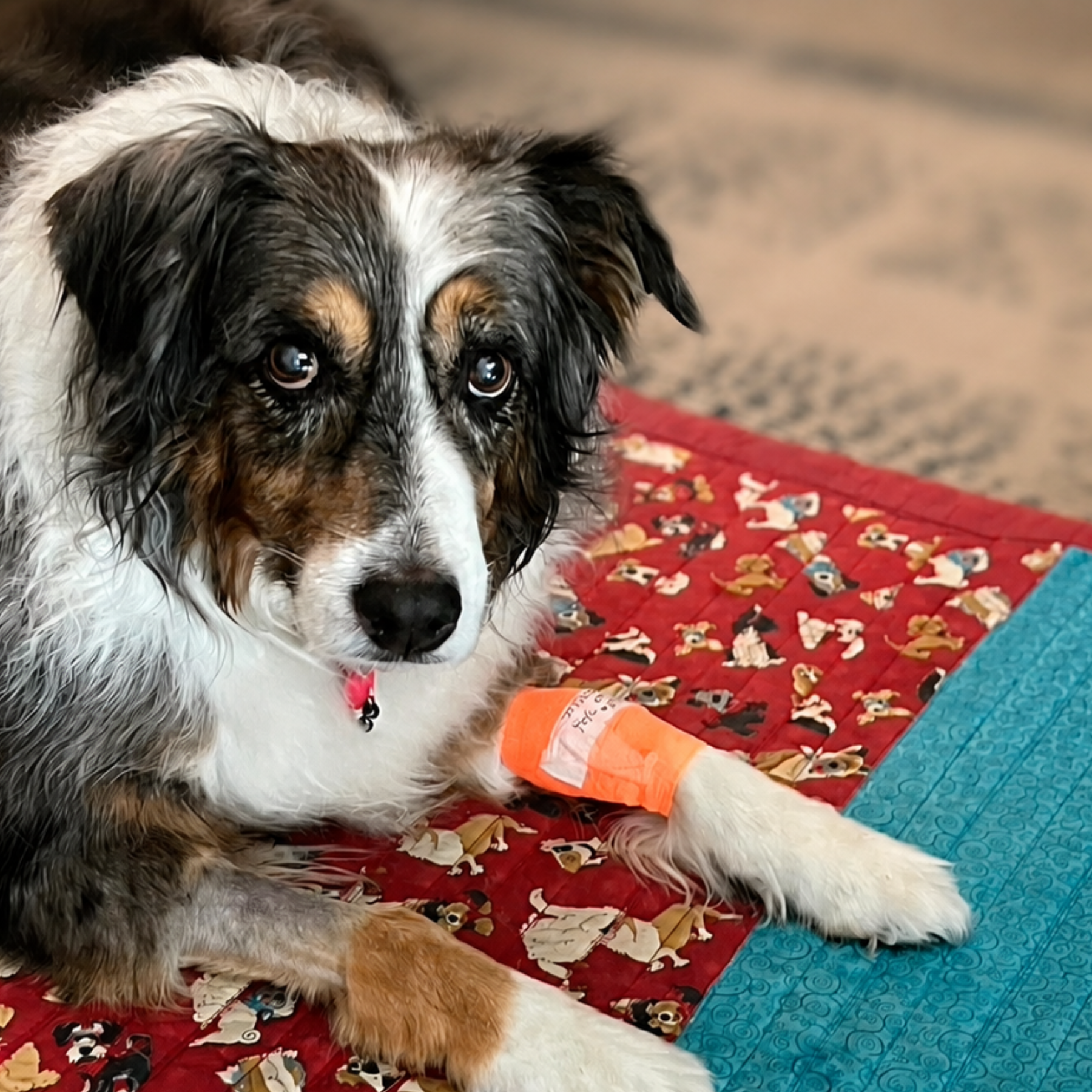
What is Anticipatory Grief?
Grief that begins
before a loss happens.
Anticipatory grief is the grief that begins before a loss happens. It often starts when you realize your dog’s time may be limited because of age or illness.
You’re grieving the changes you’ve already seen while you are worrying about what comes next.
Many people feel confused because their dog is still here. That doesn’t make the grief any less real.
You are not alone.
Anticipatory grief does not mean…
-
You’re giving up on your dog.
-
You’re wishing your dog would die.
-
You’re loving them less.
-
You’re doing grief wrong.
What can help right now?
-

Spend time together with intention.
Even ten quiet minutes can help you feel more connected.
-
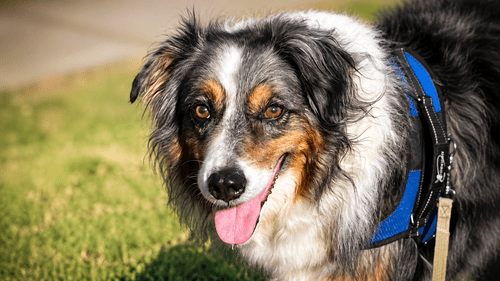
Take one ordinary photo today.
You’ll be glad you did. One photo is better than none.
-

Write down one thing you never want to forget.
A memory today can bring comfort tomorrow.
-

Ask your veterinarian the questions you’ve been avoiding.
Information can bring peace of mind.
-

Give yourself permission to feel.
There is no right way to do this.
You don’t have to prepare for everything today.
Just keep showing up for your dog and yourself.


You don’t have to do this alone.
Helpful Resources for the Road Ahead.
Quality of Life Checklist
Questions to write down and bring to your veterinarian. Free to print, or fill in on your phone.
View the checklist →Memorial Ideas
Thoughtful ways to honor your dog's life and legacy, including hand-finished Legacy Portrait art.
Explore ideas →Why Losing a Heart Dog Hurts So Much
You're not just losing a dog. Charlie's story, and why this kind of grief runs so deep.
Read Charlie's story →Pet Loss Support
Support options for when you need someone to talk to, and resources for the days after.
Get support →There is science backing what you feel…and its real.
Anticipatory grief in pet owners is the profound sadness, fear, and guilt that begins before a loss— often immediately following a serious or terminal veterinary diagnosis. It lives in the space between the diagnosis and the goodbye — in every medication dose, every car ride, every moment you try to memorize the weight of them beside you.
It is real. It is documented. It is one of the most isolating experiences a pet owner can face — because the world often does not acknowledge grief that begins before death.
“Research shows that nearly 40% of pet owners screen positive for depressive symptoms within weeks of a pet cancer diagnosis — before any loss has occurred. You are not overreacting. You are loving someone who is dying, and that is one of the hardest things a human heart is ever asked to do.”
— Nakano et al. (2020), Journal of Veterinary Internal Medicine (Peer-Reviewed)
The guilt, the fear, the second-guessing — these are not signs of weakness. They are signs of a bond that is real and deep and worthy of grief while they are still here.
THE STORY BEHIND THIS PAGE
This page began because of a dog named Cheyenne
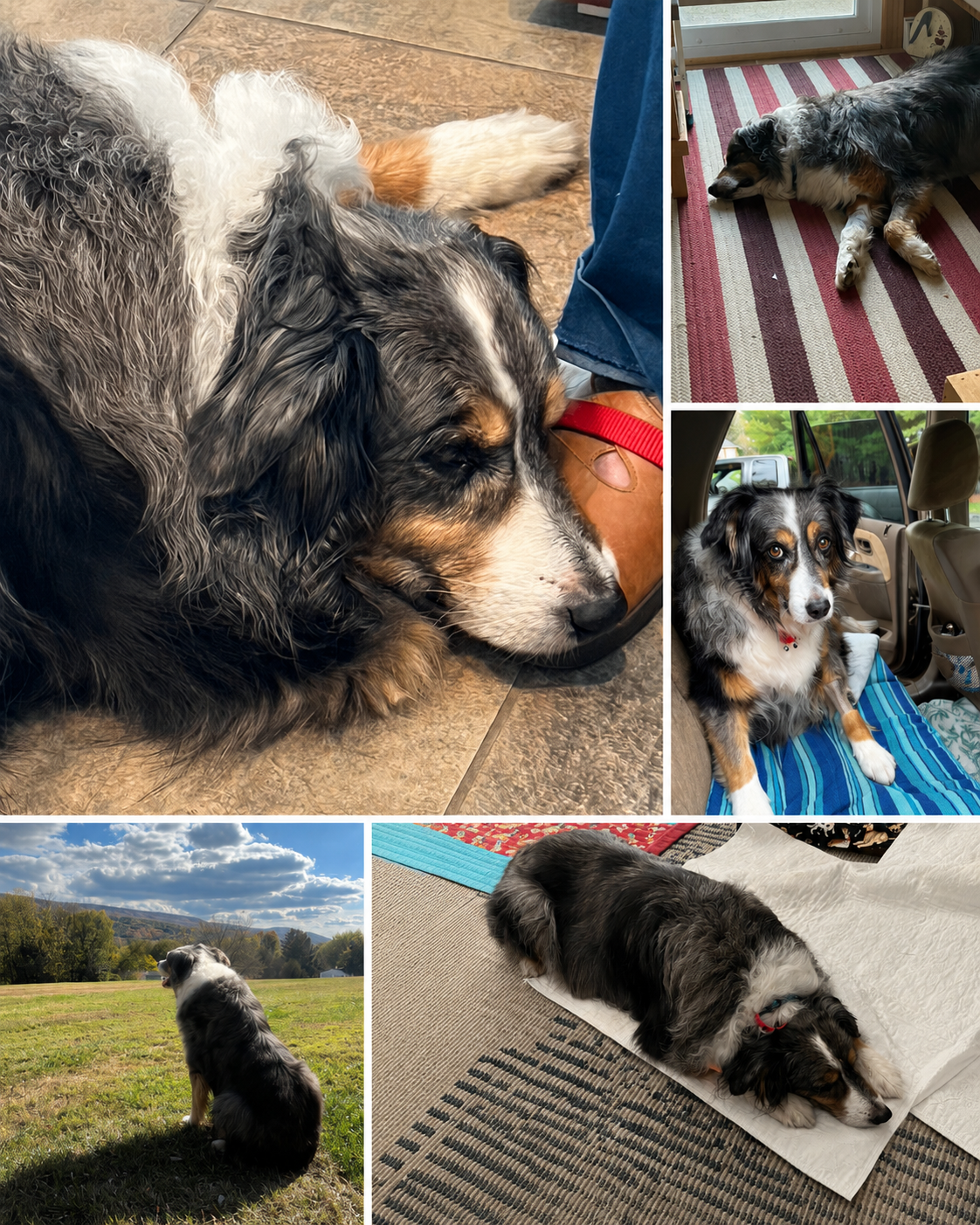
Cheyenne’s medical crisis began with seizures and the discovery of a glioma in his brain. As my aunt Cindy faced emergency visits, radiation treatment, medication decisions, and an uncertain prognosis, I attended his appointments and walked through each new development beside them.
That experience became the foundation of this page. It showed me what anticipatory grief actually looks like: loving a dog who is still here while living with the fear that everything could change.
Three months after radiation, Cheyenne’s follow-up MRI showed that the glioma had completely resolved. There was no visible tumor, swelling, or edema. The news gave Cindy hope that Cheyenne could still have years ahead of him.
Now they are facing a new challenge—an adrenal mass requiring further testing and treatment. Their story continues to hold both realities at once: fear for what may happen and gratitude for the life still being lived today.
Cheyenne’s story is why this page began. It was created for every person trying to remain present while carrying the fear of what comes next.
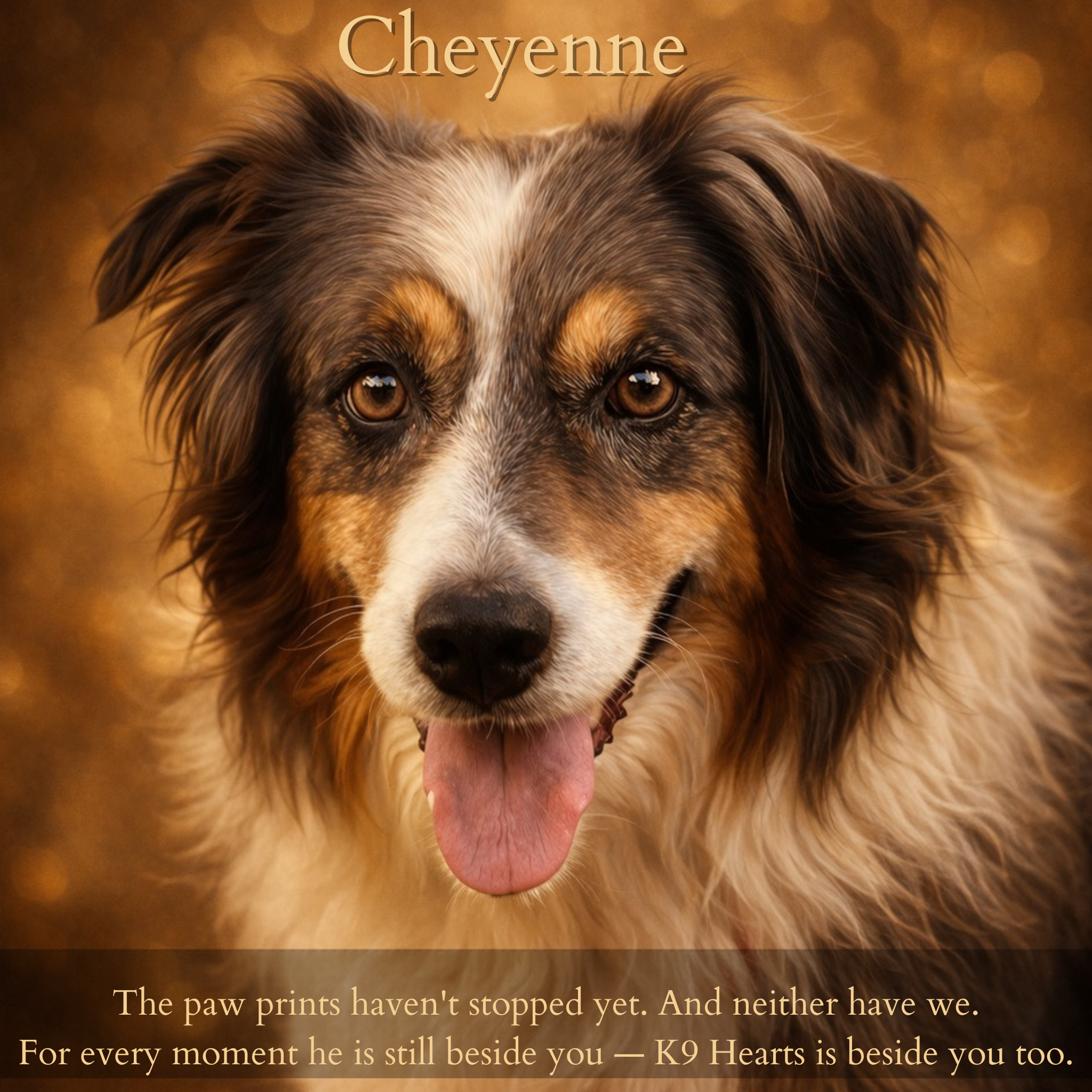
Help Cheyenne face his next medical challenge
Cheyenne’s medical fight began when he suddenly developed a series of severe seizures. Testing revealed a glioma in his brain, and he underwent radiation treatment followed by continued neurological care, seizure management, medications, and repeat imaging.
Three months after radiation, his follow-up MRI brought remarkable news: the glioma had completely resolved. It is no longer visible on the MRI. The radiologist reported no remaining tumor, swelling, or edema.
That result changed Cheyenne’s outlook. Instead of preparing for a limited amount of time, Cindy now has reason to hope that he may have several good years ahead of him.
But just as they received that hopeful news, Cindy and Cheyenne were confronted with another frightening medical problem: a mass on his adrenal gland that requires further evaluation, advanced imaging, and likely surgery.
Cindy has already spent approximately $40,000 on Cheyenne’s emergency care, radiation treatment, specialist appointments, seizure treatment, medications, and continued monitoring. The next stage of his care is expected to cost approximately $10,000.
Donations will help cover Cheyenne’s adrenal-mass evaluation, advanced imaging, surgery if recommended, medications, and related veterinary care.
Cheyenne fought his way to a future that once felt uncertain. This fundraiser is about giving him the chance to live it.
Every extra day matters more than words can say.
Thank you!
Frequently Asked Questions
If your dog has received a serious or life-limiting diagnosis, you may be carrying fear, hope, exhaustion, and grief all at once. These questions reflect what many dog owners ask during this difficult period.
-
Anticipatory grief is grief that begins before a loss occurs. It can start after a serious diagnosis, a noticeable decline, or the realization that your dog’s time may be limited.
You may feel sadness, anxiety, dread, irritability, difficulty concentrating, or an intense need to watch every symptom. You may also find it hard to enjoy the present because part of you is already afraid of what comes next.
This does not mean you are grieving too soon or giving up on your dog. It means you understand that someone you love may not always be beside you.
-
Yes. Grief does not always begin at the moment of death. It often begins when you first understand that a loss may be coming.
Many people feel guilty for grieving a dog who is still alive. They worry that sadness means they have lost hope or stopped fighting. It does not. You can pursue treatment, celebrate good days, and remain deeply hopeful while also grieving the uncertainty.
Both can be true at the same time.
-
Focus on the day in front of you rather than trying to carry the entire future at once. On especially difficult days, that may mean taking things one hour at a time.
A simple routine can help. Keep track of medications, symptoms, appetite, mobility, sleep, and questions for the veterinarian. Make space for ordinary moments with your dog, and allow yourself to feel what is happening without judging it.
You do not have to process everything alone. Talk with someone who understands the bond you share with your dog, write down what you are feeling, or use the resources on this page to help organize the practical and emotional parts of care.
-
There is no single right decision for every dog or every family. The best choice depends on your dog’s diagnosis, expected quality of life, likely treatment burden, prognosis, and your family’s values and resources.
Ask your veterinary team questions such as:
What is the goal of this treatment?
What are the most likely benefits and side effects?
What might a typical day look like during treatment?
How will we know whether it is helping?
What would palliative care look like instead?
What would you consider if this were your own dog?
You are not required to make every decision immediately. It is reasonable to ask for time, clarification, written information, or a second opinion.
-
Track the things that help show whether your dog is comfortable and engaged with life.
Useful daily observations include appetite, water intake, mobility, breathing, sleep, pain, nausea, toileting, response to medication, and interest in favorite people or activities.
Also record moments of connection: a tail wag, interest in food, resting comfortably, seeking affection, enjoying a walk, or watching the world from a familiar place.
These notes can help your veterinary team recognize changes and help you see patterns more clearly when emotions make it difficult to remember one day from another.
-
Yes. The bond between a person and a dog can be deeply attached, emotionally significant, and central to daily life.
Losing a dog may also mean losing routine, companionship, physical closeness, emotional safety, and the presence of someone who shared nearly every ordinary part of your day.
Pet grief can be made harder when other people minimize it or expect you to recover quickly. Your grief does not need outside approval to be real.
-
End of Paw Prints, or EOP, is a K9Hearts memorial tradition created to formally recognize the end of a dog’s life and the place that dog held within a family.
Inspired by traditions that honor lives of service, EOP honors dogs whose service was given through companionship, loyalty, comfort, and love.
An EOP Legacy Portrait may be created while a dog is still living or after death. Its purpose is to preserve the dog’s presence, story, and significance with dignity.
-
Use clear, honest language while considering each person’s age and emotional needs.
With adults, explain what the veterinary team knows, what remains uncertain, and what decisions may be ahead. Give family members opportunities to ask questions, spend time with your dog, and express what they are feeling.
With children, use simple and direct words. Avoid phrases such as “going to sleep” when discussing euthanasia or death, because they can create confusion or fear around ordinary sleep. Let children know what may happen, invite questions, and reassure them that sadness, anger, worry, and confusion are all understandable.
Shared grief does not remove the pain, but it can keep one person from carrying all of it alone.
-
Try to be present rather than perfect.
You do not need to create a series of extraordinary final experiences. Most dogs still value the things they have always valued: your voice, your scent, familiar routines, quiet companionship, favorite foods, gentle touch, and time near you.
Let your dog’s comfort guide the day. Sit together in the sun. Take a slow walk if they still enjoy it. Photograph ordinary moments. Record the details you never want to forget. Say what you need to say, even if your dog cannot answer in words.
The goal is not to make every remaining day special. It is to let your dog continue feeling safe, known, and loved.
CONTINUE YOUR JOURNEY
More Support from K9 Hearts
More from K9 Hearts
Charlie’s Guided Journal for Pet Loss
A companion with prompts that lead you somewhere real — grounded in evidence-based grief frameworks. Available in paperback, hardcover, and digital.
EOP Legacy Art Portrait
Honor your dog’s life while they are still here. A timeless memorial portrait created from your photographs — rooted in continuing bonds research.
Pet Loss Support & Grief Resources
A curated list of vetted resources for pet owners navigating anticipatory grief, euthanasia decisions, and post-loss support.