
How to Find Support Groups for People Who Have Lost Their Dogs

If you are looking for support groups after losing your dog, you are not alone — and you are doing exactly the right thing by reaching out. Free online support groups, virtual grief hotlines, and in-person communities exist specifically for people who have lost a dog or beloved pet, and K9 Hearts has gathered the most trusted options in one place on our Pet Loss Support and Grief Resources page. Whether you are ready to talk to someone tonight or just need to know that others understand, there is a place for you.
As an Amazon Associate, I earn from qualifying purchases. This helps support K9 Hearts' mission to provide grief support resources for those who have lost their beloved dogs.
You Are Looking for Something Real
There is a particular kind of loneliness that comes after losing a dog. It is not just the empty house or the leash still hanging by the door. It is the moment you realize that the people around you — even the ones who love you — may not fully understand why you are still this broken, this many days later.
You are not too much. Your grief is not an overreaction. And you do not have to carry it alone.
Research confirms what grieving dog owners already know in their bones. A peer-reviewed study published in Anthrozoös found that pet loss can produce grief responses comparable in intensity to the loss of a human loved one, and that social support plays a meaningful role in how people move through that grief (Testoni et al., 2017). Finding your people — whether online, over the phone, or in a room together — is not a luxury. It is part of how healing happens.
But knowing that support exists and actually finding it are two different things. This post is here to close that gap.
Why Pet-Specific Support Groups Matter
General grief resources are not always enough. A study published in OMEGA — Journal of Death and Dying found that people who participated in online communities specifically designed for pet loss reported feeling significantly less alone and more validated than those who sought support through general grief channels (Packman et al., 2014). The term researchers use is disenfranchised grief — the experience of feeling that your loss is not taken seriously by the world around you.
Pet-specific support groups exist because this gap is real. The people in these spaces have said goodbye to a dog. They know what it means to look for them in the morning. They are not going to tell you it was just a dog.
Online Support Groups — Free and Available Now

These are the most accessible starting points for most people. You do not need to leave your home, make an appointment, or explain yourself to a stranger in person.
Association for Pet Loss and Bereavement (APLB) - The APLB is one of the most established nonprofit organizations dedicated specifically to pet loss grief. They offer free online chat rooms and weekly video support groups staffed by trained volunteers — people who have been through this themselves and received formal training to support others. A free Bronze membership gives you access to the chat rooms. Visit aplb.org to get started.
Lap of Love Pet Loss Support - Lap of Love offers both free virtual support sessions and more structured paid group programs. Their free listen-and-learn groups run on a regular weekly schedule and cover acute grief, anticipatory grief, men's support, and more. Visit lapoflove.com to see their current schedule and register.
BirchBark Foundation - Free virtual pet loss and grief support sessions held via Zoom, facilitated by professionals experienced in grief counseling. Sessions run every Wednesday evening. Visit birchbarkfoundation.org to register.
Facebook Groups - If you want the ability to reach out any hour of the day or night, Facebook groups for pet loss are active, compassionate communities. Some trusted options to search for: Pet Loss Support Group, Grieving My Pet — A Pet Loss Support Community, and the official Association for Pet Loss and Bereavement group. Membership is free and most groups are open to anyone.
Reddit — r/Petloss - A large, active community of people navigating pet loss grief. Anonymous, free, and available around the clock. You can read other people's stories without posting your own, which can be a gentle first step when you are not yet ready to talk.
Grief Hotlines — When You Need to Hear a Voice
Sometimes a chat room is not enough. Sometimes you need to actually talk to someone. These hotlines exist for exactly that moment.
ASPCA Pet Loss Helpline - Available 24 hours a day, 7 days a week, staffed by trained counselors who understand pet loss grief. 📞 (877) 474-3310
Cornell University Pet Loss Support Hotline - Staffed by veterinary students trained in grief support under professional supervision. Available Monday through Friday, 6–9pm EST, and weekends midday to 9pm EST. 📞 (607) 253-3932
University of Illinois C.A.R.E. Helpline Companion Animal Related Emotions — a compassionate resource from the College of Veterinary Medicine. 📞 (877) 394-2273
Tufts University Pet Loss Support Hotline Cummings School of Veterinary Medicine - Available evenings Monday through Thursday, 6–9pm EST. 📞 (508) 839-7966
If You Want to Work With a Therapist
Sometimes what you need is not a group. It is one person, in your corner, who understands grief at a clinical level and will not minimize what you are going through.
Here is something most people do not know: pet bereavement therapy is a recognized area of clinical practice. A peer-reviewed model published in the Human-Animal Interaction Bulletin describes a structured six-session intervention for pet loss that integrates cognitive behavioral therapy, psychoeducation, and resilience work — the same therapeutic tools used in grief therapy for human loss (Kelly & Cozzolino, 2014). A grief and loss therapist will use these same approaches whether the loss was a person or a beloved dog.
You do not need to find someone whose profile says "pet loss specialist." You need someone who lists grief and loss as a specialty area. The therapeutic models are the same.
Psychology Today Therapist Directory - Visit psychologytoday.com/us/therapists and search for therapists in your area. Filter by "Grief" under Issues. Many therapists who work with grief and loss also run small group sessions — it is worth asking when you reach out. Some local therapists offer both individual and group formats that do not appear in any online support group directory.
Online Therapy Covered by Insurance - If cost or access is a barrier, grief and loss therapy is covered under many major insurance plans. Online platforms like Talkspace connect you with licensed therapists and accept most major insurers including Aetna, Cigna, Blue Cross Blue Shield, and Optum, often with copays in the $0–$30 range. Always verify your specific plan's coverage. Search for a therapist who lists grief and loss as a specialty — you do not need a provider who specifically names pet loss to receive meaningful, effective support.
If you prefer in-person, use the Psychology Today directory with your zip code to find local grief therapists. Ask directly whether they have experience with pet bereavement — you may be surprised how many do.
Pacific Northwest and Washington State Resources
If you are local to Washington State or the Pacific Northwest, these in-person and regional options may feel more immediate.
Seattle Animal Shelter — Weekly Pet Loss Support Group Every Thursday, 5:30–7:00pm, available by phone or Webex. Open to anyone navigating pet loss grief. ✉️ saspetloss@gmail.com
TAGS — The Animal Grief Support Group Based in Vancouver, WA. Offers community-based, in-person support for those mourning the loss of a pet.
If You Are Not Ready for a Group Yet
Not everyone is. Some people are not ready to sit in a room — even a virtual one — and say the words out loud. That is okay. That is not failure. That is just where you are right now.
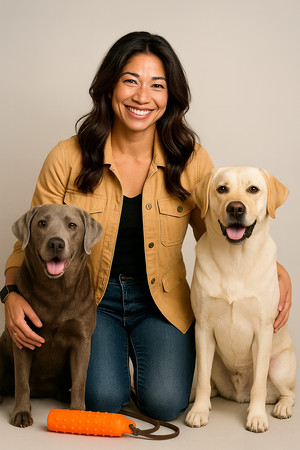
With a B.S. in Psychology and an M.A. in Forensic Psychology, plus nearly 30 years of working with children and families through the hardest parts of their lives, I built K9 Hearts because I knew there needed to be something for the person who is not ready to talk yet but still needs somewhere to land.
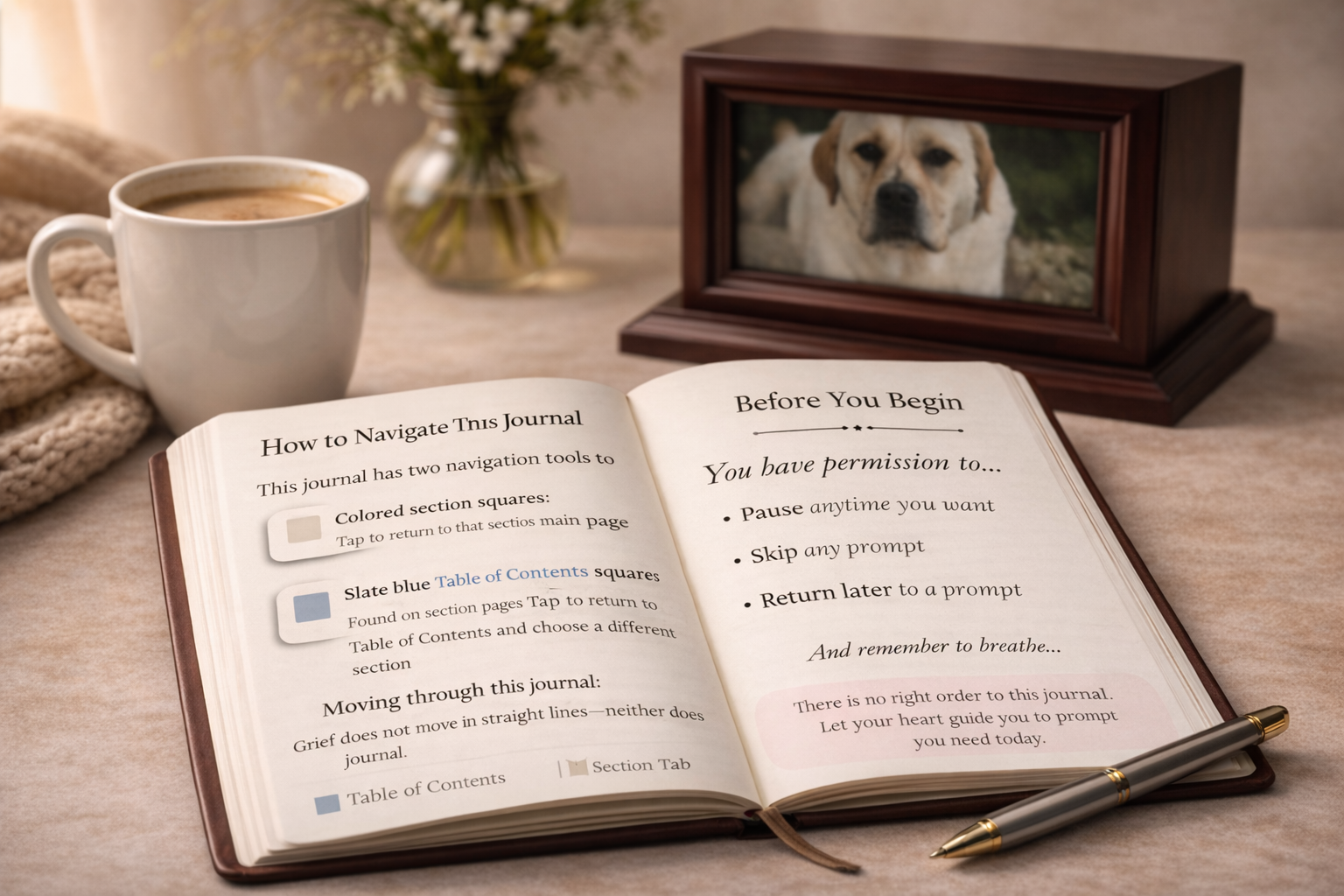
Charlie's Guided Journal was written for that moment. It gives you a structured, private space to move through your grief at your own pace — no group, no speaking out loud, no having to be ready for anything other than picking up a pen. It follows Worden's Four Tasks of Mourning, which means it is not just a blank journal. It is a gentle framework for actually moving through the grief, not just sitting in it.
If you are grieving the dog you lost while also trying to care for the one still beside you, Charlie's Last Walk was written to sit with you in both.
If you want to understand the story behind K9 Hearts — and behind Charlie Brown, the yellow Lab who made all of this necessary — Charlie's Last Walk is where that story lives.
A Book That Walks Beside You
If you are looking for something to read while you work up to a group — or simply because reading is how you process — And I Love You Still: A Thoughtful Guide and Remembrance Journal for Healing the Loss of a Pet by Dr. Julianne Corbin, Ph.D., is one of the most compassionate books available on this subject. Dr. Corbin is a psychologist with more than twenty years of clinical experience in companion animal loss. Her book directly addresses the experience of feeling unseen and misunderstood in your grief and includes reflective journal prompts to help you begin moving through it.
You Belong Somewhere That Understands
Research on social support and grief consistently shows that people who find connection — whether through peer groups, professional support, or structured self-guided tools — experience better outcomes in grief than those who try to carry it alone (Guérin & Tobin, 2022). That is not a judgment on anyone who has been carrying it alone. It is an invitation.
The K9 Hearts Pet Loss Support and Grief Resources page was built as a home base for exactly this kind of search. If you are not sure where to start, start there. Everything is in one place, and nothing requires you to be ready for more than you are.
You looked for support today. That matters. That is the first step.
Where losing your best friend is understood.
Frequently Asked Questions About Finding Pet Loss Support Groups
Are there free support groups specifically for people who have lost a dog?
Yes. Several organizations offer free pet-specific support groups, including the Association for Pet Loss and Bereavement (APLB), which runs free online chat rooms and weekly video groups staffed by trained volunteers. Lap of Love also offers free virtual listen-and-learn grief support sessions on a weekly schedule. Both are available to anyone, regardless of location.
What is the difference between a pet loss support group and a grief hotline?
A support group is an ongoing community — a space where you can share your story, hear from others who understand, and return as often as you need. A grief hotline connects you with a trained individual for immediate one-on-one support, usually by phone. Both are valuable, and many people use both at different points in their grief. Hotlines are particularly helpful in the acute early days of loss when you need to hear a voice right away.
Can I see a therapist for pet loss grief, and will insurance cover it?
Yes. Pet bereavement is a recognized area of clinical practice, and grief and loss therapists use evidence-based therapeutic models — including cognitive behavioral therapy and psychoeducation — that apply directly to pet loss (Kelly & Cozzolino, 2014). You do not need a therapist who specifically lists pet loss as a specialty. Search for grief and loss on the Psychology Today therapist directory, or look into online therapy platforms like Talkspace, which accept most major insurance plans. Always verify your specific coverage before booking.
What if I am not ready to join a group or talk to anyone?
That is completely valid. Not everyone is ready for a group, especially in the early days of grief. A structured grief journal — like Charlie's Guided Journal from K9 Hearts — can serve as a private, self-paced alternative that gives you somewhere to put your grief without requiring you to speak it out loud to others. Many people use a journal as a first step before they feel ready to seek connection.
Can I find pet loss support groups on social media?
Yes. Facebook has several active, compassionate communities for pet loss grief, including the official Association for Pet Loss and Bereavement group and Grieving My Pet — A Pet Loss Support Community. Reddit's r/Petloss community is also widely used, particularly by people who prefer to read and process before they post.
Are there pet loss support resources specifically for people in Washington State?
Yes. The Seattle Animal Shelter runs a weekly pet loss support group every Thursday evening via phone or Webex, open to anyone. TAGS — The Animal Grief Support Group — is based in Vancouver, WA and offers in-person community support. The K9 Hearts Resources page also includes additional Pacific Northwest options.
Is it normal to still need support weeks or months after losing a dog?
Completely normal, and supported by research. Peer-reviewed studies have documented that pet loss grief can last from several months to several years depending on the depth of the bond (Testoni et al., 2017). There is no timeline that makes your grief overdue. Seeking support at any stage — whether in the first days or the first year — is always appropriate.
How do I know if I need professional help rather than a peer support group?
If your grief is significantly affecting your ability to function — sleep, eat, work, care for yourself or others — over an extended period of time, it may be time to speak with a licensed mental health professional. Peer support groups are a wonderful resource for connection and validation, but they are not a substitute for professional care when grief becomes prolonged or complicated. The K9 Hearts Resources page includes guidance on finding professional pet loss support as well.
K9 Hearts does not provide clinical mental health services. If you are experiencing grief that significantly impacts your daily functioning, please reach out to a licensed mental health professional. If you are in crisis, call or text 988. K9 Hearts updates their Resources page for additional resources at https://www.k9hearts.com/pet-loss-and-grief-support.
References
Guérin, E., & Tobin, R. (2022). Research in social support and grief: Implications for understanding and treatment. In Handbook of Grief Therapies (pp. 173–185). SAGE Publications. https://doi.org/10.4135/9781071873199.n15
Kelly, M. A., & Cozzolino, C. A. (2014). A therapist's guide to treating grief after the loss of a pet: A three-tier model. Human-Animal Interaction Bulletin, 2(2), 25–38. https://doi.org/10.1079/hai.2014.0007
Packman, W., Carmack, B. J., Katz, R., Carlos, F., Field, N. P., & Landers, C. (2014). Online survey as empathic bridging for the disenfranchised grief of pet loss. OMEGA — Journal of Death and Dying, 69(4), 333–356. https://doi.org/10.2190/OM.69.4.a
Sharkin, B. S., & Knox, D. (2003). Pet loss: Issues and implications for the psychologist. Professional Psychology: Research and Practice, 34(4), 414–421. https://doi.org/10.1037/0735-7028.34.4.414
Testoni, I., Ronconi, L., Palazzo, L., Galgani, M., de Cataldo, L., & Zamperini, A. (2017). The broken bond: Looking into the effects of the death of a pet for grief, attachment style and well-being. Anthrozoös, 30(4), 631–643. https://doi.org/10.1080/08927936.2017.1370225
Whipple, E. E. (2021). The human–animal bond and grief and loss: Implications for social work practice. Families in Society: The Journal of Contemporary Social Services, 102(3), 310–321. https://doi.org/10.1177/10443894211015132