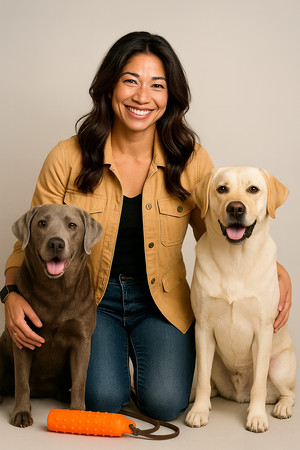

Is It Normal to Feel Guilty After Losing a Dog?
Yes. And the guilt is not evidence that you did something wrong.
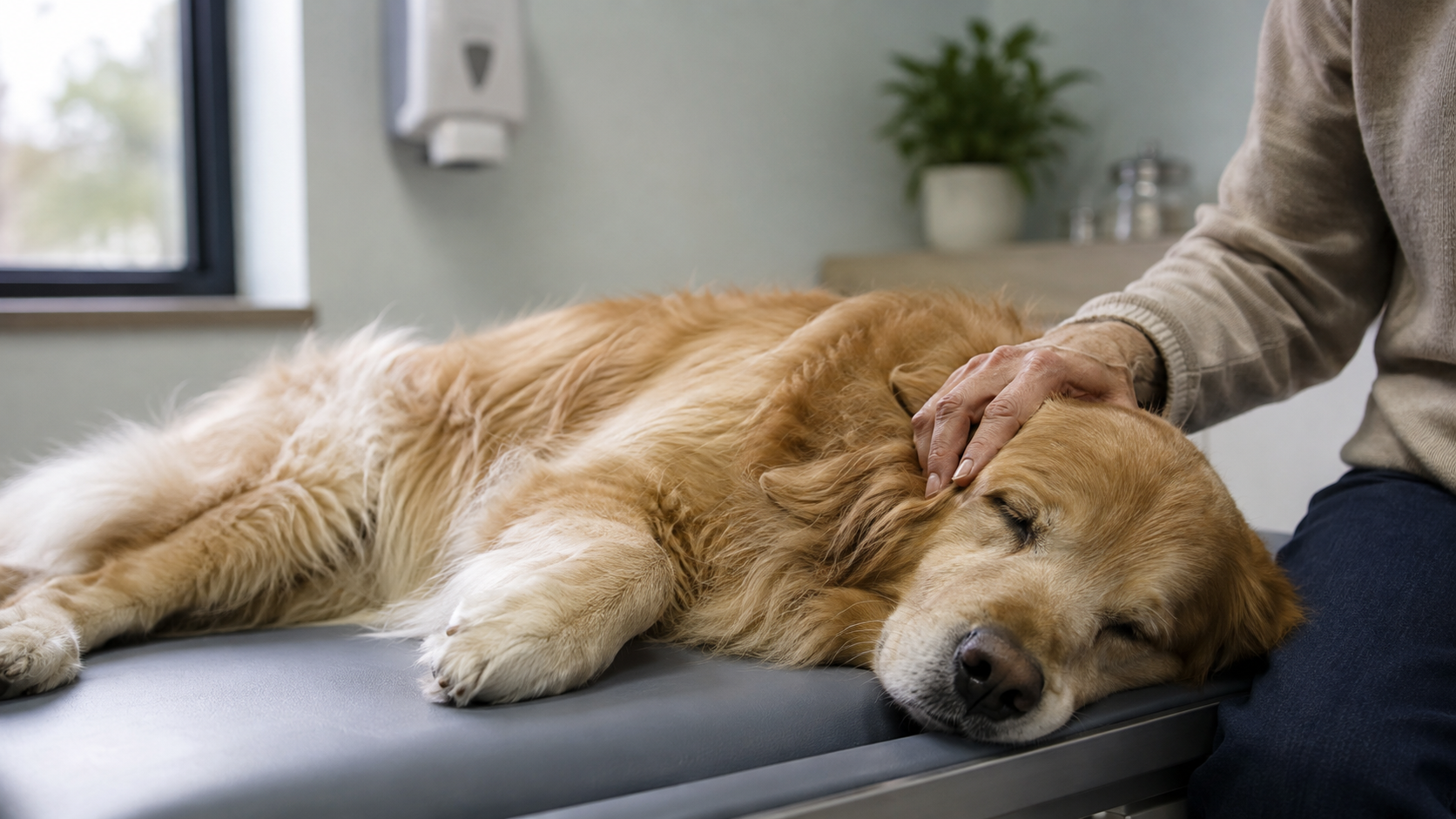
If you had asked me in the weeks after Charlie died whether I felt guilty, I am not sure I would have said yes. Guilt sounded like a word for people who had done something wrong. I had done everything I could, for seventeen months.
And still, the should-have, could-have loop ran over and over in my head. The questions kept coming.
Something I did? Something I didn't do? Something I should have done? Something I could have done?
So here is the direct answer, before you scroll any further.
Yes, it is normal to feel guilty after losing a dog. It is one of the most common experiences grieving dog families describe, and it shows up whether you chose euthanasia, whether the death was sudden, whether your dog was sick for years, or whether nothing at all was in your control. The guilt is not a verdict on your decisions. It is what love does when it cannot accept that it had no control.
That distinction matters, because most people try to solve guilt by proving to themselves that they did the right thing. I tried that. It did not work for me, and this article will explain why.
Key Takeaways
Guilt after losing a dog is common, and it often coexists with knowing you made the right decision.
Research finds that owners who chose euthanasia report less guilt than owners whose pets died without that decision.
The strongest driver of guilt is not what you chose. It is how alone and unsupported you felt while choosing.
Guilt runs on "if only" thinking, which is a loop, not a question. Loops do not have answers.
You do not get rid of the guilt by winning the argument. It quiets when you stop blocking the grief underneath it and let that grief take its own time.
Where the Guilt Actually Starts
For me it did not start the day Charlie died. It started in an exam room.
Charlie was three years old. We attempted surgery for what we thought was a simple CCL tear, and were told it was bone cancer. Then another doctor said it was not osteochondritis dissecans, or OCD, which is a bone and joint disorder and has nothing to do with the mental health condition that shares those letters. He said it was Lyme disease. Then we found the vet we trusted most, and he gave us the real diagnosis, which was OCD.
Several months later I learned Charlie also had hip dysplasia, elbow dysplasia, and likely problems with his spine. By the time those additional diagnoses came, I had already learned how to hold two opposite things at once, which is hope and dread, and how to keep functioning while holding them.
Then we were sitting with the orthopedic specialist and he started talking about quality of life. He said I needed to be thinking about quality of life.
That was the moment. Not because anyone said the word goodbye, but because I finally understood what all of his diagnoses added up to. Every one of them would eventually end his life, which meant we were closer to the end of it than the beginning. The guilt arrived right behind that, and it never really left.
Underneath it ran a second guilt, and this one is the guilt nobody writes about.
Money.
I had to get Charlie everything he needed. Every consult, every scan, every treatment on the list. I researched every viable plan. I did not skip anything I could reach. And after he died, I still carried the feeling that I did not have enough. Not that I did not do enough. That I did not have enough.
If you are reading this and your guilt has a dollar sign attached to it, you are not alone and you are not shallow for it. Loving a dog through a serious illness costs money, and the people who love their dogs the most are often the ones who lie awake doing math.
Here is what I want you to notice about all of it. Every one of those guilts was illogical, and I knew it at the time.
I could sit down, set the feeling aside, and walk through the facts. I researched everything. I gave him every opportunity I could find. Even the small ones held up under examination. Did I let him walk too much? He set his own pace. I let him set his own pace.
The logic was airtight. The guilt did not care.
That is the part that made me feel like something was wrong with me, and it is the part I most want you to hear. Guilt that survives your own best reasoning is not a sign that you are irrational or that you are hiding something from yourself. It is how this particular feeling works.
What the Research Actually Says
I spent nearly thirty years working with children and families through crisis and loss before any of this was mine. I knew the frameworks. When it was my own dog, none of them reached me. So afterward I went looking at what the research says about grief and guilt in pet loss specifically, and four findings changed how I understand my own loop.
Guilt and "I made the right call" live in in your thoughts at the same time.
A 2018 study published in Bereavement Care analyzed how bereaved companion animal owners described their euthanasia decisions. Most respondents believed they had made the right decision, and they were still experiencing extremely high levels of grief. About 22 percent described the decision as appropriate and reported guilt or ambivalence alongside it. Roughly 6 percent expressed guilt on its own.
Read that again. People who believed they chose correctly still felt guilty.
Guilt is not the mind's way of telling you that you were wrong.
People who made the decision carry less guilt than people who never got one to make.
This is the finding that surprised me most. A 2025 study in the Journal of Veterinary Behavior surveyed 123 bereaved pet owners using the Pet Bereavement Questionnaire. Owners whose pets were euthanized reported lower levels of guilt than owners whose pets died without euthanasia.
If you chose, you probably assume you carry more guilt than the people who did not have to choose. The research says the opposite. And if your dog died suddenly with no decision available to you, this explains something you may have been unable to name, which is why the absence of a choice did not spare you.
The guilt tracks support, not decisions.
The same 2025 study found that grief intensity rose when owners felt excluded from the decision by their veterinarian and when they regretted the timing. Guilt was lower when owners felt the veterinary team responded to their emotional needs.
The strongest predictor was not what happened. It was whether anyone was standing with you while it happened.
"If only" is a loop, not a question.
Robert Neimeyer and colleagues, writing in Death Studies, describe how repetitive "if only" thinking sustains suffering after a loss and gets in the way of making any meaning from it. They identify four directions this thinking points: at yourself, at the one who died, at other people, and at the circumstances.
Related research followed bereaved people over time and found that thoughts about how your own actions or inactions might have prevented a death predicted more severe grief and depression later on.
Notice what that says. The problem is not that you have not yet found the right answer to "should I have done something differently." The problem is that the question keeps running.
“The Should-Have, Could-Have” Loop
Here is how I think about it now.
Guilt after losing a dog is not an accusation. It is an attempt to find a version of the story where you had control, because a story where you had control is easier to live in than a story where you did not.
If I could find the thing I did wrong, then the loss becomes something I caused. And something I caused is something that, in some other version of the world, I could have prevented. That feels unbearable, but it feels less unbearable than the truth, which is that I could not have prevented it at all.
I call it the Should-Have, Could-Have Loop, because that is exactly what it sounded like in my head. “I Should have... I Could have…. “ questions replay over and over in my head, with no apparent exit or reason to stop.
The loop is powered by love for our heart dog or our soul dog. That is the whole thing. You do not run this loop about a stranger. You run the loop about the one you would have traded places with.
Which is why arguing with it fails. When you present evidence to the loop, you are treating it like a question. It is not a question. It is love with nowhere to go, still trying to protect you and your dog that you can no longer reach.
What Changes When You Stop Arguing
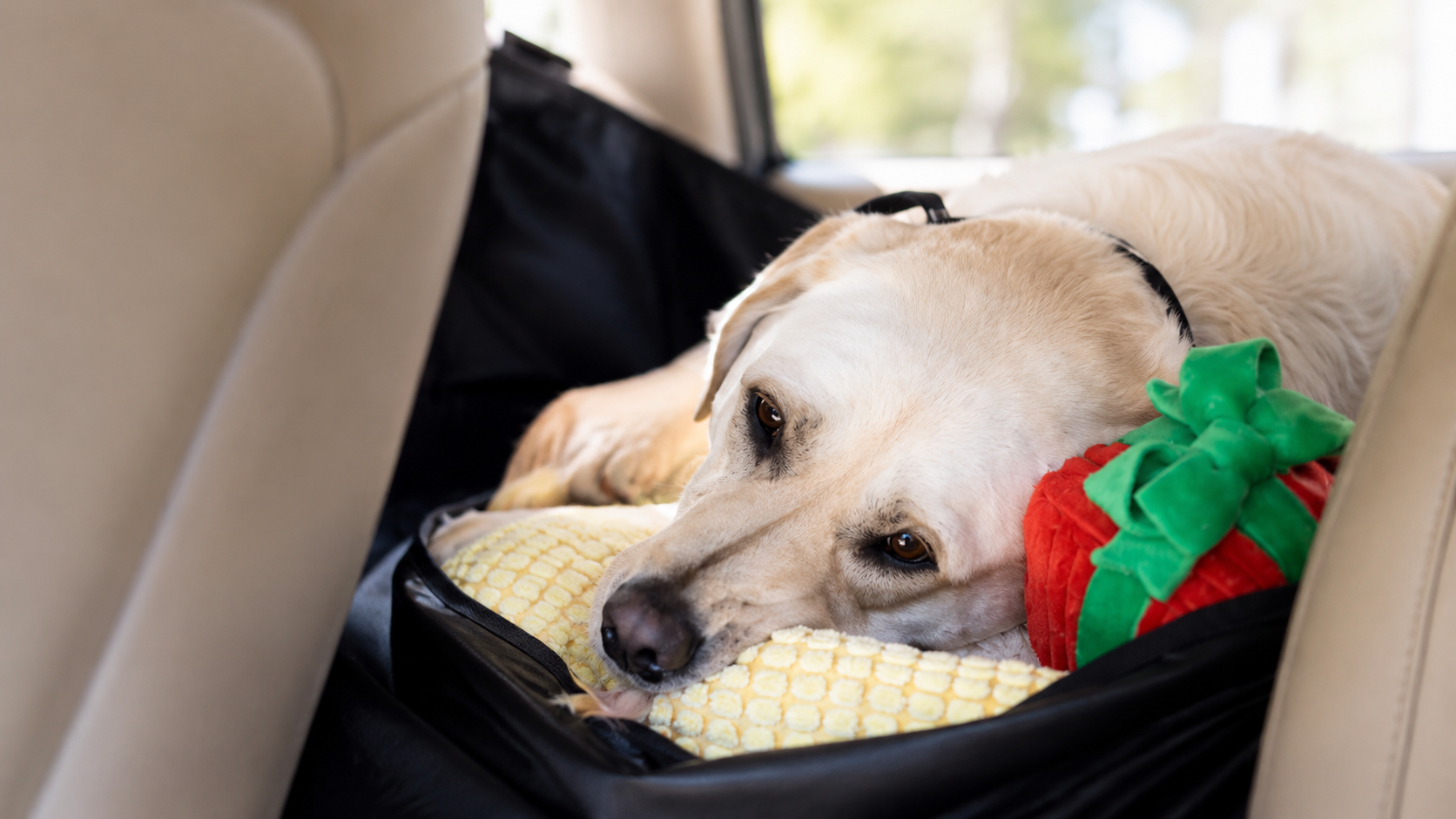
I stopped trying to win my own arguments. I was exhausted from the arguments in my head.
That sounds like giving up and it is the opposite. What I gave up was the idea that if I reviewed the seventeen months one more time, I would finally land somewhere that felt settled. I had reviewed them hundreds of times. The verdict was always the same and the guilt was always still there in the morning.
What changed was that I stopped treating the guilt as information about my failures and started treating it as information about my love. Same feeling. Completely different meaning.
But the thing that actually made the guilt quieter was not something I figured out about Charlie's care. It was the grief itself.
For a long time I was managing the grief instead of letting myself grieve. When I finally let the feelings come, I could look at each one and name it for what it was. Sadness. Longing. Fear. Missing him. None of these feelings were evidence that I had done something wrong. Not even one. Acknowledging these feelings, is when the real grief started. But it is also the path the start moving through the grief and loss path. This path is not about forgetting your dog, its about giving them a place to live permanently in your memories.
And I let the grief take the all time I needed, on my timeline instead of anyone else's. Nobody gets to hand you a calendar for this.
That is when the guilt began to subside. Not because I resolved it, and not because I finally won the argument. Because I stopped standing between myself and the grief underneath it.
The guilt was never the real thing. The guilt kept me from the grief I needed to feel.
Some things that helped me along the way, in case any of them fit you.
Naming the loop out loud. Saying "this is the loop again" creates half a second of space between you and it. That half second is more than it sounds like.
Writing it down instead of thinking it. A thought can circle forever. A sentence on paper sits still and lets you look at it. This is why so much of what I make at K9 Hearts is a guided journal rather than a set of instructions. The loop loses power when it has to hold still.
Answering the money guilt with facts, once. Write down what you actually did. Every consult, every treatment, every option you researched. Not to argue with the guilt. To have the record. And if your dog is still here and money is what's standing in the way, we keep a list of financial assistance programs and clinical trials that cover treatment costs. Nobody should have to choose between their dog and their finances.
Letting the guilt and the love be the same size. They usually are. When the guilt gets loud, it is worth asking what would have to have been true for you to feel nothing.
Doing something the your love for your dog can actually do. This is the part that surprised me. Guilt is stuck energy from love with no destination. Giving it a destination helps. Memorializing your dog is not about closing anything. It gives the love somewhere to go besides the loop.
Telling one person the specific thing that you don’t want to acknowledge. Not "I feel guilty." The actual sentence. The one statement you have not said out loud because you are afraid of how it sounds to yourself or to others. Guilt gets quieter in company and louder in secret. That person can be a therapist, your best friend, or even another pet.
What I Want You to Know
The feeling that showed up in that parking lot was not a warning. It was not some instinct telling me I was failing Charlie. It was how much I loved him, with nowhere to put it.
You are not going to talk yourself out of this. I tried for a long time. You have probably already tried too, sitting up at 2:00 am going back over the facts one more time. The facts are on your side. They have been the whole time. It does not matter, because guilt does not answer to facts.
The guilt is not there because you fell short. It is there because you would have done anything, and there was nothing left to do.
Your dog never once judged how you handled it. He was busy loving you.
So let yourself grieve. Let the feelings come and call them what they are. Take as long as it takes, on your timeline and nobody else's. That is what finally quieted mine.
The size of your guilt is the evidence of how much you love your dog. And letting yourself grieve is how that love keeps going.
Looking Back From 2026
Charlie died in June of 2022. I have had four years to think about the last six months of his life, and this is what I would tell the woman standing in that parking lot.
First, I would tell her what she actually said in the seconds after she heard the words quality of life, which was “Oh my God. What? NO!” And then nothing at all, because she went numb for days. I do not think that was weakness. I think that was her brain protecting her, because life did not stop so she could absorb it. There was still a dog to take care of, a house to clean, dinner to cook, chores to finish, and commitments to keep.
I have a degrees in psychology. I have sat with families through this exact conversation. None of it helped me, and I would say it got in the way, because I understood right away where those words were pointing and there was nothing I could do with that understanding.
So I did the only thing that felt like doing something. I went down the rabbit hole. Every alternative treatment. Every medication. Every study I could find. There had to be something out there that would stop the thing I did not want to happen, which was Charlie's death.
Ask the questions out loud:
What is the best plan to give Charlie the best quality of life for the time he has left?
Are there other treatments, even ones I probably cannot afford?
Am I giving the medications correctly, and is there anything else that might help him even a little?
The second one is the question that would have saved me the most. If I had asked out loud whether there were treatments beyond what I could afford, and heard the answer, then later, when the money guilt came, I would have had something solid to hold against it. Not a feeling. A fact.
Instead I carried a question I never asked, and an unasked question will take whatever shape your guilt gives it.
Do not go alone. Find someone to go with you, or even to be on the phone during those hard and emotional vet appointments.
I go to my aunt's vet appointments with her dog Cheyenne. Our anticipatory grief page is dedicated to him, and it exists because of what she is walking through right now. Most of the time I am on the phone rather than in the room, and it still counts. She has told me it helps to have someone there, because when she cannot remember exactly what the vet said, I can. I take the notes. I am the witness. She has told me it means something to her. And I, as her support and witness, feel truly honored and grateful that she lets me apart of of what she is going through.
I do it because I do not want her to be alone in it. I remember every feeling I had with Charlie.
I want to be honest that this is the one piece of advice here I cannot hand you a study for. There is research showing that guilt runs lower when owners feel their veterinary team responded to their emotional needs. I have not found anything testing whether bringing your own person to the appointment helps you afterward. I believe it does. That belief comes from my life and not from a journal, and you should weigh that advice in that way.
That is really how any of this gets passed along. We learn something from the people and the dogs who move through our lives, and we offer it forward as a suggestion rather than as instruction. My circumstances are not your circumstances. Take what fits and leave the rest.
What surprised me while writing this.
I did not read any of this research until I sat down to write this article for you. I thought I was describing something private and a little embarrassing, a brain that would not stop running the same loop.
Most of it has been studied for decades.
The thought I repeated about my uncle, who passed away in 2025, that “at least he would not be in pain much longer,” has a name. Researchers call it a downward counterfactual, and they have found that imagining how something could have been worse offers comfort and relief. The plan I made for each of his days lines up with what researchers call the functional theory of counterfactual thinking, which holds that this kind of thinking helps most when it points toward something you can actually do. And the loop I ran about Charlie was the same machinery pointed the other direction.
I want to be careful not to oversell that. One study of bereaved people found that both the "if only" thoughts and the "at least" thoughts were tied to lasting distress. The "at least" thought did not shorten my grief for my uncle. It got me through the day in front of me. That is a smaller claim and a truer one.
So here is the term, and the definition, because I think you deserve to know that what is happening in your head has been named.
Counterfactual thinking is the mind comparing what happened to what might have happened instead. Robert Neimeyer and his colleagues, writing in Death Studies, describe what it looks like when grief turns circular, with the bereaved person endlessly and uselessly trying to undo a loss that cannot be undone. They found that this process keeps the suffering running and blocks the work of making meaning out of what happened. They identify four places the "if only" tends to point: at yourself, at the one who died, at other people, and at the circumstances of the death. Related commentary on this research notes that regret over specific decisions, however painful, is not by itself a sign of complicated or prolonged grief. If you have been doing this, you are not broken and you are not sick. You are doing something so common that it has a name and decades of research behind it.
If I could hand you one thing from everything I have learned in hindsight, here in 2026, about who I was in the months before June 10, 2022: ask your questions out loud. Bring someone who will remember the answers and be your support. Then tell yourself it is okay to grieve for as long as it takes, without the should-have, could-have loop running underneath it. Recognize that loop for what it is, which is interference. It gets in the way of feeling your actual grief. I could not save Charlie, but I know I gave him the best life. I could have saved myself some of what came after, and that is the part I can hand to you.
Frequently Asked Questions
Is it normal to feel guilty after putting a dog to sleep?
Yes. It is one of the most common experiences after euthanasia, and it does not indicate you chose wrong. Research finds most owners believe they made the right decision and still carry guilt. In one 2025 study, owners who chose euthanasia actually reported lower guilt than owners whose pets died without that decision.
Why do I feel guilty when my dog died of natural causes?
Because guilt does not require a decision. It searches for anything you might have controlled: a symptom you did not catch, a vet visit you delayed, a walk you allowed. Guilt after a natural death is often harder precisely because there is no decision to examine, so the search never lands anywhere.
How do I stop feeling guilty about my dog's death?
You likely will not argue your way out, because guilt survives good reasoning. What helps is letting the grief underneath it actually happen. Name the feelings as they come, write them down instead of circling them, tell one person the sentence you have not said out loud, and let it take as long as it takes.
Is it normal to feel guilty about money spent on my dog's care?
Yes, and it is more common than people admit. Owners who researched every option and spent everything they had still report feeling they did not have enough. Financial guilt is rarely about your actual choices. It is grief attaching itself to the one variable that felt like it should have been controllable.
When should I get help for guilt after losing a dog?
If the guilt is not easing over months, if it is keeping you from sleeping, eating, or working, or if it has turned into thoughts that you deserve to suffer, that is worth bringing to a licensed therapist or a pet loss counselor. Persistent, punishing guilt responds well to support and rarely resolves on its own.
How long does pet grief last?
There is no set timeline. Research on pet bereavement finds that the intensity and length of grief track the strength of your bond, not how long you owned your dog. Months is normal. A year or more is normal. And since letting the grief take its own time is what finally quiets the guilt, these two questions are really one question. I wrote a full article on it here: How Long Does Pet Grief Last?
Keep Reading:
Charlie's Story: Why Losing a Heart Dog Is So Hard — the full account of the seventeen months, and the book that came out of them.
How to Memorialize Your Dog — practical, unhurried ways to give the love somewhere to go.
The Heart Dog Journal: A Guided Journal for Pet Loss — written for the loop, with prompts that hold the guilt without feeding it.
Anticipatory Grief — for anyone still in it, loving a dog they already know they are losing.
Pet Loss Support and Grief Resources — free articles, guides, and tools.
About the Author
Paige Cummings is the founder of K9 Hearts and the author of Why Losing a Heart Dog Is So Hard: A Story About Love, Guilt, and Saying Goodbye and the The Heart Dog Journal: A Guided Journal for Pet Loss. She holds a B.S. in Psychology and an M.A. in Forensic Psychology, and spent nearly thirty years working with children and families through crisis, trauma, and loss. She lost Charlie, her yellow Labrador, on June 10, 2022, after a seventeen-month illness, and learned that none of her professional training reached her when the grief was her own. K9 Hearts is based in Port Orchard, Washington, and supports grieving dog families everywhere online.
Sources cited:
Bereavement Care, 2018. Qualitative exploration of the euthanasia decision-making process among bereaved companion animal owners.
Journal of Veterinary Behavior, 2025, vol. 79, pp. 60–67. Euthanasia and prolonged grief: a cross-sectional study with bereaved pet owners (123 participants).
Neimeyer, Pitcho-Prelorentzos, and Mahat-Shamir. "If only…": Counterfactual thinking in bereavement. Death Studies.
Longitudinal research on upward and downward counterfactual thought after loss, linking self-referent "if only" thinking to prolonged grief and depression.