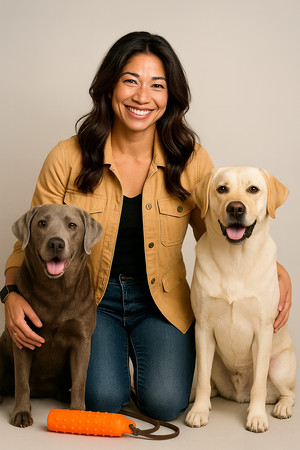
Why Does Pet Loss Feel Harder Than Human Loss?
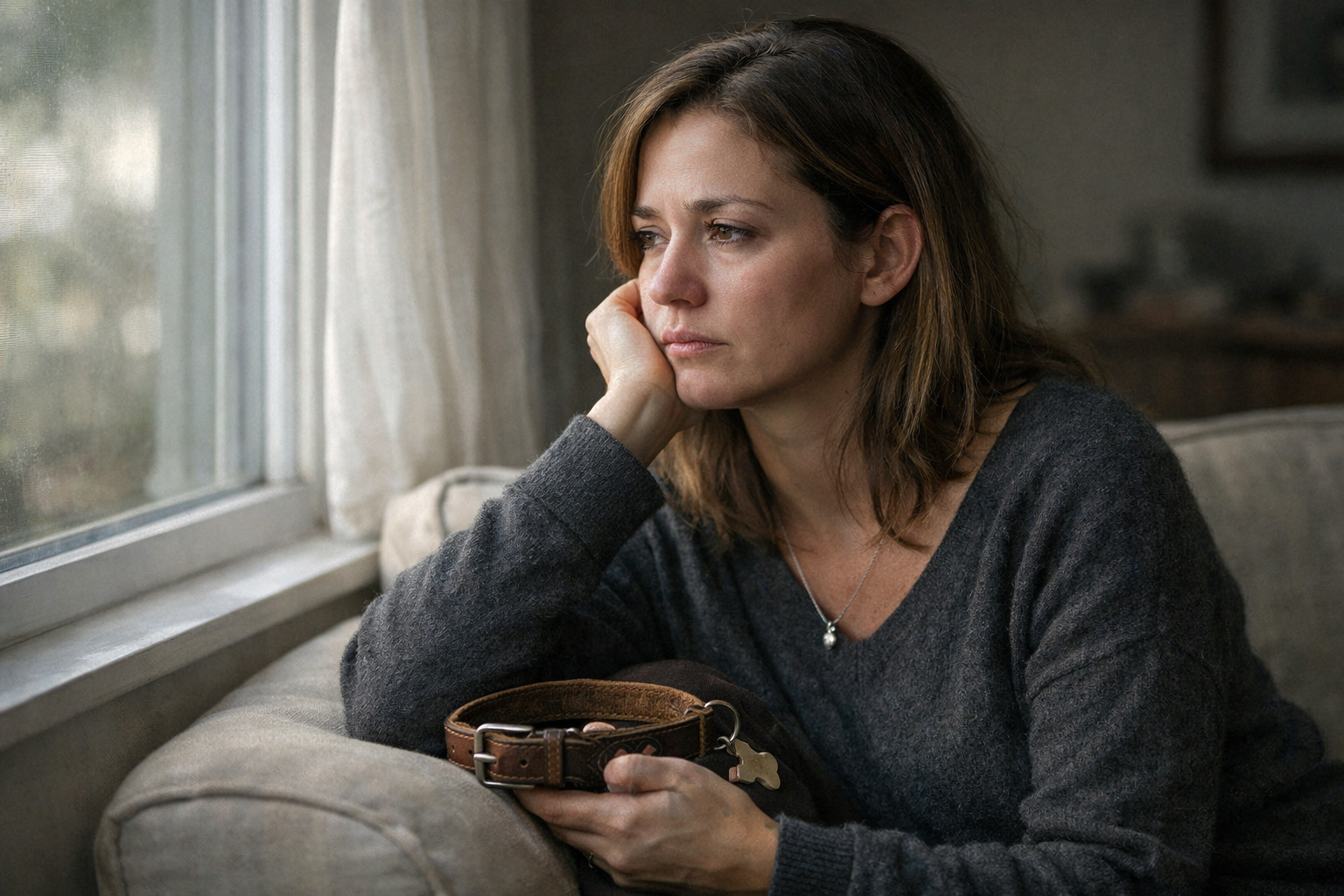
Losing a dog can feel just as devastating as losing a person — and research confirms that is not an overreaction. The grief is real, the intensity is documented, and the silence that surrounds it is what makes it harder to carry. At K9 Hearts, we believe pet grief deserves the same witness and support as any other loss — and that understanding starts here.
As an Amazon Associate, I earn from qualifying purchases. This helps support K9 Hearts' mission to provide grief support resources for those who have lost their beloved dogs.
If you have ever lost a dog and found yourself thinking — why does this feel as hard as losing a person, maybe harder — you are not alone. And you are not wrong.
You may have said it out loud and watched someone's expression shift. Maybe they meant well. Maybe they said something like "at least it wasn't a person" or "you can always get another dog." And instead of feeling comforted, you felt something worse — ashamed of your own grief. Like it was too much. Like you were too much.
That feeling has a name. And the research behind it is exactly why K9 Hearts exists.
What the science actually says
You loved your dog the way you love family. You structured your days around them. You talked to them. You knew their sounds, their moods, the specific weight of them against you on the couch. And when they died, the grief that arrived was not a small thing. It was the same hollow, disorienting weight you have felt — or watched others feel — after losing a person.
And yet someone, somewhere, probably said something that made you feel like it should not be.
Here is what the research actually says about that.
In 2019, researchers Lavorgna and Hutton published a peer-reviewed study in Death Studies that directly compared grief severity between people who had lost a pet and people who had lost a human loved one. Their finding was unambiguous: there was no significant difference in overall grief intensity between the two groups. What predicted how hard someone grieved was not whether they lost a person or a pet — it was how close they were to who they lost.
When the bond was deep, the grief was deep. Full stop.
A 2025 systematic review by Hughes and Lewis Harkin, published in the OMEGA Journal of Death and Dying, confirmed this further. Reviewing studies on pet loss grief across the literature, they found that pet owners can experience grief equal in intensity to the grief felt after losing a human family member. The same waves of sadness. The same disorientation. The same ache of reaching for someone who is no longer there.
Your grief is not an overreaction. It is a proportionate response to a real and significant loss. Science says so.
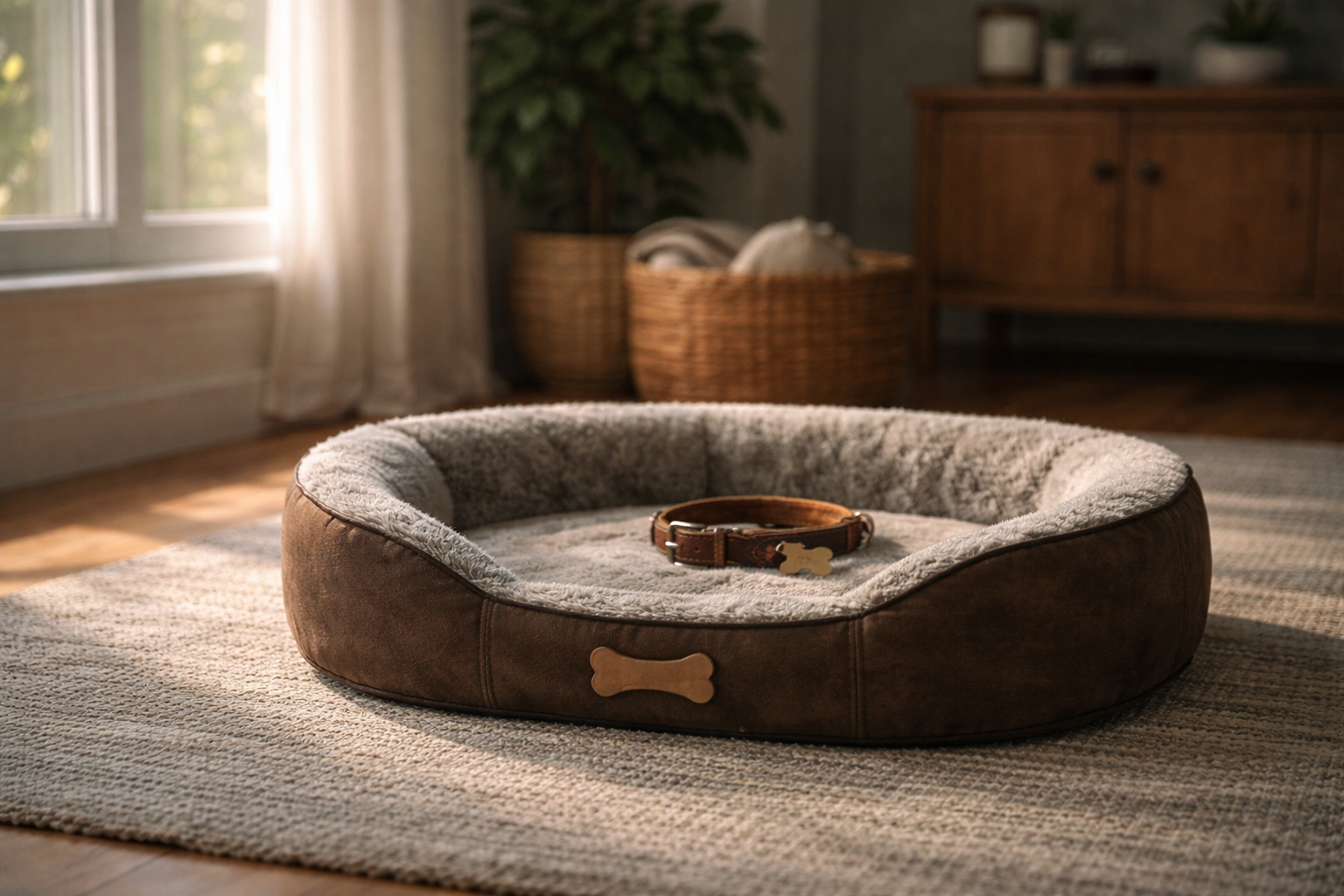
So why does it sometimes feel even harder?
If the grief is equal in intensity, why do so many people describe pet loss as feeling somehow worse — more isolating, more shameful, harder to move through?
The answer is not in the grief itself. It is in what surrounds it.
When a person dies, the world tends to rally. There are rituals — funerals, memorials, obituaries. There is bereavement leave. There are casseroles and cards and people checking in for weeks. There is a shared cultural language for that kind of loss.
When a dog dies, you are often expected back at work the next day.
Researchers call this disenfranchised grief — a term first defined by psychologist Kenneth Doka in 1989 to describe grief that is not openly acknowledged, publicly mourned, or socially supported. Pet loss is one of the most commonly cited examples in the literature. It is grief that exists in full — felt completely, carried heavily — but not given the social scaffolding that helps people heal.
Lavorgna and Hutton's research found that bereaved pet owners reported significantly less empathy from the people around them compared to those grieving a human loss. That gap in support does not make the grief smaller. It makes it harder to process. It makes it lonelier. And according to a separate study by Lavorgna and Hutton published in Anthrozoös, disenfranchised grief does not just intensify the pain in the moment — it actively inhibits healing over time.
The grief is real. The silence around it makes it worse.
The shame that gets added on top
Maybe you stopped talking about your dog after a week or two — not because the grief eased, but because you could feel the air change when you brought it up. Maybe you started apologizing for still crying. Maybe you told yourself you should be over this by now, or wondered what was wrong with you for not being able to move on.
That is not weakness. That is what happens when grief goes unwitnessed for too long.
Hughes and Lewis Harkin's 2025 review identified a pattern they called double disenfranchisement. It describes exactly what you may have experienced: not only does the world minimize your grief, but eventually you begin to minimize it yourself. You take on the world's dismissal as your own. You grieve in silence. You carry shame on top of sorrow.
That shame is not a reflection of who you are. It is a reflection of a cultural gap — one that the K9 Hearts mission exists to close that gap.
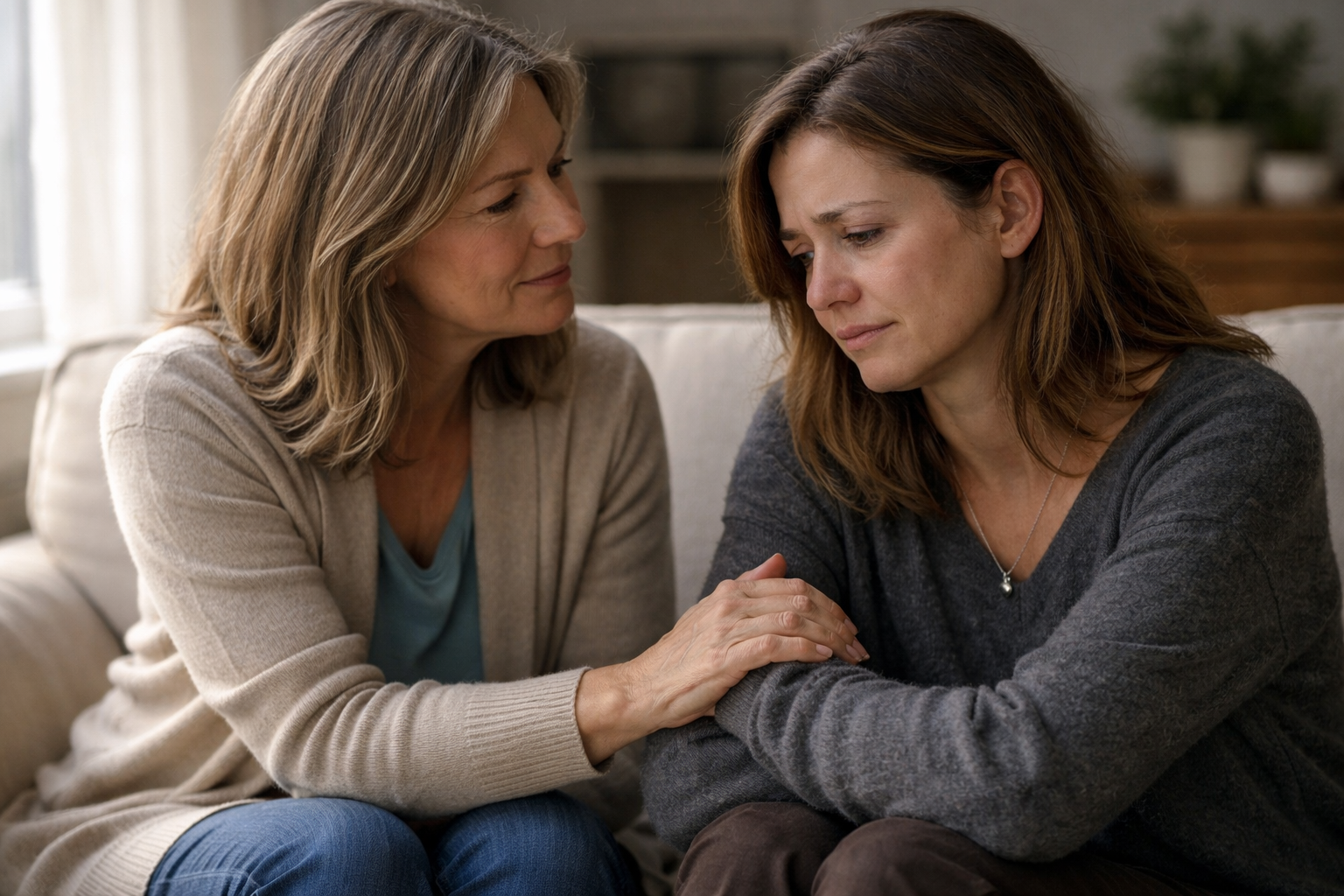
What re-enfranchisement means — and why it matters for healing
Think about the first time someone responded to your grief the way it deserved to be responded to. Maybe it was a friend who did not change the subject. A stranger online who said "I understand exactly what you mean." A book that described your loss so accurately it made you cry — not from sadness, but from relief. From finally feeling seen.
That moment — when grief that has been dismissed is finally given back its legitimacy — has a name in the research.
In 2012, researcher Michelle Cordaro used the term re-enfranchisement in the Journal of Mental Health Counseling to describe the active process of returning social recognition and legitimacy to grief that has been dismissed. It is what happens when someone or something steps into the silence and says: this loss is real, this grief is legitimate, and you are allowed to feel it fully.
Re-enfranchisement is not just emotionally meaningful. It is clinically significant. The research shows that when grieving people receive genuine social support and validation, grief outcomes improve. The intensity eases. The isolation lifts. Healing becomes more possible.
This is one of the reasons K9 Hearts exists — not just to offer products and resources to those who are grieving, but to shift the cultural conversation around pet loss grief at every level. Through blog posts read by people who have never lost a dog. Through social media that gives language to an experience people have not had words for. Through the End of Paw Prints movement, which creates shared ritual and recognition for a loss that has too long gone without ceremony.
When the people in your circle understand pet loss grief better — even if they have never experienced it themselves — they become better support. And when support improves, grief becomes less severe. That is not just a belief. It is what the research supports.
If you are reading this and you have not lost a dog, but someone you love has — this post is for you too. The most powerful thing you can offer is not a solution. It is acknowledgment. It is saying: I know this is real. I am not going anywhere. Take all the time you need.
What Charlie's story taught me about being witnessed
With a B.S. in Psychology and an M.A. in Forensic Psychology, plus nearly 30 years of working with children and families through the hardest parts of their lives, I understood disenfranchised grief long before I lived it.
And then Charlie died.
Charlie Brown was my Labrador — my constant, my anchor, my first thought in the morning and my last at night. He carried four diagnoses: OCD (osteochondritis dissecans), DJD (degenerative joint disease), HD (bilateral hip dysplasia), and ED (elbow dysplasia). I watched him decline with the same heartbreak I had witnessed in others, and thought I understood what was coming. I did not understand it at all — not until it was mine to carry.
What I needed in those weeks was not someone to fix it or explain it. I needed someone to witness it. To sit in the weight of it with me without rushing me toward okay.
I wrote Charlie's Last Walk because that book did not exist. And I built K9 Hearts because that witness — for every person who has ever loved a dog and been told their grief was too much — needed a permanent home.
Where losing your best friend is understood.

How to find support when the world does not offer it
If your grief is not being witnessed (or understood) by the people around you, there are places where it will be.
Charlie's Last Walk is not a self-help book. It is an honest account of grief — written from inside it, not above it. Reading it, many people describe feeling seen for the first time since their dog died.
Charlie's Guided Journal for Pet Loss was built alongside the memoir, structured around the same grief frameworks, with prompts that help you process what you are carrying at your own pace. Grief research consistently supports structured expressive writing as a tool for moving through loss — particularly when the grief has been disenfranchised and carried alone.
For some people, creating a physical ritual of remembrance is part of what makes grief feel witnessed. A solar memorial garden stone — placed in a quiet corner of your garden, glowing softly at dusk — offers a daily, gentle acknowledgment that your dog was here, and that their absence matters.
For those ready to create a permanent tribute, the End of Paw Prints Legacy Portrait — a K9 Hearts initiative — transforms a photograph of your dog into an AI-enhanced memorial portrait and places it in the EOP Legacy Gallery and Virtual Resting Place. It is a space where your dog's story lives on — witnessed, honored, and carried forward. The paw prints stop. The love never does.
And if you are not ready for any of that yet — if you are still in the early weight of it — the Grief Counseling and Grief Therapy Handbook offers evidence-based coping strategies written in accessible language, including how to find and build support when the people around you do not understand what you are going through.
Your grief is not too much. It never was.
If this post gave language to something you have been carrying alone, Charlie's Last Walk was written to sit with you in it. Not to fix it. To witness it.
Frequently Asked Questions:
Is it normal for pet loss to feel as bad as losing a person?
Yes — and research confirms it. A peer-reviewed study published in Death Studies found no significant difference in grief intensity between people who lost a pet and people who lost a human loved one. The strongest predictor of grief severity was emotional closeness to the deceased, not whether they were a person or an animal. If your bond with your dog was deep, your grief will be deep. That is not an overreaction. That is love.
Why does losing a dog sometimes feel even harder than losing a person?
The grief itself is not necessarily more intense — but the support surrounding it often is not equal. When a person dies, there are rituals, bereavement leave, and social acknowledgment. When a dog dies, many people are expected to return to normal within days. Researchers call this disenfranchised grief — grief that is real and fully felt, but not socially recognized or supported. That lack of support does not reduce the grief. It makes it harder to process and more isolating to carry.
What is disenfranchised grief and how does it relate to pet loss?
Disenfranchised grief is a term coined by psychologist Kenneth Doka to describe grief that is not openly acknowledged, publicly mourned, or socially supported. Pet loss is one of the most commonly cited examples. It means your grief exists in full — but the world around you does not always give it the language, ritual, or recognition that helps people heal. Research shows that disenfranchised grief not only intensifies pain in the moment, it can also slow the healing process over time.
Why do people say "it was just a dog" and how do I respond?
People who say this are usually not trying to be cruel — they simply have not experienced the kind of bond you had. They do not yet have language for a grief they have not lived. You do not need to defend your grief to anyone. What you need is to be around people who understand it. K9 Hearts exists because that understanding matters — and because the more people learn about the depth of the human-animal bond, the better they become at supporting those who are grieving it.
Does pet loss grief get better over time?
Yes — though not on a fixed timeline. What changes over time is not that the love disappears, but that the grief becomes something you carry differently. The acute weight of early loss eases for most people. What helps that process is having the grief witnessed, named, and supported — rather than minimized or rushed. Resources, community, ritual, and honest acknowledgment all play a role in how grief moves.
How can I help a friend who is grieving the loss of their dog?
The most powerful thing you can offer is acknowledgment. You do not need to have experienced pet loss yourself to support someone who has. Simply saying "I know this is real and I am here" matters more than any solution. Avoid comparisons to human loss or suggestions to get another dog. Show up the way you would for any significant grief — with patience, presence, and the willingness to let them talk about their dog as much as they need to.
What is the End of Paw Prints movement and how does it help with grief?
The End of Paw Prints — EOP — is a movement founded through K9 Hearts to create shared language, ritual, and recognition for the loss of a beloved dog. Inspired by the gravity of End of Watch traditions used to honor fallen first responders, EOP formally acknowledges that a dog's role in our lives is real, significant, and worthy of ceremony. It exists in part as a direct response to disenfranchised grief — offering the witness and ritual that the wider culture has not yet learned to provide. Learn more at the EOP Legacy Gallery and Virtual Resting Place at k9hearts.com/end-of-paw-prints-legacy-gallery.
References:
Lavorgna, B. F., & Hutton, V. E. (2019). Grief severity: A comparison between human and companion animal death. Death Studies, 43(8), 521–526. https://doi.org/10.1080/07481187.2018.1491485 [Peer-reviewed | Published in: Death Studies | Indexed on PubMed] Plain-language summary: Directly compared grief intensity between pet loss and human loss. Found no significant difference in overall grief severity. Emotional closeness — not species — was the strongest predictor of grief intensity. Also found that pet owners received significantly less social support and empathy than those grieving a human loss. Used in this blog as the primary research anchor for the claim that pet loss grief is equal in intensity to human loss grief.
Lavorgna, B. F., & Hutton, V. E. (2019). Pet loss: Understanding disenfranchised grief, memorial use, and posttraumatic growth. Anthrozoös, 32(4). https://doi.org/10.1080/08927936.2019.1621545 [Peer-reviewed | Published in: Anthrozoös | Indexed on Taylor & Francis] Plain-language summary: Investigated the relationship between disenfranchised grief, memorialization, and posttraumatic growth in 133 bereaved pet owners. Found that disenfranchised grief actively inhibits posttraumatic growth — meaning when grief goes socially unacknowledged, people not only suffer more in the moment but also have a harder time healing over time. Used in this blog to support the claim that social silence makes grief worse and slower to heal.
Hughes, B., & Lewis Harkin, B. (2025). The impact of continuing bonds between pet owners and their pets following the death of their pet: A systematic narrative synthesis. OMEGA — Journal of Death and Dying. https://doi.org/10.1177/00302228221125955 [Peer-reviewed | Published in: OMEGA — Journal of Death and Dying | Available on PMC and SAGE] Plain-language summary: Systematic review confirming that pet owners can experience grief equal in intensity to human bereavement. Identified disenfranchised grief as a significant complicating factor, and introduced the concept of double disenfranchisement — where owners not only have their grief minimized but begin to feel ashamed of feeling it. Used in this blog to validate grief intensity, name the shame layer, and support the mission of re-enfranchisement.
Cordaro, M. (2012). Pet loss and disenfranchised grief: Implications for mental health counseling practice. Journal of Mental Health Counseling, 34(4), 283–294. https://doi.org/10.17744/mehc.34.4.41q0248450t98072 [Peer-reviewed | Published in: Journal of Mental Health Counseling] Plain-language summary: Conceptual paper defining pet loss as disenfranchised grief and introducing re-enfranchisement as a clinical goal — the active process of returning social recognition and legitimacy to grief that has been dismissed. Used in this blog to name re-enfranchisement explicitly and connect it to K9 Hearts' broader mission of shifting the cultural conversation around pet loss.
Doka, K. J. (1989). Disenfranchised grief: Recognizing hidden sorrow. Lexington Books. [Peer-reviewed foundational text | Widely cited across all bereavement literature] Plain-language summary: Introduced the term disenfranchised grief to describe loss that is not openly acknowledged, publicly mourned, or socially supported. Pet loss is one of the most consistently cited examples. Used in this blog to define the concept in plain language for readers who have experienced it but never had a name for it.
K9 Hearts does not provide clinical mental health services. If you are experiencing grief that significantly impacts your daily functioning, please reach out to a licensed mental health professional. If you are in crisis, call or text 988. K9 Hearts updates their Resources page for additional resources at https://www.k9hearts.com/pet-loss-and-grief-support.