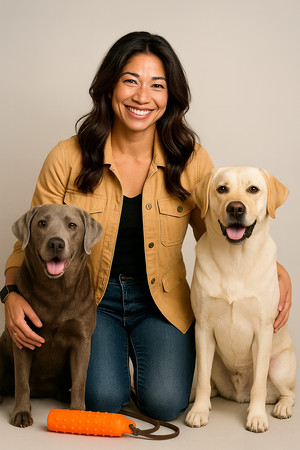

Dog Memorial Ideas: Keepsakes, Rituals, and Ways to Honor Them
This post contains affiliate links. If you purchase through these links, K9 Hearts may earn a small commission at no additional cost to you. We only recommend products we genuinely believe may support your healing.
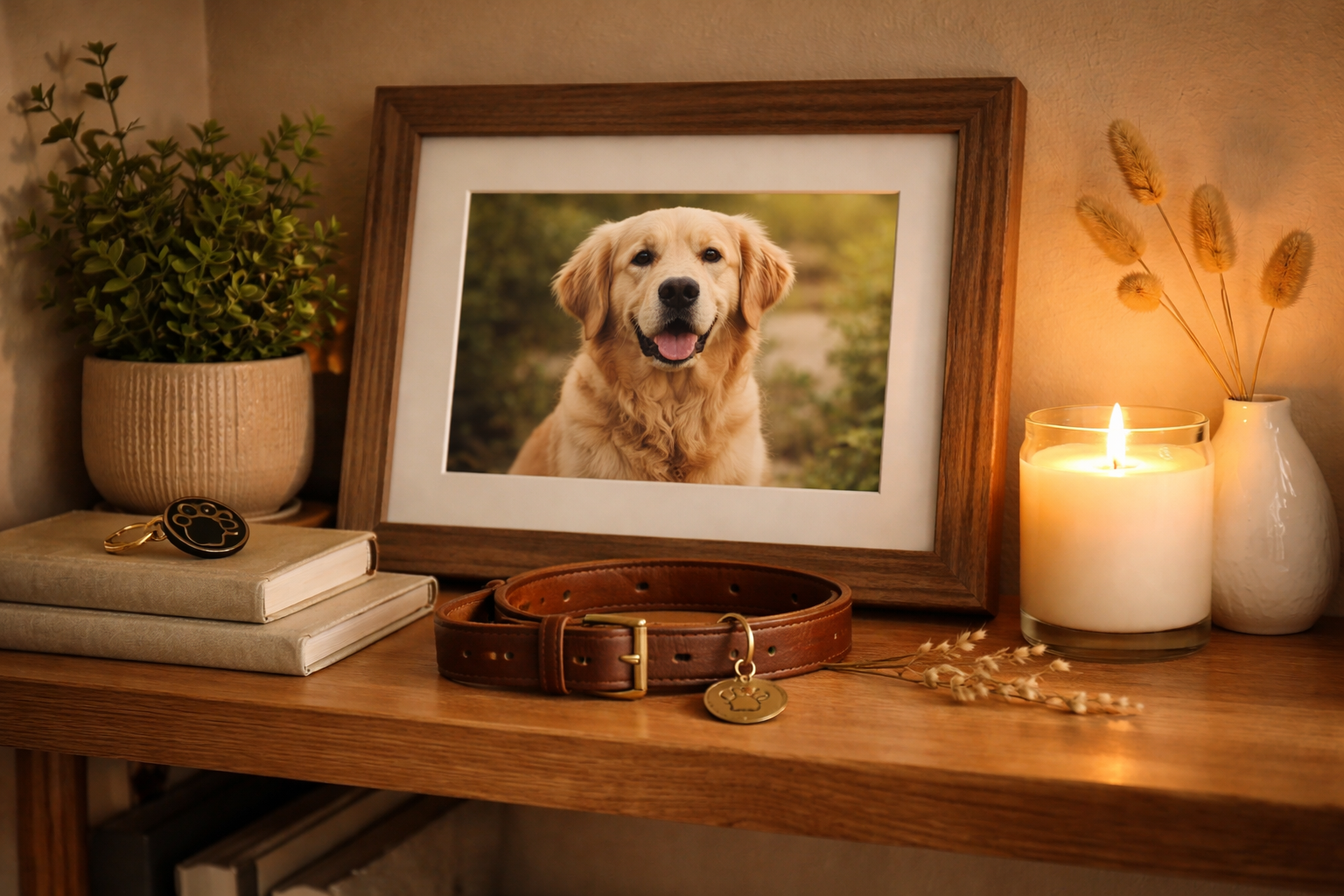
There are many compassionate ways to memorialize a dog—creating a memory space, planting something living in their honor, writing their story, or choosing a memorial that reflects who they were.
At K9 Hearts, these approaches are part of a grief-informed process that helps you honor your dog’s life while gently carrying your love forward.
You are standing in a room that used to feel different.
Maybe it's the kitchen, where their bowl still sits. Maybe it's the doorway where you always said hello. Maybe it's your bed, where there used to be warmth beside you. The absence is physical. It takes up space. And you are wondering what to do with it.
You want to honor your dog. You want to do something — something that says: this love was real, this life mattered, this grief is not nothing.
That instinct is not only natural. It is, according to grief research, one of the most meaningful things you can do.
Why Memorialization Matters: What the Research Says
Across the research on pet bereavement, rituals, memorials, memories, and dreams have been identified as helpful coping mechanisms — ones that work by sustaining levels of attachment and reducing the intensity of grief.
This is grounded in what grief researchers call Continuing Bonds Theory — a framework developed by Klass, Silverman, and Nickman (1996) that fundamentally shifted how we understand healthy grief. Rather than encouraging detachment from a lost loved one, continuing bonds theory proposes that the bereaved maintain a connection in new ways — a perspective that shifts grief support from a "letting go" mindset to one that acknowledges the ongoing relationship between the living and the deceased. The Loss Foundation
In other words: you do not have to let go. You are allowed to carry your dog forward with you.
Research on pet memorialization confirms that many pet owners engage in practices and expressions of continuing bonds similar to those seen after human loss — and that these choices meaningfully support the grieving process. Sage Journals
Grief researcher J. William Worden offered another lens that many find useful. Rather than stages that happen to you, Worden describes four tasks of mourning and stresses that the grief process is fluid. The fourth task — to find an enduring connection with the deceased in the midst of embarking on a new life — speaks directly to the role that memorialization can play in grief. VA
Memorialization is not about staying stuck. It is about carrying someone you loved into the life that continues.
Compassionate Ways to Memorialize Your Dog
There is no single right way to honor a dog. What matters is that it feels true to who they were — and who they were to you. The following ideas range from quiet and private to permanent and visible. Take what resonates and leave the rest.
1. Create a Memory Space in Your Home
A small, designated space — a shelf, a corner, a side table — can give your love somewhere to land. Place a photo, their collar, a favorite toy, or a paw print. Light a candle nearby. This doesn't have to be elaborate. It just has to be intentional.
Common continuing bonds used by bereaved pet owners include looking at photos, reminiscing over memories, preserving their possessions such as a leash or blanket, and writing letters to their pet. ResearchGate Each of these small acts is supported by grief research as a meaningful way to stay connected.
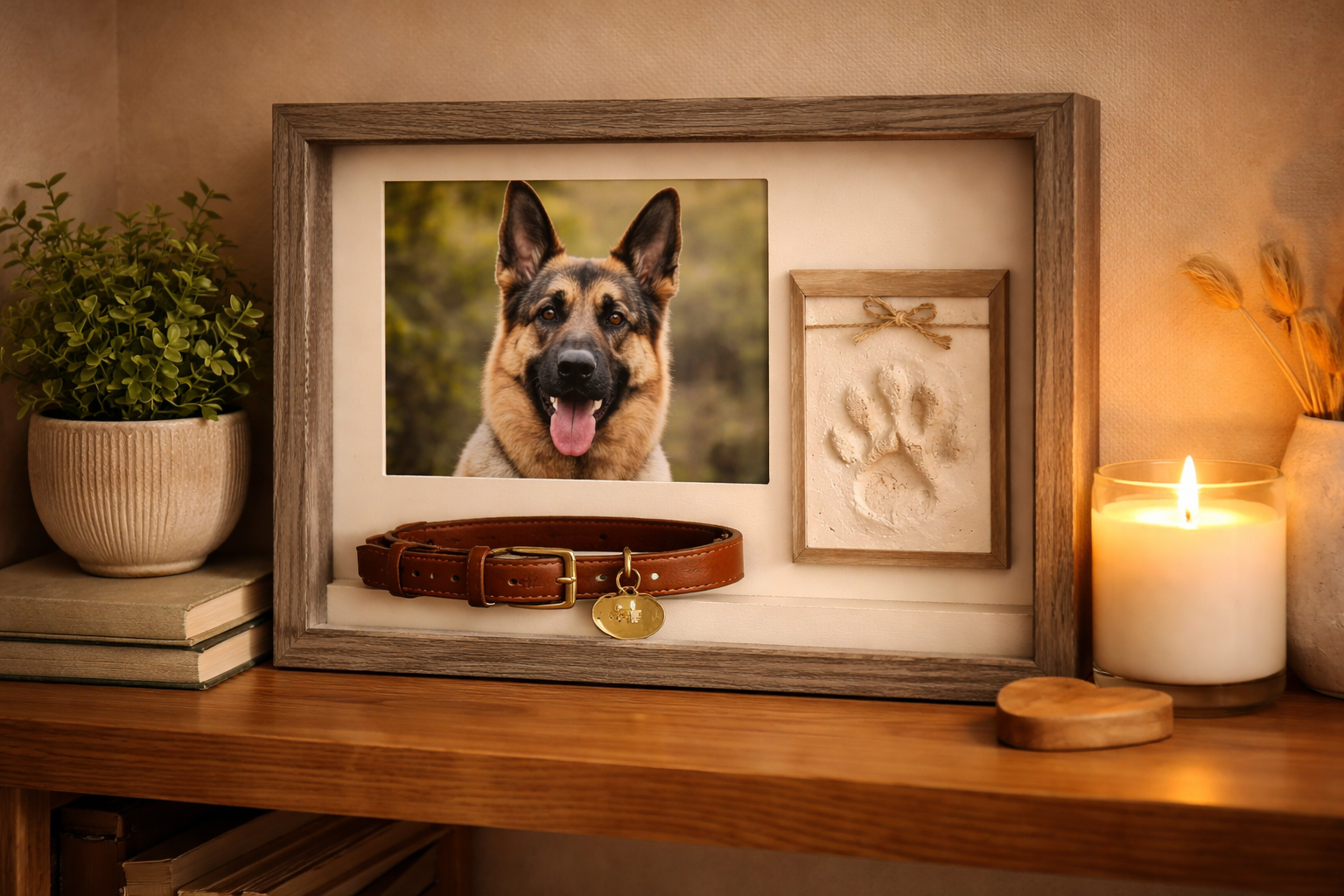
A beautiful option for a memory space is a dedicated shadow box — a frame with depth that holds a photo alongside a collar, tag, or other small memento. The KCRasan Pet Picture Frame Memorial is a heartfelt keepsake under $20, rated 4.7 stars by over 1,800 pet families — it holds your dog's photo alongside their collar in one tender display. Search for other dog memorial shadow box frames on Amazon to find the style that fits your dog's memory best.
2. Plant Something Living in Their Honor
A tree, a rosebush, a perennial that comes back every year — planting something in your dog's memory creates a living, growing tribute. You can sit beside it. Watch it change with the seasons. Return to it on hard days. Forget-Me-Not seedsare a tender choice — their name says everything a grieving heart already knows. With over 3,000 seeds and 4.3 stars from nearly 3,300 gardeners, it's a simple, beautiful way to let something bloom in their honor. Lavender seeds are another meaningful option — a calming, fragrant perennial that returns faithfully every year, just like the love you carry.
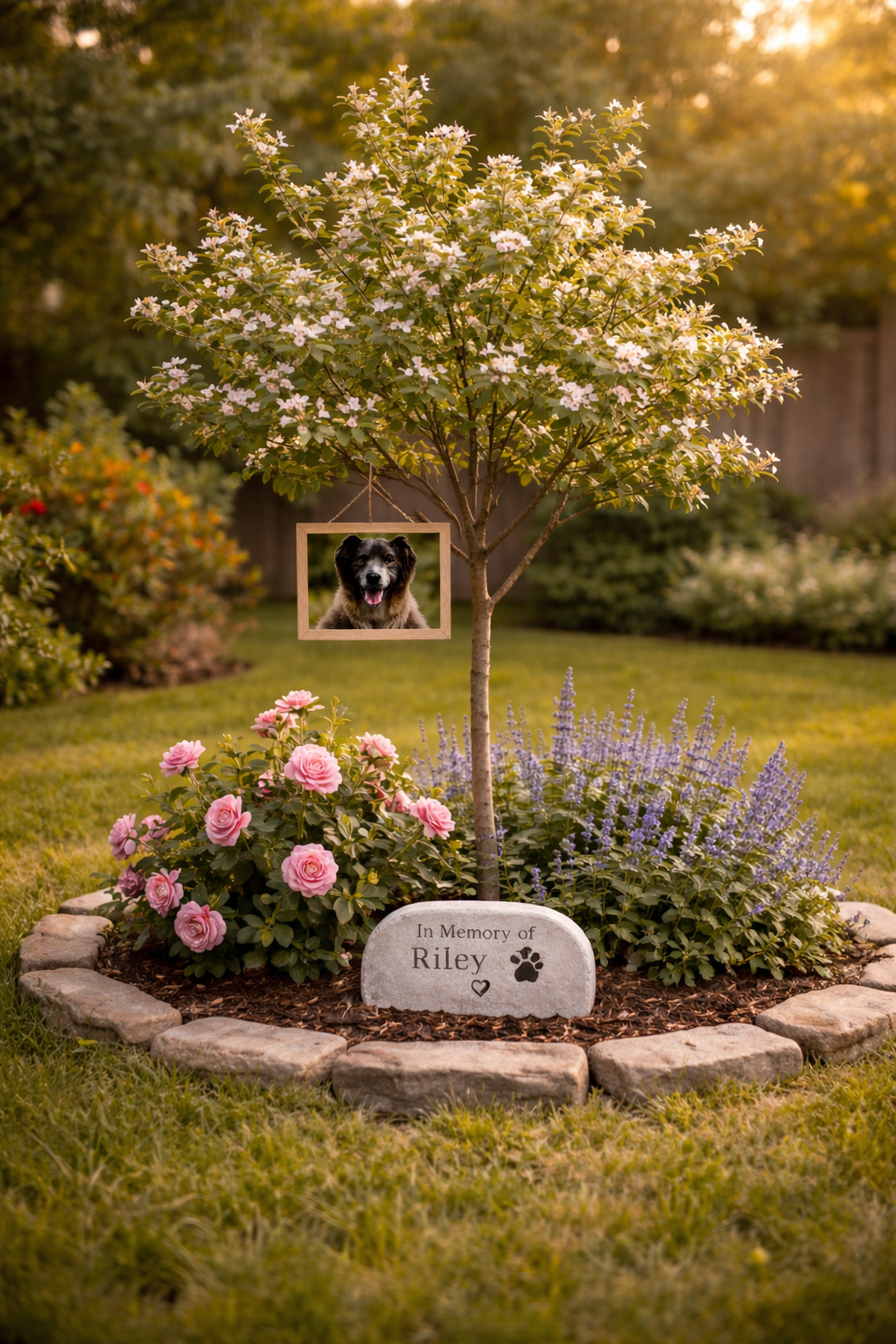
Many families choose to plant near a favorite spot — the corner of the yard where their dog loved to lie in the sun, or along the path they always walked together. The living plant becomes a continuing bond with physical roots.
3. Establish a Memorial Ritual
Rituals give grief a container. They carve out a time and place where love is allowed to exist fully — so it doesn't ambush you everywhere else.
A ritual might be as simple as lighting a candle at the time they usually woke you up. Taking their favorite walk alone on their birthday. Writing them a letter on the anniversary of their passing. Setting aside a quiet morning moment to look at their photos.
Research on bereavement rituals suggests they play an important part in the grieving process — reinforcing and validating the appropriateness of the attitudes and memories towards the deceased, and providing an important opportunity for mourners to feel seen and supported in their grief.
4. Gather Their Story in Writing
Every dog has a story worth telling. Writing yours — even just for yourself — is a powerful act of love and remembrance. What made them unique? What did they teach you? What will you never forget? Getting it down on paper before memory softens the details is a gift you give your future self.
If you are looking for a guided, structured way to do this, Charlie's Guided Journal for Pet Loss was built exactly for this kind of work. Built around the same evidence-based grief frameworks used by researchers and grief counselors — including Worden's Tasks of Mourning and Continuing Bonds Theory — it walks you through the arc of your grief using reflective prompts alongside real excerpts from Charlie's story. It is not a workbook with right answers. It is a quiet, guided space where your memories are honored.
Available in paperback (Amazon), hardcover (Amazon), and digital format.

5. Create a Dedicated Photo Album or Memory Book
There is a reason art therapy has been used in grief work for decades. Creating or commissioning something visual — something that captures who your dog truly was — engages a part of the healing process that words alone cannot reach.
Within Worden's framework, one of the core tasks of mourning is finding a way to maintain an enduring connection with the one you've lost while still finding a path forward. A memorial portrait is that connection made visible. It transforms grief from something that lives only inside you into something that exists in the world — dignified, beautiful, and permanent.
The EOP Legacy Portrait™ from K9 Hearts was created for exactly this moment. EOP stands for End of Paw Prints — a ceremonial designation for the day your dog passed, born from the same tradition of honor given to working dogs. Each portrait is individually crafted to capture the soul of your dog, and is delivered as a high-resolution file you can print, frame, and display in any size.
"The paw prints stop. The love never does."

6. Add a Memorial Garden Stone
Outdoor tributes carry a different kind of weight — something that weathers seasons, that stays when you need it to. A garden memorial stone engraved with your dog's name, dates, or a short phrase can mark a meaningful spot in your yard or garden.
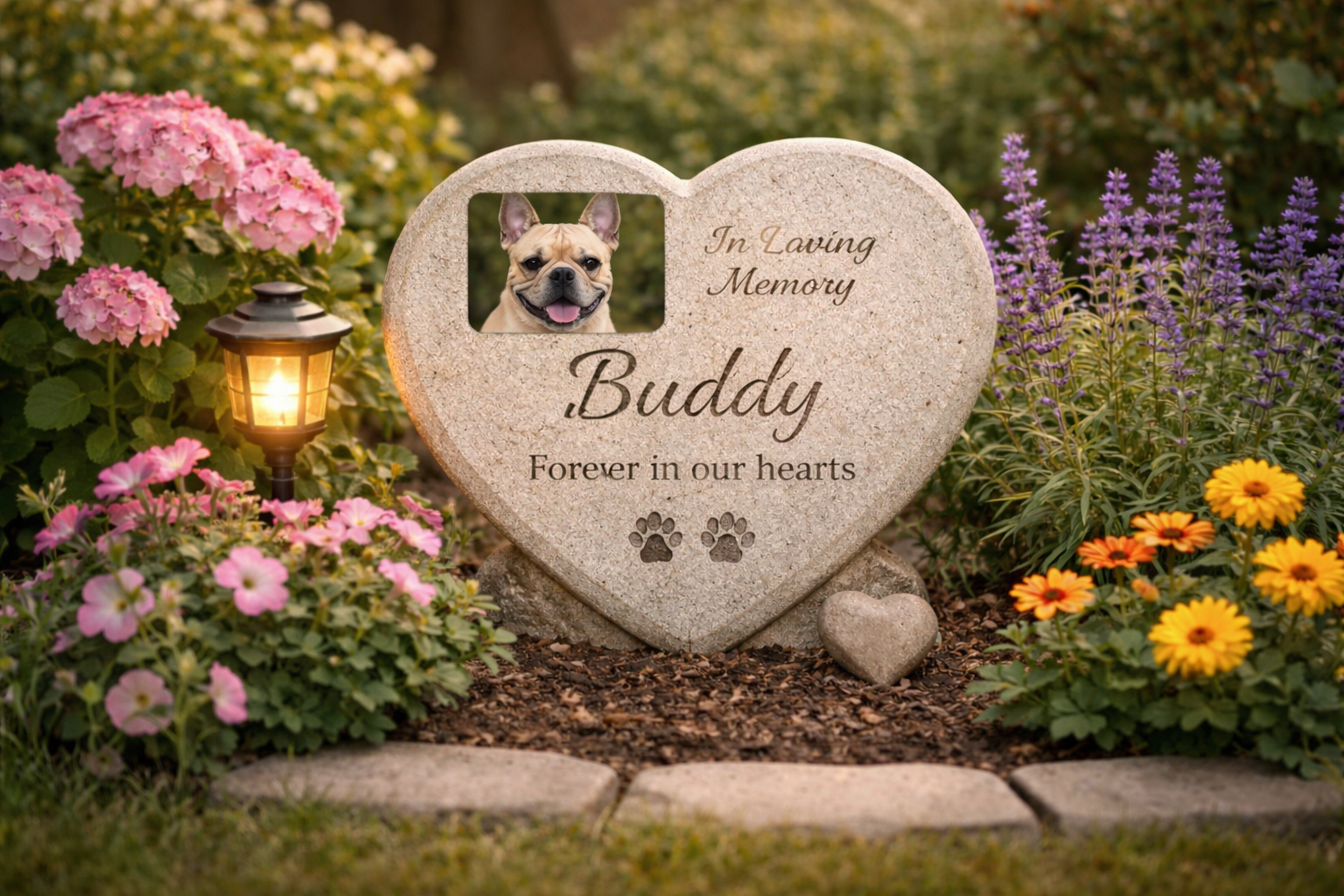
The iHeartDogs Forever My Guardian Angel Garden Solar Light is a beautiful way to honor your dog in a garden or outdoor space — a peaceful angel figure with a soft solar glow, rated 4.7 stars by over 2,300 pet families. You can also search for personalized pet memorial garden stones on Amazon for engraved and customizable options.
7. Read Alongside Someone Who Understands
Sometimes the most compassionate thing you can do for yourself is to read someone else's story first — to feel less alone in your own.
Charlie's Last Walk: A Dog Memoir of Healing after Pet Loss is the true story of Charlie Brown — a Labrador who changed everything, and the grief that came after. Written by Paige Cummings, who holds a B.S. in Psychology and M.A. in Forensic Psychology and nearly 30 years of experience supporting families through crisis and loss, it is the book that says: I understand. What you are feeling is real.
Available in paperback on Amazon and in digital format.
There Is No Wrong Way to Remember Someone You Loved
Whether you choose a simple candle, a shadow box, a garden stone, or a portrait that hangs where they used to sleep — the act of honoring your dog is itself an act of healing. Research on pet bereavement consistently identifies memorialization as one of the key coping mechanisms that helps bereaved pet owners process their grief and find their way forward. PubMed
You are not overreacting. You are not clinging. You are doing exactly what the research says healthy grief looks like — carrying your love forward.
Where losing your best friend is understood.
K9 Hearts |k9hearts.comGrief support resources: /pet-loss-and-grief-support
FAQ
Q: What are compassionate ways to memorialize a dog after they've passed?
A: Compassionate ways to memorialize a dog include creating a memory space with their photo and belongings, planting something living in their honor, establishing a memorial ritual, writing their story in a journal, commissioning a memorial portrait, and gathering a photo album or memory book. Research in pet bereavement shows that these acts of memorialization meaningfully reduce grief and support healing.
Q: Is it healthy to memorialize a pet after they die?
A: Yes. Grief research supports the idea of "continuing bonds" — the concept that maintaining a loving connection with a pet who has passed is not only normal but healthy. Studies show that memorialization, rituals, and keeping meaningful mementos are among the most effective coping strategies for bereaved pet owners.
Q: What should I do with my dog's belongings after they pass?
A: There is no single right answer. Many grieving pet owners find comfort in keeping a collar, leash, favorite toy, or blanket in a memory box or displayed on a shelf. Research shows that preserving a pet's belongings is a common and healthy form of continuing bonds expression. You do not need to remove their belongings until — or unless — you feel ready.
Q: How do I create a memorial for my dog at home?
A: A simple home memorial can be created with a dedicated shelf or surface holding a framed photo, a collar or name tag, a paw print, and a small candle. A shadow box frame is a beautiful way to display multiple meaningful items together. The goal is to create an intentional space that honors your dog's life and allows you a place to return to when grief visits.
Q: What is the End of Paw Prints Legacy Portrait?
A: The End of Paw Prints (EOP) Legacy Portrait™ is a personalized memorial portrait created by K9 Hearts to honor a dog who has passed. Rooted in the tradition of formal honor given to working and service dogs, each EOP portrait is individually crafted and delivered as a high-resolution digital file. It represents the fourth task of mourning — maintaining an enduring connection with the one you loved while continuing your own life forward. Learn more at k9hearts.com/eop.
Q: Is it normal to grieve deeply for a dog?
A: Yes. Research consistently confirms that the grief experienced after the loss of a dog can be as intense as grief after the loss of a human loved one. The bond between a person and their dog is real, neurologically documented, and deeply attached to daily life and identity. If you are grieving deeply, your feelings are valid — you are not overreacting.
References
Klass, D., Silverman, P. R., & Nickman, S. L. (Eds.). (1996). Continuing bonds: New understandings of grief. Taylor & Francis. — Credibility note: This is a foundational, widely-cited anthology in bereavement science, published by a major academic press and edited by three prominent researchers in the field. It is considered a landmark work in grief theory. It relies primarily on qualitative methods, which the editors explicitly defended as appropriate to the relational nature of grief.
Hughes, B., & Lewis Harkin, B. (2025). The impact of continuing bonds between pet owners and their pets following the death of their pet: A systematic narrative synthesis. OMEGA — Journal of Death and Dying.https://doi.org/10.1177/00302228221125955 — Peer-reviewed. Published in OMEGA, a long-established, peer-reviewed journal on death and dying (SAGE). Systematic narrative synthesis reviewing research on continuing bonds specifically in pet loss.
Kogan, L. R., Packman, W., Bussolari, C., Currin-McCulloch, J., & Erdman, P. (2024). Pet death and owners' memorialization choices. Illness, Crisis & Loss, 32(3), 308–328. https://doi.org/10.1177/10541373221143046 — Peer-reviewed. Published in Illness, Crisis & Loss (SAGE). Survey of 517 bereaved pet owners examining memorialization choices and continuing bonds expressions.
Park, R. M., Royal, K. D., & Gruen, M. E. (2023). A literature review: Pet bereavement and coping mechanisms. Society & Animals, 26(3), 285–299. https://doi.org/10.1080/10888705.2021.1934839 — Peer-reviewed. Published in Society & Animals (Brill). Review of 48 studies identifying memorialization as a key coping mechanism for bereaved pet owners.
Cleary, M., West, S., Thapa, D. K., Westman, M., Vesk, K., & Kornhaber, R. (2022). Grieving the loss of a pet: A qualitative systematic review. Death Studies, 46(9), 2167–2178. https://doi.org/10.1080/07481187.2021.1901799 — Peer-reviewed. Published in Death Studies (Taylor & Francis). Systematic review of 19 qualitative studies on the psychosocial impact of pet loss.
Worden, J. W. (2018). Grief counseling and grief therapy: A handbook for the mental health practitioner (5th ed.). Springer Publishing. — Credibility note: Not a journal article, but a widely-adopted clinical reference text in thanatology by a Harvard-trained researcher, now in its fifth edition after decades of use in clinical and research settings.