
When Three Years Feels Like Forever: Losing a Dog Too Soon, and the Grief That Built K9Hearts
As an Amazon Associate, I earn from qualifying purchases. This helps support K9 Hearts' mission to provide grief support resources for those who have lost their beloved dogs.
When people learn that Charlie died at just three years old, I always see the same reaction. A sharp intake of breath. Then — almost always — the well-meaning addition: "At least you didn't have him long enough to get too attached."
I understand the impulse. People are trying to find a silver lining. A way to make the loss feel smaller than it is.
But here's what they don't understand: the depth of grief has nothing to do with the length of time.
Sometimes three years with the right dog leaves a deeper mark than a lifetime with anyone else could. Charlie's three years changed my entire trajectory — who I am, how I love, and ultimately, why K9Hearts exists.
This is his story. And mine.
The Dog Who Was Built Wrong From Birth
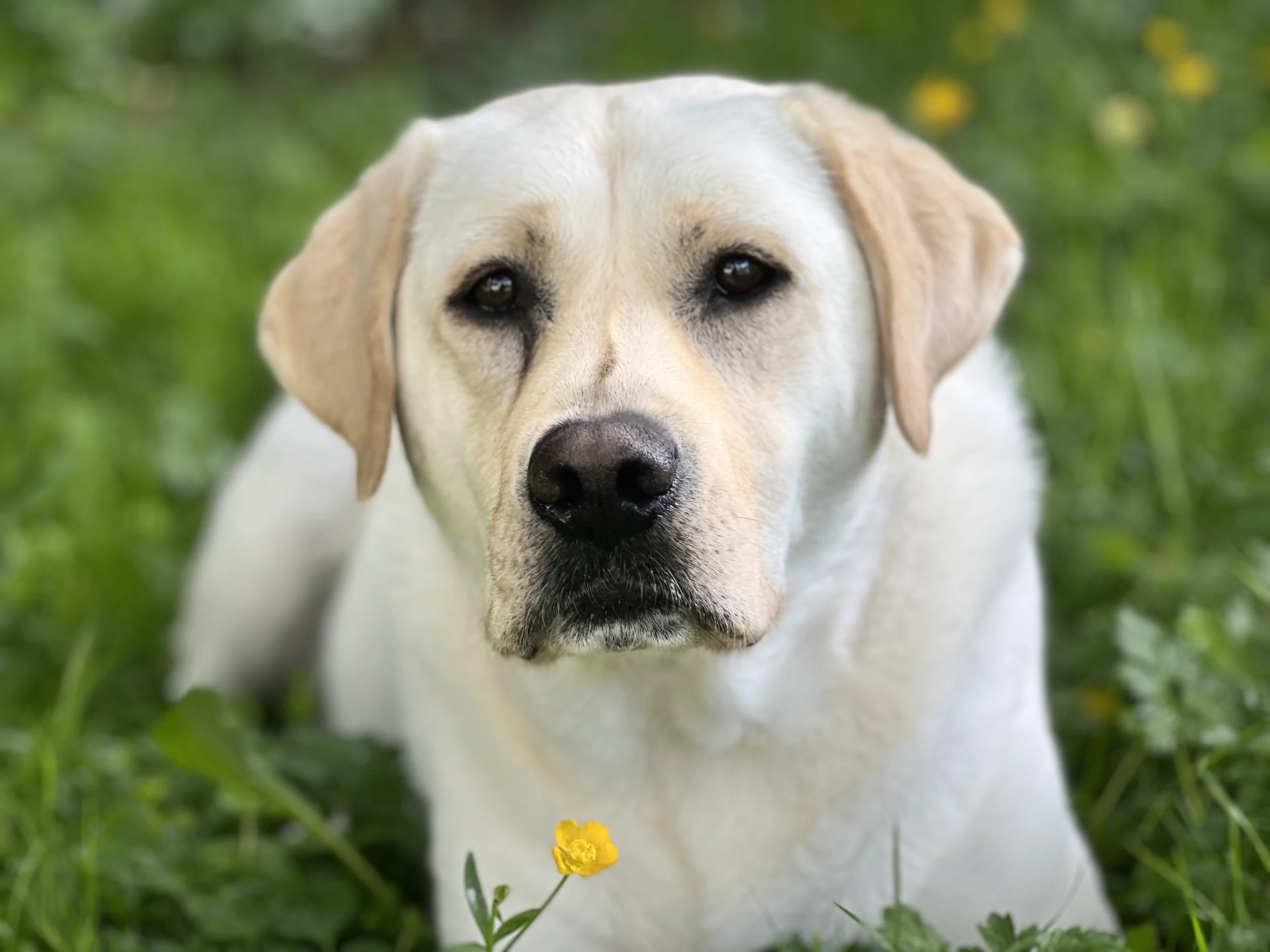
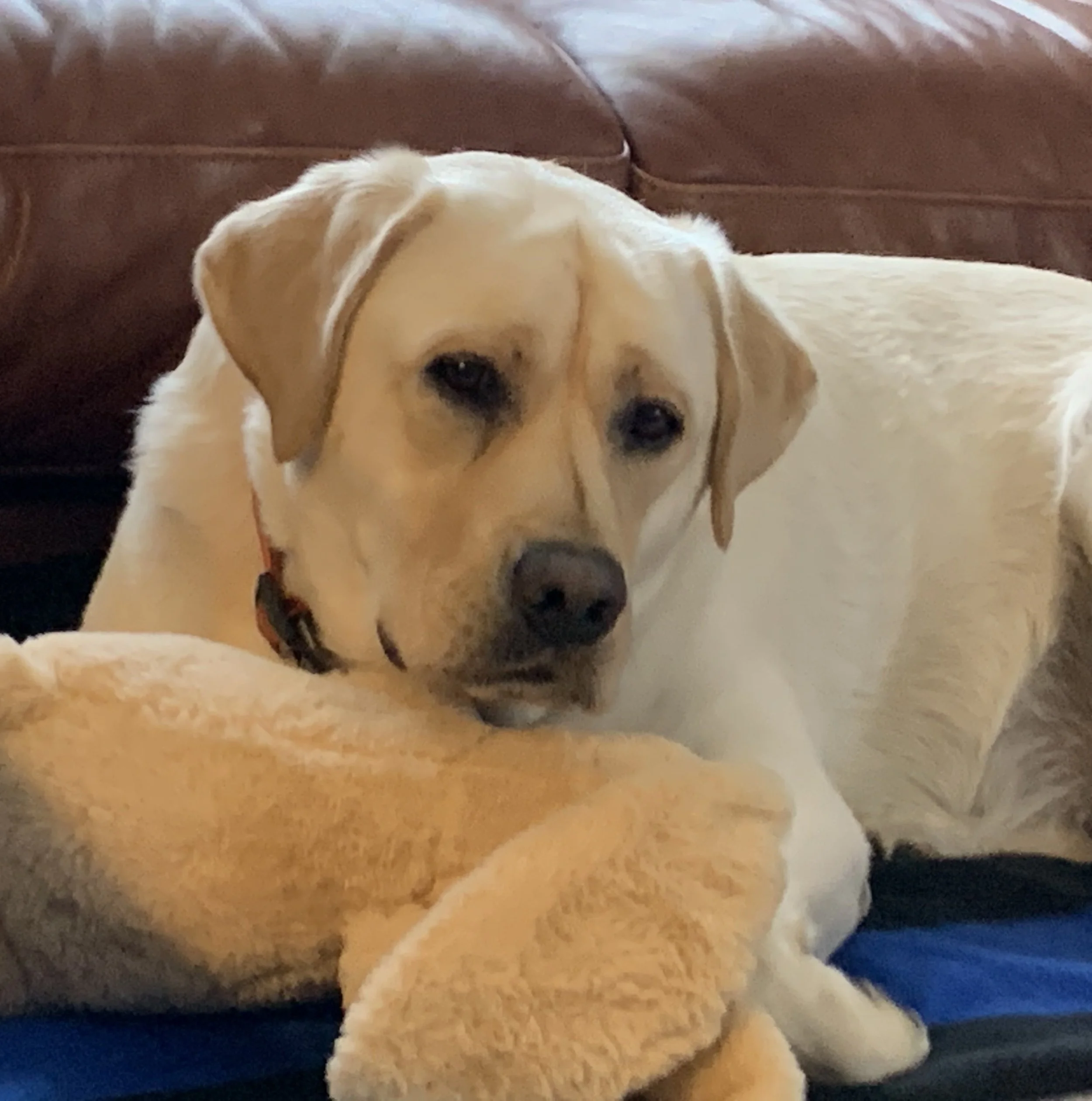
Charlie Brown wasn't just a pet. He was my heart dog — the kind of dog who comes along once in a lifetime, if you're lucky.
He was calm in a way that felt intentional. Magnetic. He had an extraordinary gift for helping anxious dogs feel safe — he would simply lay down near them, steady and patient, and wait. He waited out every dog who came to him in fear, until they found their way to peace beside him. That was Charlie's superpower: patience that felt like love.
What I want you to understand — especially if you haven't read Charlie's full story — is that his death didn't arrive cleanly. It didn't come with a single diagnosis, a clear timeline, or a straight path from sick to goodbye. It came the way the worst losses often do: in waves, in contradictions, in false hope followed by fresh terror, over and over, for nearly two years.
And every single pivot along the way carried its own version of grief — before any final goodbye was even on the table.
Shortly after I adopted Charlie, I noticed a limp. It was subtle at first. Not constant. But there. Getting a veterinary appointment during that period was genuinely difficult — clinics were overwhelmed and wait times stretched for weeks. By the time we were seen, the limp had worsened. Charlie's first vet believed it was a CCL tear — a torn ligament in his knee, the kind of injury that is painful and serious but ultimately fixable with surgery. Devastating news, but survivable news. We could do this.
Around that time, Dr. Smith had just opened her practice in Port Orchard, offering home veterinary visits while she waited on the final permits from the county for the clinic building itself — which meant her X-ray equipment couldn't yet be used on site. She was closer to us, and something told me to make the call. I'm glad I listened. Dr. Smith examined Charlie carefully and felt it was likely a partial CCL tear — not a full rupture. She gave us some things to consider, some reasons to pause before committing to surgery immediately.
But while we waited, Charlie's limp worsened. The pain became harder to watch and harder for him to hide. Waiting was no longer an option.
I had to find a different vet clinic that had availability. One that could do the imaging now, and perform the surgery if it came to that.
That decision — made out of necessity, not choice — is what led us into the next two years of medical chaos.
The surgeon at that clinic took X-rays and moved forward with pre-surgical preparation. Charlie was sedated. Prepped. On the table.
Then she took one more look.
A lump on the leg that had been limping looked different to her than it had before. Different enough that she stopped.
She called me while Charlie was still sedated on the table.
She did not feel comfortable proceeding with the surgery.
The lump, she told me, had a high probability of being bone cancer.
I want you to sit with that for a moment — because I need you to understand what those words feel like when your dog is just over a year old and currently sedated in a surgical suite. Bone cancer in dogs is not a diagnosis that comes with hope attached. It is fast, it is aggressive, and in most cases it is a death sentence delivered in stages. In that moment, I wasn't just afraid of losing Charlie someday. I was afraid I was losing him now. That he might never come home from that table.
The recommendation was to wait six to eight weeks and repeat the imaging — to see whether it had spread, to get a more definitive answer.
Those eight weeks were excruciating.
This is anticipatory grief in its rawest form — not grieving a loss that has happened, but living inside the terror of one that might be coming, with no certainty and no timeline and no way to prepare. Every morning I woke up and looked at Charlie and did the math I didn't want to do. Every good day felt borrowed. Every bad day felt like confirmation of the thing I was most afraid of.
When we finally returned for the follow-up, the surgeon was gone — away for a family emergency, no return date, not booking appointments. Her backup reviewed Charlie's case.
His conclusion: not bone cancer.
Almost certainly Lyme disease.
I want to be honest about what I felt in that moment — and it wasn't relief. It was something closer to a breaking point. We had gone from a partial CCL tear to possible bone cancer to Lyme disease in the span of a few months, with a different person delivering each verdict. The ground had shifted so many times that I no longer trusted any of it. The disbelief and frustration I felt after that call sent me back to the one person who had been measured, careful, and honest with me from the very beginning.
Dr. Smith's clinic had finally received its remaining permits from the county. The building was open. She was ready.
I called her.
She reviewed everything — every X-ray, every test result, the full accumulating record of a journey that had started with a limp and traveled through a bone cancer scare and a Lyme disease verdict before arriving, finally, at something real.
The initial picture that emerged was OCD (osteochondritis dissecans) — a condition where cartilage in the joint fails to develop properly, causing bone fragments to break free and float — and the arthritis that had already begun to settle into his joints as a result. It was genetic. It was not fixable. It could only be managed.
He was not yet two years old.
What none of us fully understood yet was that this was only the beginning of the picture. Over the following year, as Charlie continued to struggle despite every intervention, an orthopedic specialist would add the diagnoses that completed the devastating truth of what his body was carrying: DJD (degenerative joint disease), HD (bilateral hip dysplasia), and ED (elbow dysplasia). Each new diagnosis arrived not as a single blow but as another door closing — another version of the future quietly disappearing.
All four legs. Severely compromised. A body built against itself from before his first breath.
What followed was the long, aching middle of anticipatory grief that I don't think gets talked about enough — the phase after the diagnosis lands but before the goodbye arrives. We tried everything medicine and love could offer. Physical therapy. Laser treatments. Acupuncture. Joint supplements. Specialist after specialist. Medication adjustments. Micro-doses of ketamine in those final weeks, hoping to find something that could reach the pain that everything else had stopped touching.
Every morning began the same way: I assessed his quality of life before I made my own coffee. I watched how he rose from sleep. Whether his eyes were bright or dim. Whether he wanted to eat. Whether he wanted to move toward me or simply stay still.
This is what anticipatory grief actually looks like from the inside — not one dramatic moment of preparation, but hundreds of small, quiet assessments made by someone who loves a dog with their whole heart and is slowly, achingly learning to read the language of goodbye.
We gave Charlie seventeen months of quality life after his diagnosis — seventeen months that many said wasn't possible. Seventeen months of mornings in Banner Forest, of his particular gift for calming every anxious dog he met, of the warm, steady weight of him beside me.
And then his body was done.
Not dramatically. Not suddenly. Quietly, the way Charlie did everything — with a kind of dignified exhaustion that told me, before I was willing to hear it, that the time had come.
He deserved more than he got.
He gave more than anyone had a right to ask.
The Unique Pain of Losing a Young Dog
When you lose an elderly dog, there is a natural narrative arc. You had their puppyhood, their prime years, their slower senior days. The goodbye, while devastating, fits a certain order. You had what you were supposed to have — a full life together.
When you lose a young dog, that narrative shatters. You are left holding fragments of a story that ended mid-sentence.
The stolen future hurts differently.
With Charlie, I didn't just lose the dog I had. I lost the dog he was becoming. I lost the years of hiking we'd never take. The training milestones we'd never reach. I had plans for him — I was going to help him become a therapy dog once we better managed his pain. He was going to be my constant companion through all the chapters of life I hadn't lived yet.
All of that is gone. And the weight of unlived possibility is its own particular grief burden.
Medical decisions feel more impossible.
With an elderly dog, end-of-life choices — while still agonizing — carry a certain context. The dog has lived a full life. With a young dog, especially one with a chronic degenerative condition, every decision feels premature. You are not helping them exit after a long, full life. You are ending a life that barely got started. The guilt cuts deeper because of it.
I asked myself every single morning: Does he still have quality of life? Am I being selfish keeping him here? Am I giving up too soon?
There is no easy answer when your dog is only three years old.
The Grief Nobody Warns You About — Before the Goodbye
Pet loss grief is already dismissed in our culture. People who don't understand will minimize your pain with "it was just a dog." But when that dog was young, the minimization intensifies.
"At least you only had him three years.""It's easier than if you'd had him for ten.""You can get another puppy and start fresh."
These words, meant to comfort, instead suggest that love accumulates linearly — like interest in a bank account. That the less time you had, the less it hurt. That's not how love works. That's not how grief works.
But there is another kind of minimization that I don't think gets talked about honestly enough — and it doesn't come from people who don't care. It comes from people who care deeply and don't know what to do with what they're watching.
It sounds like this:
"You need to end his suffering.""It's the kindest thing you can do.""You'll know when it's time.""If you really love him, you'll let him go."
These statements are not wrong. They come from a real place of compassion. But what they don't account for is this: there is an emotional journey that a pet owner has to travel before they can arrive at euthanasia with any peace. And that journey cannot be rushed, shortened, or skipped — no matter how much someone on the outside wants to help.
What I want to name here — carefully, because it matters enormously — is the tension between what your heart is telling you and what your veterinarian is telling you. And I want to be honest that those two things do not always align. In fact, at this stage of the journey, they often don't.
There is a real medical truth that grief can make it hard to hold: trying one more thing is not always without consequence. More intervention can sometimes mean more discomfort, more procedures, more stress on a body that is already carrying more than it should. The very love that drives us to keep fighting can, in some circumstances, extend suffering rather than relieve it. That is not a comfortable thing to acknowledge. But it is true, and your dog deserves for you to know it.
This is why your veterinarian is not just a resource during this time — they are your most essential partner. They can see what love sometimes cannot. They can tell you when another intervention is genuinely likely to help, and when it is more likely to buy time at a cost your dog will pay. Listening to that guidance, even when it conflicts with what your heart is screaming, is not giving up. It is one of the most loving things you can do.
And yet — and this is equally true — medical recommendations alone cannot make this decision for you. Your veterinarian can tell you what is happening in your dog's body. They cannot tell you what is happening in your heart, or how much road you still need to travel before you can arrive at peace. The goal is not to let your heart override the medicine, or to let the medicine silence your heart. The goal is to bring them into conversation with each other — honestly, and with your dog's quality of life at the center of everything.
That balance is not a moment. It is a process. And it looks different for every person who has to find it.
What I want you to hear is this: needing time to reach that balance is not the same as failing your dog. Asking more questions, seeking clarity, working through the conflict between what you feel and what you are being told — that is not selfishness. That is a human being doing the hardest work love ever asks of us.
When well-meaning people push — even gently, even lovingly — before a pet owner has completed that journey, it doesn't land as support. It lands as pressure. And when your dog is your heart dog — when this is the once-in-a-lifetime bond — that pressure doesn't just sting. It cuts to the bone.
The path to peace in this decision is rarely a straight line. But it is a path, and you are allowed to walk it at the pace your whole self requires — your heart, your mind, and the medical reality your veterinarian is holding alongside you.
When I finally knew it was time for Charlie, I knew it in all three places at once. Not because someone told me. Not because I had run out of options — though I had. But because I had done the work of bringing all of it together. And when I arrived at that decision, I arrived with my whole self — no part of me left behind, no question left unanswered, no doubt loud enough to drown out the certainty that what I was doing was the final and most complete act of love I had left to give him.
That is what readiness looks like. It is not the absence of grief. It is the presence of peace — a peace you build slowly, in conversation with your vet, with your own heart, and with the dog who is trusting you to get it right.
And you will get it right. Not perfectly. But with love. And that is enough.
Why Short Lives Can Leave the Deepest Marks
There is something about abbreviated stories that haunts us more than completed ones. We mourn not just who they were, but the unfinished arc of who they might have become.
Intensity over duration.
When you know — or even suspect — that your time is limited, it changes how you experience every moment. Those three years with Charlie were lived at a heightened frequency. I noticed the way sunlight caught his fur. The particular sound of his breathing when he slept. The weight of his head on my lap. I was archiving memories even as I was making them.
Those three years weren't simply three years. They were three years lived in full presence — because I knew, even when I refused to say it out loud, that we were on borrowed time.
Bonds forged in crisis run deep.
Charlie and I didn't have an easy relationship built slowly over years of comfortable routine. We had intensity from the beginning. His medical reality meant constant veterinary visits, pain management decisions, mobility support, sleepless nights, and ultimately, an impossible choice made with trembling hands and a full heart.
Bonds formed in crisis often run deeper than bonds formed in ease. We went through something together. I advocated for him through every setback. I made decisions on his behalf when he couldn't make them himself. That creates a connection that transcends time.
Unfinished business weighs heavy.
When a dog lives a long life, there's a sense of completion. You did everything you could. You were there for all of it.
When a dog dies young, you're left with unfinished business. And that weight is real.
I Held Two Truths at Once — And You Can Too
I want to say something honest here, because I think it matters.
I hate the phrase "everything happens for a reason." Charlie's death at three years old didn't happen for a reason. It happened because genetics betrayed him and medicine couldn't save him. There is no cosmic lesson that makes that okay.
But I can hold two truths at once: that his death was senseless and wrong, and that what I learned in the wake of it was real. Meaning is not the same as justification.
His short life recalibrated everything — what deserves my energy and what doesn't. His urgency taught me not to wait. Not to put off the walk, the extra cuddle, the moment of full presence because surely there will be another chance tomorrow. He taught me to love completely, without reservation. That gift I carry forward — not just with other dogs, but in every relationship I have.
The Comparison Game Helps No One
Don't compare your grief to someone who had their dog for fifteen years. Don't let anyone — including yourself — minimize the pain with "at least you didn't have them long enough to really get attached."
Every loss is incomparable. Every bond is unique. Your three years with your heart dog are not less than someone else's fifteen. They are simply yours.
You don't have to find a reason for your dog's young death. You don't have to turn their loss into a lesson or an inspiration. Sometimes terrible things just happen, and the only meaning is the love you shared.
But if you do find meaning — if their short life taught you something about presence, or courage, or the fragility of time — you can honor that without pretending it makes the loss acceptable.
I honor Charlie through the work I do now at K9Hearts, walking alongside others through pet loss grief. His short life ripples forward through every person I'm able to reach. That doesn't make his death okay. But it does give his memory continued presence in the world.
Two Charlies: The Story That Changed Everything
After Charlie died, I was positively devastated in a way I didn't have adequate words for.
I also made a decision. A quiet, firm, certain decision that I had arrived at through the grief and through the weight of everything that had come before it. I had been one of the lucky ones — a lifetime of extraordinary dogs, one after another, each one a gift I hadn't taken for granted. I had loved well and been loved well in return. And now, between the magnitude of losing Charlie and my own health challenges that needed my full attention, I made peace with the idea that this chapter of my life was simply complete.
I was done having dogs.
When a friend mentioned she had heard about a litter of silver lab puppies, I told her clearly: I was not interested. I wasn't ready, and more than that — I wasn't planning to be ready. She understood. She went to meet the litter herself and came home with one of the puppies. She named her Lilly.
Then she called me.
There was one puppy left. The last one. She thought I should at least meet her.
I want to be honest about the resistance I felt in that moment. It wasn't the gentle hesitation of someone who might be talked into something. It was the firm, considered boundary of someone who had thought this through and arrived at an answer. I said no. I had my reasons — grief, health, the sheer weight of what loving Charlie had asked of me and what it had cost. I wasn't saying no out of fear. I was saying no because I genuinely believed it was the right answer.
But I went anyway. Just to meet her.
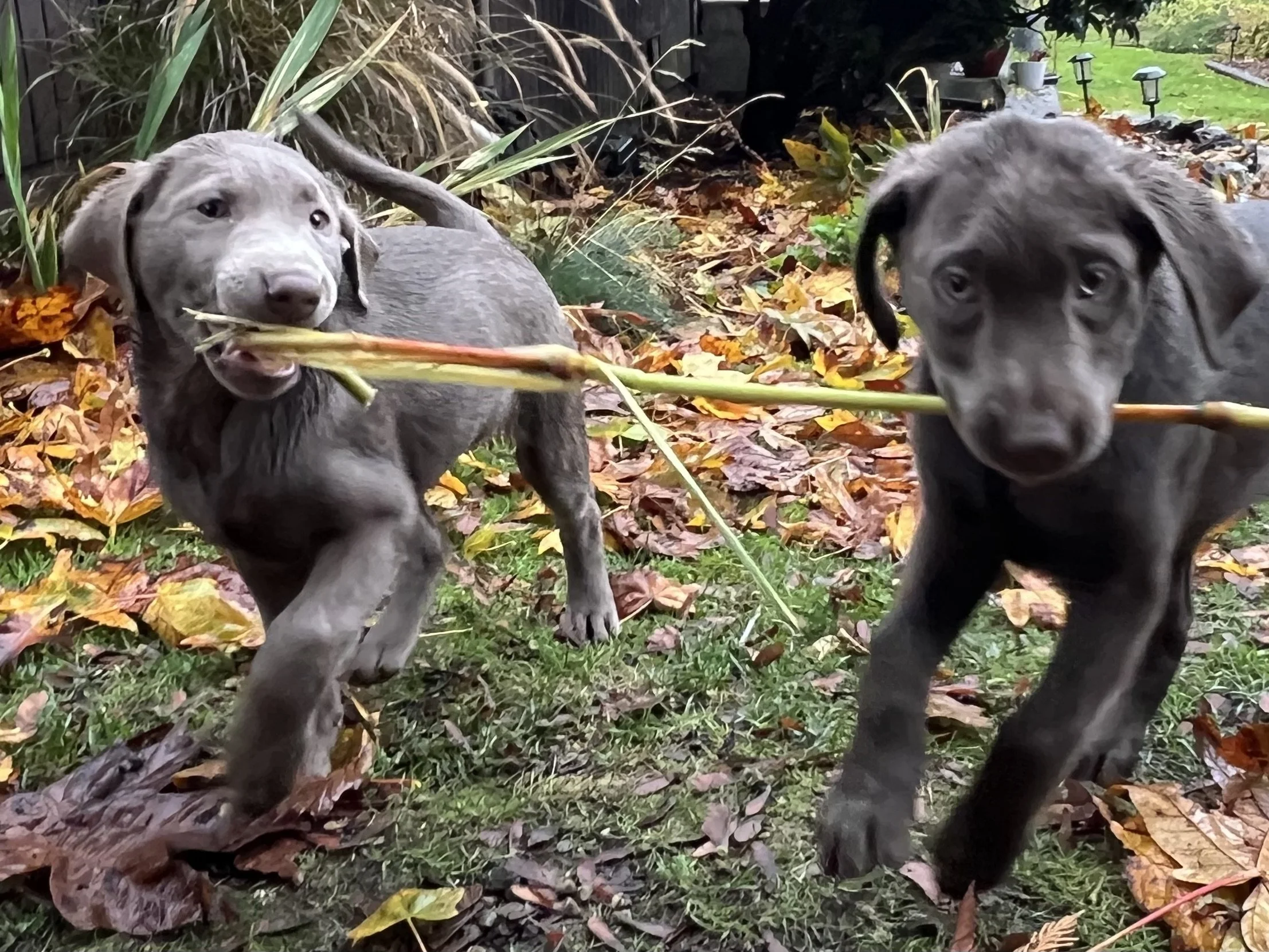
She was tiny. Silver, with enormous paws that looked like they belonged on a dog twice her size, and eyes that were soft in a way that moved through my resistance before I had time to rebuild it. I felt something stir in my chest that I hadn't felt since Charlie — something quiet and certain and completely inconvenient.
I told the owner I needed twenty-four hours to think.
That evening, she sent me a photograph. Nova at nine weeks old, looking directly into the camera with those soft, impossible eyes.
I looked at that photo for a long time.
And somewhere in the looking, the decision I had made so carefully began to come undone — not because I had talked myself into anything, but because Charlie had taught me something I hadn't fully understood until that moment. He had taught me that the capacity to love a dog fully — even knowing it will end in grief, even knowing you will one day face the most impossible decision — is not a burden. It is the whole point. And choosing never to love like that again wouldn't protect me from grief. It would just mean I had let grief win.
I brought Nova home in October 2022.
What I didn't know then — what would only become clear months later — was that Nova and Lilly, though living in different homes, had been bonded from the very first days of their lives. From the moment they could move, they had explored their world together, two small silver shapes finding everything new side by side. That bond never broke. Today, Nova and Lilly still walk together four to five days a week. If too many days pass without each other, both dogs become genuinely unsettled in a way that only resolves when they are reunited. They did not need to live in the same house to remain each other's constant. Some bonds don't require proximity to stay whole.
We would later learn that Nova and Lilly were the only two puppies in their litter to carry the same kidney concerns as their mother — a quiet inheritance that bound them together in ways beyond affection.
Their mother had chronic kidney disease. She had been born with only one functioning kidney, and the veterinarian had been clear from the beginning: it was likely genetic. Nova and Lilly would need monitoring for their entire lives. I knew this when I brought Nova home. After everything I had been through with Charlie, the thought of another young dog facing her own health journey was genuinely terrifying. I asked myself honestly whether I could survive that again — whether my heart had enough left in it for another long road.
Charlie's answer, I think, was yes. He had already shown me it was worth it.
In early 2023, I learned that Nova's mother had died. Her one kidney had finally given out. She had given everything she had during her short life, and then she was gone.
Nova's mother's name was also Charlie.
When I found out, it hit me like a blow to the gut. That is the only honest way to describe it. A physical impact — the kind of thing your body feels before your mind catches up.
And then, slowly, something else.
I began to wonder — in the way that grieving people sometimes wonder, quietly and without needing an answer — whether this was Charlie's way of getting my attention from wherever he was. Whether the universe, or he, or something I don't have a name for, was trying to tell me that I was not meant to be without a dog in my life at this time. Whether Nova had been placed in my path on purpose.
I didn't know. I genuinely didn't know whether that was truth or the story a grieving heart tells itself to find meaning in the unbearable.
I sat with that uncertainty for a long time.
It wasn't until I finished writing Charlie's story — until I had traveled every mile of it on the page, revisited every decision, honored every moment — that I could finally see what I hadn't been able to see from inside it. The full circle of it. Two dogs named Charlie. Two short lives. Two legacies that pointed in the same direction, toward the same truth: that love does not end when our dogs are gone. It expands. It finds new shapes. It keeps moving forward even when we are certain we cannot.
Nova isn't Charlie. She has never tried to be. Where Charlie's gift was calm — the steady, patient presence that helped anxious dogs find peace — Nova's gift is pure joy. She finds a stick on every walk through Banner Forest, the same forest Charlie and I walked together, and she makes absolutely certain that every person she passes gets to witness it. She carries that stick with a pride that borders on ceremony. She has moved strangers to tears. She has made a neighbor stop and say, with tears in his eyes: "I know it's stupid — it's just a stick. But it truly makes me happy to see this."
It is not stupid. It is everything.
Two Charlies. Two short lives. Two different gifts, carried forward by the dogs who came after them.
And one woman who said she was done — right up until the moment she wasn't.
If you have read Charlie's Last Walk, I hope this gives you something the book couldn't quite hold: the full weight of the no that came before the yes, and the long, uncertain road between a gut punch and a full circle. The book tells you what happened. This is what it felt like from the inside, before I understood any of it.
If you haven't read Charlie's Last Walk yet, I want to tell you something honestly: this blog is the view from thirty thousand feet. It gives you the shape of the story — the medical chaos, the grief, the two Charlies, the full circle. But the book is the ground level. It is the walk through Banner Forest on the last morning. It is the overnight hours that preceded that walk. It is the specific, unflinching detail of what it looks and feels and costs to love a dog the way we loved Charlie — and to let him go with your whole heart intact.
If any part of what you read here felt like your story too — if you recognized your own grief in these pages, your own impossible decisions, your own love that doesn't fit neatly into the space other people leave for it — the book was written for you. Not as a guide. Not as a prescription. As a hand reaching across the specific darkness of this kind of loss, from someone who has been there, to someone who is there now.
Charlie's Last Walk is available in paperback and hardcover on Amazon, or in digital format at k9hearts.com.
How to Hold Grief for a Life Cut Short
If you are in the raw space of having lost a young dog — or if you are watching your young dog decline and quietly bracing for what's coming — here is what I want you to know.
Your grief is valid exactly as it is.
You don't need to justify your devastation. You don't need to explain to anyone why three years mattered so much. You know what you lost. That is enough.
Tell their story truthfully.
Don't let anyone convince you to minimize your grief because your dog was young. Tell their story in its entirety — the intensity, the medical reality, the impossible decisions, the stolen future.
I wrote Charlie's full story in Charlie's Last Walk because I needed to document not just his loss, but the fullness of who he was and what we faced together. Writing became my way of saying: his short life mattered enormously. If you're moved to write, journal, or document your own young dog's story, honor that impulse.
Charlie's Last Walk is available in paperback and hardcover on Amazon:
If journaling helps you hold what you're carrying, I created Charlie's Last Walk: A Guided Journal for Pet Loss specifically because I needed something that honored the messy, non-linear truth of pet loss grief — including the unique pain of saying goodbye too soon. It's structured around real grief frameworks and grounded in Charlie's story, but written for your journey, not mine. Available in paperback and hardcover on Amazon, or as a digital version at k9hearts.com.
Find community who understands.
Not everyone will understand the particular grief of losing a young dog. But there are others who do — who have lost puppies to accidents, young dogs to genetic conditions, dogs in their prime to sudden illness. Find those people. They will validate what you already know: that your grief is not proportional to years lived. It's proportional to love felt.
Honoring a Short Life With Something Lasting
One of the most meaningful things I did in the wake of Charlie's loss was find a tangible way to carry his memory forward — something I could see, return to, and hold.
If you're looking for a way to honor your young dog's life with something lasting and beautiful, K9Hearts Legacy Artcreates custom AI-enhanced memorial portraits from your favorite photos of your dog. It doesn't matter whether they lived three years or thirteen — every dog deserves to be witnessed. Every life deserves to be honored.
And if you're drawn to something ceremonial — a way to formally mark the day your dog's journey ended — the End of Paw Prints (EOP) movement was born directly from Charlie's story. EOP is K9Hearts' way of saying: that day deserves a name. It deserves weight. It deserves to be witnessed, not rushed past.
The paw prints stop. The love never does.
You can learn more about EOP and what it means to formally honor your dog's End of Paw Prints at k9hearts.com/about-eop.
A Final Truth About Short Lives
Charlie's three years were enough to change my entire trajectory. They were enough to teach me about unconditional love, impossible choices, and the courage it takes to let go. They were enough to shape who I am now and everything K9Hearts does today.
Three years wasn't enough time. I wanted decades. But three years was enough to matter forever.
If you lost your dog young, please hear this: the brevity of their life does not diminish the depth of your grief or the magnitude of your loss. Their short life doesn't mean your love was less real or your bond was less significant.
Sometimes the shortest stories leave the longest shadows. Sometimes three years holds more love than some people find in a lifetime.
Your young dog's life mattered. Your grief matters. And the love you carry for them — now and always — matters more than any timeline could measure.
About K9Hearts
K9Hearts was born because Charlie's three years taught me more than I was prepared for — and because I couldn't let that learning stay mine alone.
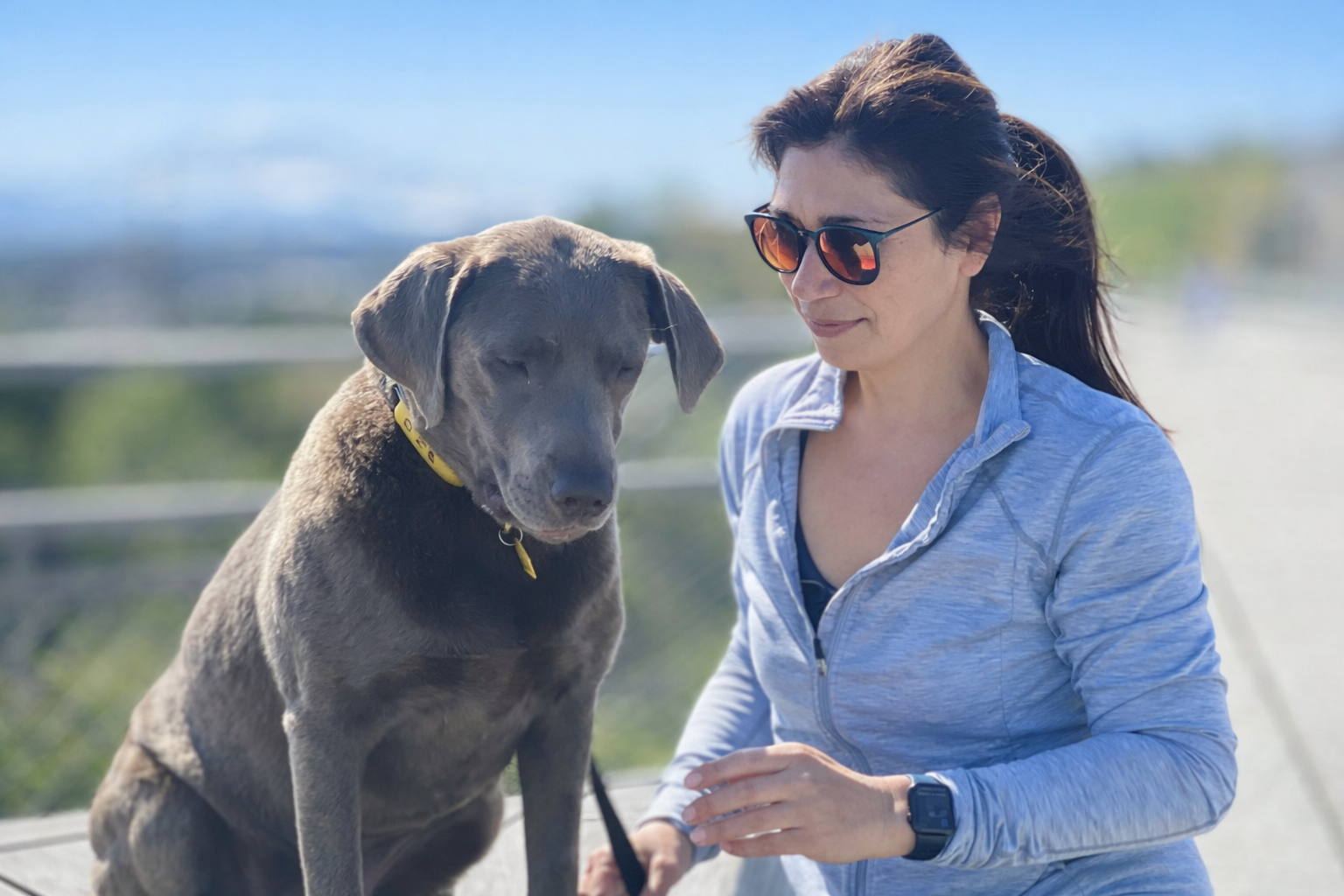
With a B.S. in Psychology and M.A. in Forensic Psychology, and nearly 30 years of walking alongside children and families through crisis, trauma, and loss, I built K9Hearts to be the resource I wish I'd had. Not a clinical service. Not a pet company. Something in between — a place where grief is treated with the weight it deserves, and where every dog's life is honored as the significant, irreplaceable thing it was.
If you're in the middle of that grief right now — whether your dog lived three years or thirteen — I hope something in Charlie's story helped you feel a little less alone.
Learn more at www.k9hearts.com
A note on this blog: Because this post is K9Hearts' origin story rather than a research-based grief education post, it does not carry peer-reviewed citations. The content is drawn entirely from Paige's lived experience and documented account in Charlie's Last Walk. For research-backed blog posts on pet loss grief, the K9Hearts blog includes fully cited, peer-reviewed resources — see the Pet Loss Support page for those resources.
Frequently Asked Questions
Why does losing a young dog feel so devastating? Losing a young dog carries a particular grief burden because the loss includes not just who they were, but everything they were becoming. The stolen future — the years of adventures, milestones, and quiet companionship that were supposed to come — adds a layer of grief that completed lives don't carry in the same way.
What is anticipatory grief in pet loss? Anticipatory grief is the grief that begins before a loss occurs — when you sense that a goodbye may be coming and your heart begins to prepare even as love continues. For many dog owners navigating a serious or terminal diagnosis, anticipatory grief begins the moment the prognosis shifts from fixable to manageable. It is real, it is valid, and it is one of the least talked-about parts of loving a dog through illness.
What is OCD in dogs? OCD (osteochondritis dissecans) is a painful orthopedic condition where cartilage in a dog's joint doesn't develop properly, causing bone fragments to break free and float in the joint. It most commonly affects the shoulder, elbow, knee, or hock, and is often genetic in origin. It is not the same as OCD (obsessive-compulsive disorder) in humans.
What is DJD in dogs? DJD (degenerative joint disease) is the progressive deterioration of joint cartilage over time, leading to pain, stiffness, and reduced mobility. It is commonly known as arthritis and can develop secondary to conditions like OCD or HD. In young dogs with genetic orthopedic conditions, DJD can be severe even before middle age.
What is HD in dogs? HD (hip dysplasia) is a hereditary condition where the hip joint doesn't fit together properly, causing abnormal wear, pain, and eventually arthritis. It is one of the most common genetic orthopedic conditions in dogs, particularly in larger breeds.
What is ED in dogs? ED (elbow dysplasia) is an umbrella term for several developmental abnormalities of the elbow joint in dogs, most of which are genetic. Like HD, it causes pain, lameness, and progressive joint damage, and is most commonly seen in medium to large breeds.
What is a CCL tear in dogs? A CCL (cranial cruciate ligament) tear is one of the most common orthopedic injuries in dogs — equivalent to an ACL tear in humans. It causes sudden or gradual lameness and usually requires surgery to repair. In some dogs with underlying joint conditions, a CCL injury can be the first visible sign of a deeper orthopedic problem.
How do I know when it's time to let my dog go? This is one of the most painful questions a dog owner can face, and there is no single answer that fits every situation. Working closely with your veterinarian is essential — they can help you understand your dog's quality of life from a medical perspective and guide you toward decisions that prioritize your dog's comfort. At the same time, reaching emotional readiness is a process that cannot be rushed. The goal is to bring your heart and the medical reality into conversation with each other, with your dog's wellbeing at the center. K9Hearts has additional resources on this topic at k9hearts.com/pet-loss-and-grief-support.
Is it okay to feel pressured by others about euthanasia? It is completely normal to feel pressure — even from people who love you and your dog — to make end-of-life decisions before you feel ready. Well-meaning statements like "end his suffering" or "it's the kindest thing" come from a place of compassion, but they don't account for the emotional journey a pet owner needs to travel before they can arrive at that decision with peace. That journey is valid. What matters is that your decision is made in partnership with your veterinarian and guided by your dog's quality of life — not by outside pressure or timeline.
Does the length of time you had a dog determine how much you grieve? No. Grief is proportional to the depth of the bond, not the number of years. Three years with a heart dog can leave a deeper mark than a decade with a different dog. Love doesn't accumulate on a linear timeline.
What is a heart dog? A heart dog is the once-in-a-lifetime dog — the one who imprints on you in a way that reshapes who you are. Not every dog is a heart dog, and those who have experienced one recognize the difference immediately. Losing a heart dog, at any age, is one of the most profound losses a person can experience.
What is K9Hearts and why was it founded? K9Hearts was founded by Paige Cummings after losing her heart dog, Charlie Brown, at three years old. With a B.S. in Psychology, M.A. in Forensic Psychology, and nearly 30 years of experience working with families through crisis and loss, Paige built K9Hearts to provide grief support, memorial resources, and legacy art for people who have lost a beloved dog. It is the resource she wishes had existed when she needed it most.
What is the End of Paw Prints (EOP) movement? The End of Paw Prints (EOP) is a K9Hearts initiative that provides a ceremonial designation for the day a dog's journey ends — honoring that day with the weight and dignity it deserves. EOP was born from Charlie's story and the recognition that some endings deserve to be witnessed, not rushed past. Learn more at k9hearts.com/about-eop.
What is Charlie's Last Walk? Charlie's Last Walk is Paige Cummings' memoir documenting Charlie Brown's life, his genetic conditions, his final hours, and the grief and healing that followed. Available in paperback and hardcover on Amazon, or in digital format at k9hearts.com.
Is there a grief journal for pet loss? Yes. Charlie's Last Walk: A Guided Journal for Pet Loss is a structured, self-directed journal built around real grief frameworks and grounded in Charlie's story. Available in paperback and hardcover on Amazon, or as a digital version at k9hearts.com.
K9Hearts does not provide clinical mental health services. If you are experiencing grief that significantly impacts your daily functioning, please reach out to a licensed mental health professional. If you are in crisis, call or text 988. K9Hearts updates their Resources page for additional resources at https://www.k9hearts.com/pet-loss-and-grief-support.