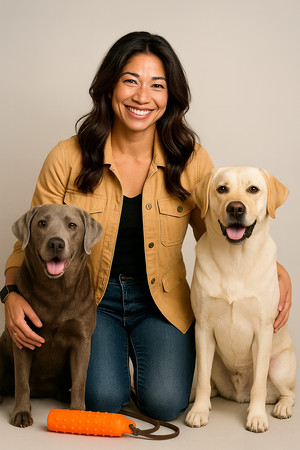

What is a Heart Dog?
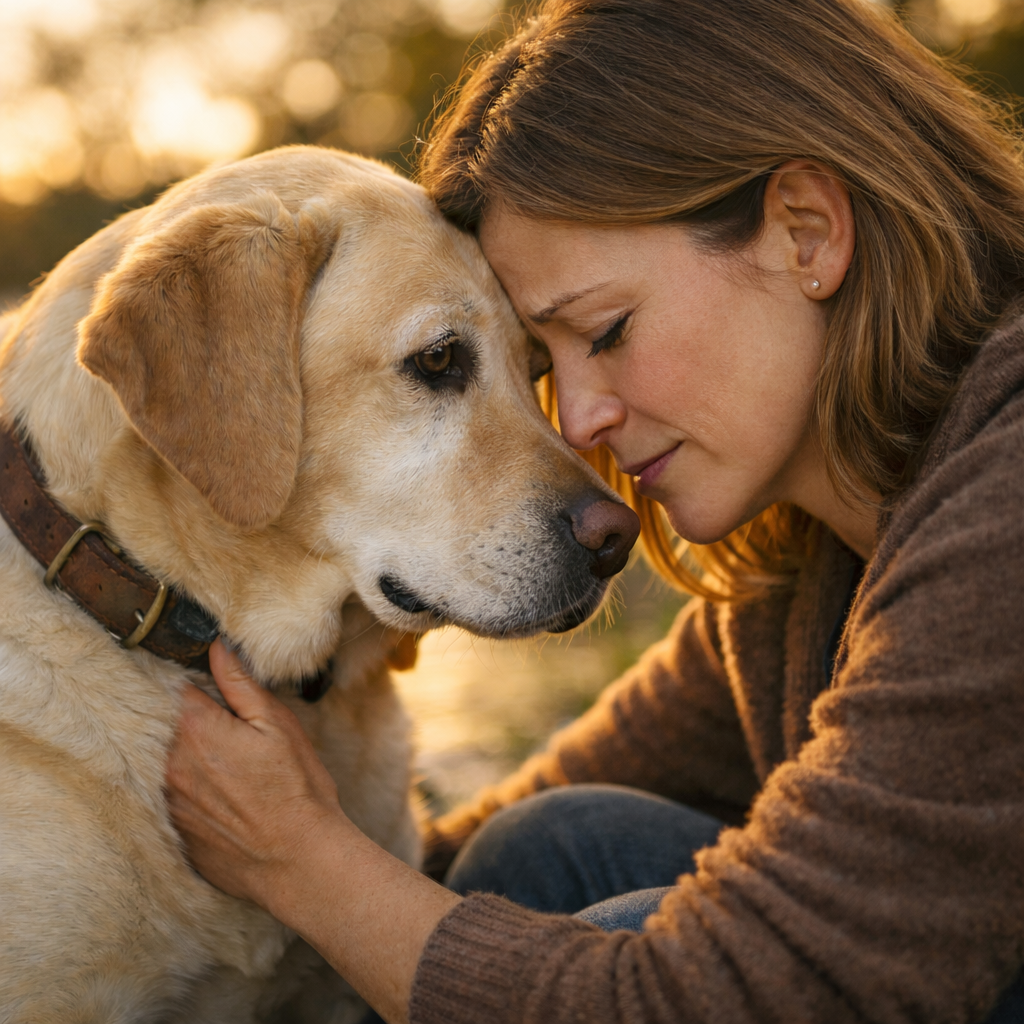
A heart dog is the dog who changes everything — and then, quietly, becomes everything. Not the only dog you have ever loved — but the one whose loss leaves a specific, named emptiness that other loves do not fill. They are the dog you take with you everywhere it is possible to take them. The dog whose schedule shapes yours. The dog you find yourself leaving a gathering early for, not because you have to, but because something in you is already halfway home. Decisions get made around them — where to live, where to travel, what to say yes to and what to decline. Not out of obligation, but because their presence in your daily life has become so woven into who you are that it no longer feels like a choice. It simply feels like how life works.
My heart dog was Charlie Brown, a yellow Labrador who arrived at a particular season of my life and became something I did not have a word for until he was gone.
What Is a Heart Dog?
A heart dog is not just a beloved dog. It is the once-in-a-lifetime dog — or perhaps twice, if you are among the fortunate — who takes up residence not in your home but in the deepest part of who you are. Dog lovers have called them soulmates, soul dogs, spirit dogs. The language differs. The experience does not.
In the comment threads of one of the earliest heart dog posts ever written, a woman named Carolyn described the moment she knew: "We clicked, is the only way I can describe it." She had gone to find one dog and came home with another because something passed between them that she could not name. A man named Pierce spent years caring for a retired racing greyhound he had not planned to love — and by the end was sitting with him in an emergency vet clinic at three in the morning, holding his head and saying goodbye. He did not use the words "heart dog" when Luke was alive. He only found them afterward, when he was looking for language equal to the size of what he had lost.
That is one of the defining truths about a heart dog: sometimes we only recognize them fully in their absence — or in the anticipatory grief that arrives when we begin to understand they are leaving. That moment of recognizing what is about to be gone is not only grief. For many people, it is the first time they fully see what they have had. And that clarity, arriving alongside the fear of losing it, is its own form of quiet devastation.
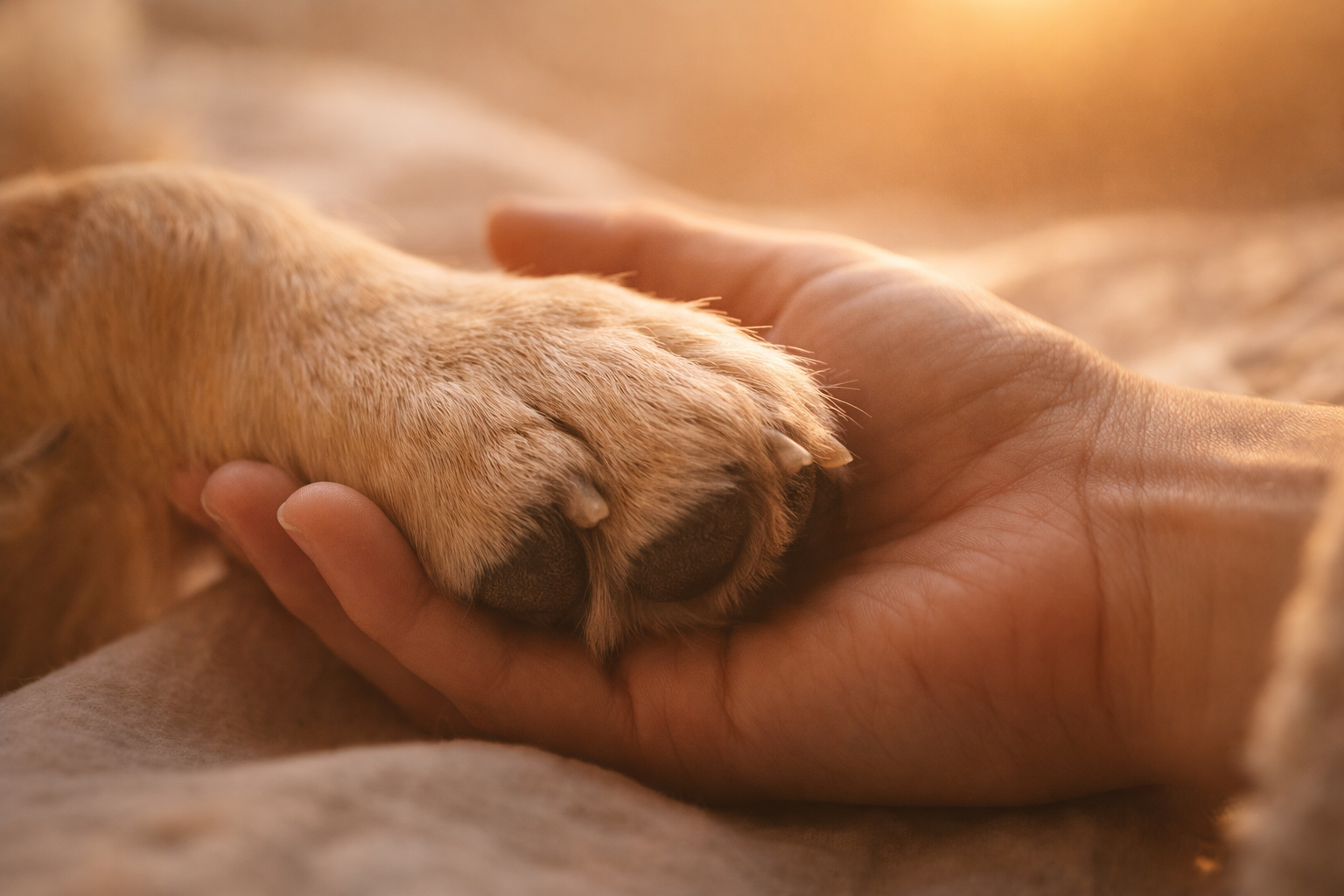
For heart dog owners, their dog is often the first one they turn to in times of emotional distress — before their closest friends, before their siblings, before their parents. This is not a figure of speech. It is how the bond actually functions. A heart dog becomes woven into the heartbeat of a person's life so completely that the relationship stops feeling like pet ownership and starts feeling like something that has no adequate word in the English language — except, perhaps, the ones we have always used for the people we cannot imagine living without. They become, in the most literal psychological sense, a primary attachment figure.
Research confirms what heart dog owners already know in their bones. In a peer-reviewed study published in the Journal of Family Psychology, psychologist Lawrence Kurdek surveyed 975 dedicated dog owners and found that participants were more likely to turn to their dogs during emotional distress than to their mothers, fathers, siblings, best friends, or children — less likely only than their romantic partners (Kurdek, 2009). For a heart dog, even that last qualifier might feel generous.
How Do You Know If You Had a Heart Dog?
You already know. But sometimes grief makes us doubt what we know — makes us wonder if we are making it mean more than it means, if we are being dramatic, if other people would understand. So here are the patterns that heart dog owners describe again and again, across decades of conversations and comment threads and grief groups. Read them not as a checklist, but as a mirror.
They chose you as much as you chose them. Many heart dog stories begin not with a deliberate choice but with a moment of recognition. The dog in the shelter who made a beeline across the room. The puppy in the litter who kept climbing back into your lap. Something was mutual from the beginning — and you felt it before you had a name for it.
You developed a private language. A look that meant something specific. A shift in their behavior that told you something was wrong before you had consciously registered it yourself. They understood you in ways you could not fully explain and sometimes did not try to. You stopped needing to.
Their presence restructured your daily life without your noticing. The walks, the routines, the rhythms of the day — they were built around each other. You came home earlier. You chose the vacation rental based on whether they could come. You turned down the invitation because they couldn't go with you, and being away from them for that long didn't sit right. It is not until the dog is gone that the full structure of that life becomes visible, because every part of it now has an absence where they used to be.
The grief feels different. If you have loved other dogs and lost them — and the loss of each one was real and painful — but this loss is something categorically different, that is information. It is not a measure of how much you loved the others. It is a measure of the specific nature of this bond.
Sharon, who had four border collies over more than forty years, put it plainly after losing her dog Rocket: "I loved my other dogs, and missed them when they were gone, but not like I miss Rocket. It wasn't until he was gone and I had to come to grips with the giant hole he left behind that I began to fully appreciate the full extent of what he meant to me."
There is a phrase that appears on mugs, on garden stones, on memorial jewelry, on every kind of keepsake that people reach for when they are trying to hold onto a heart dog: Who rescued whom?
The fact that this phrase is everywhere is not an accident. It is cultural recognition. It is millions of people looking at an object in a store and thinking — yes, that is the one. Not for every dog I have loved. For that one.
The phrase points to something real: that in many heart dog relationships, the rescue was mutual. The dog arrived when you needed something you were not asking for out loud. And what you gave each other — safety, presence, the daily work of being known — changed you both. The cultural reach of that phrase tells us that people already understand the heart dog concept, even when they do not yet have the words for it.
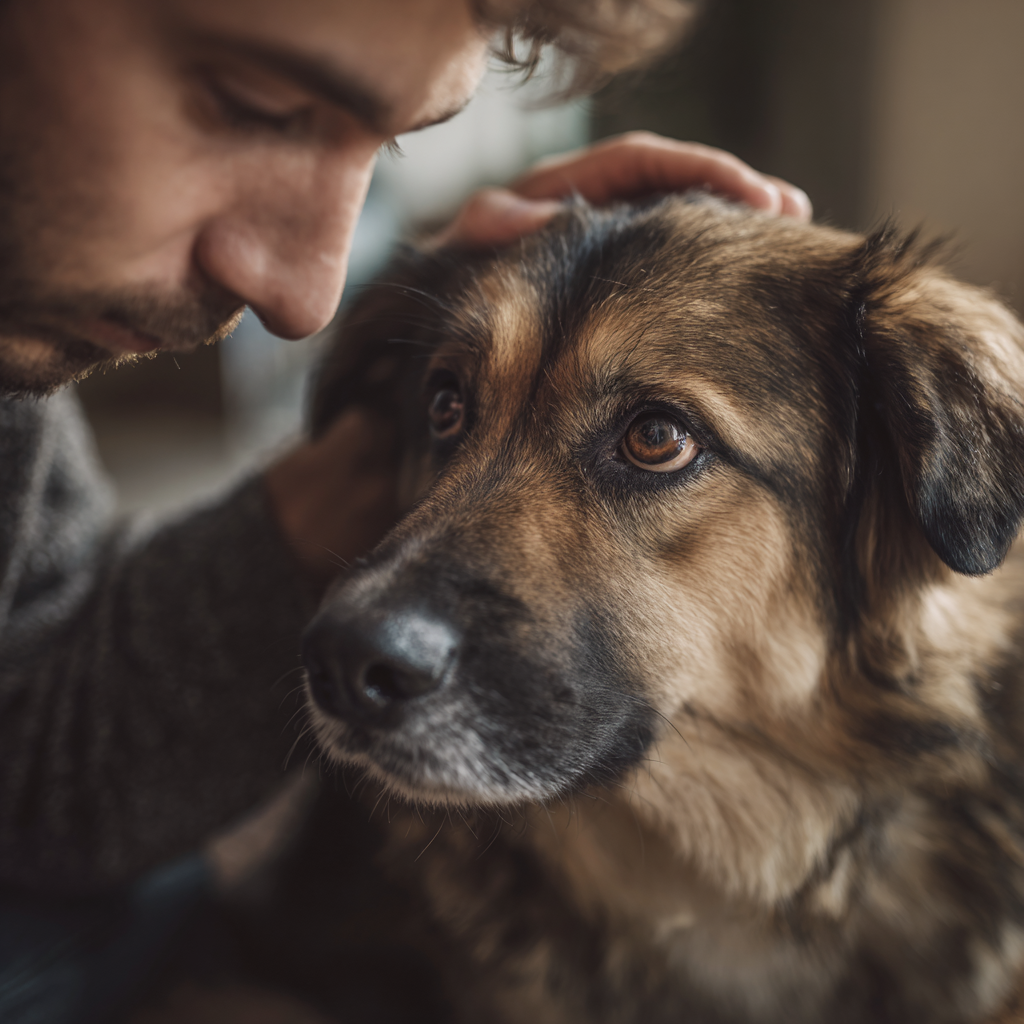
The Trust Bond: Why Some Heart Dogs Arrive at Particular Moments
Some heart dogs find us when we are carrying something we have not yet named.
Not necessarily a dramatic crisis. Often something more cumulative — a period of loss, of uncertainty, of holding things together quietly while the world around us moved on as if everything was fine. The kind of weight that builds in small increments until a person finds themselves at a threshold they did not consciously choose. Not broken. But tired in a way that is hard to explain to anyone who has not been there.
And then a dog arrives.
They do not require you to perform recovery. They do not need the story. They do not ask how you are doing and then shift uncomfortably when the honest answer is complicated. They simply stay. They are there when you wake up and there when the day ends and there in the particular silence of the middle of the night when everything feels larger than it should. And the bond that forms in that space — in that season of being quietly met without condition — becomes something that ordinary life does not easily replicate.
It is not that you love this dog more than you would have under easier circumstances. It is that they became woven into the architecture of how you survived that season. Their presence is not separate from your healing. It is part of it. And that is why, when they are gone, the grief can feel like it reaches deeper than grief is supposed to reach. It is not just loss. It is the loss of the witness.
Sometimes this works in the other direction. The dog is the one arriving from trauma — from a cage, from neglect, from a fear so deep it took weeks before they would cross the floor to you. The bond that forms through that slow, patient work of building trust becomes one of the most profound a person can experience. Christal, who fostered a puppy mill survivor named Dexter — a dog who arrived terrified and gradually, over months, learned that belly rubs were possible — described watching a broken spirit learn that safety was real. And Dexter became her heart dog.
Whether the healing is yours, or the dog's, or quietly both — the bond forged in that work carries a weight that love under easier circumstances does not always carry.
With a B.S. in Psychology and an M.A. in Forensic Psychology, plus nearly 30 years of working with children and families through the hardest parts of their lives, I have come to believe that the heart dog relationship is not accidental. It is often the right soul arriving at the right season. And that is exactly why losing one can feel unsurvivable.
Why Losing a Heart Dog Hurts So Much
If you are here because the grief has been bigger than you expected — bigger than other people seem to understand, bigger than you feel you have permission to show — I want to say this first:
You are not overreacting. You are not making it mean more than it means. You are grieving in proportion to what was real.
The world does not always make space for this kind of grief. There are no rituals for it, no bereavement leave, no universally recognized language for what it means to lose the being who was, in every functional sense, your primary companion. People say it was just a dog and they mean it kindly and it lands like a door closing in your face. That experience — of grieving something enormous in a world that does not acknowledge it as enormous — has a clinical name: disenfranchised grief. And it makes the loss harder, not because the grief itself is more intense, but because you are carrying it alone.
What you felt for your heart dog was real. What you are feeling now is real. And the intensity of it is not a measure of how fragile you are. It is a measure of how profound the bond was.
Research confirms this completely. A peer-reviewed study published in Death Studies found that the strength of the attachment bond to a companion animal was directly and uniquely predictive of grief severity — the deeper the bond, the more intense the loss (Field, Orsini, Gavish, & Packman, 2009). A larger study of 496 bereaved companion animal owners confirmed this finding, and its authors went so far as to recommend that prolonged grief disorder criteria be reconsidered to include companion animal loss — because the clinical presentation can be indistinguishable from losing a human loved one (Lykins et al., 2023). Research suggests that approximately 30% of pet owners experience intense grief following pet loss (Wu & Song, 2025). For those who have lost a heart dog, that number feels conservative.
A systematic review found that nearly two-thirds of pet owners described their animals as a baby, a child, a best friend, or a companion — not simply a pet (Hughes & Lewis Harkin, 2022). When you lose someone you have been describing in those terms, grief scaled to those terms is the only appropriate response.
Science has finally caught up to what you already knew. You loved someone. You lost them. That is enough.

When the Recognition Begins Before the Loss: Anticipatory Grief and the Heart Dog
Sometimes the grief does not wait for the loss.
It arrives the moment a veterinarian says words like "terminal" or "weeks to months." Sometimes it arrives in something quieter — a slowing of the gait, a change in the eyes, a morning when the dog does not get up right away. The diagnosis has not been spoken yet, but something in you already knows. And the knowing is its own kind of grief.
This is anticipatory grief. And for those who have a heart dog, it carries a weight that very few people around them will be equipped to understand.
In the space between diagnosis and goodbye, something shifts. You begin to see — with a painful, specific clarity — everything your dog has been holding in place. The shape of every morning. The reason you came home. The presence that made certain losses from other parts of your life feel survivable. You begin to understand what you have had precisely because you can now see it ending. And that understanding, arriving alongside the fear of losing it, is not only grief. For many people, it is the first time the full weight of the bond becomes visible. That is not ordinary sadness. That is the recognition of what has been quietly sustaining you, at the exact moment it begins to be taken away.
Some people in this stage find themselves thinking thoughts they have not said aloud to anyone. I don't know what I will do when they're gone. I don't know if I will have a reason to get up. I'm not sure I will want to.
If you have had those thoughts — if you have been sitting beside your dog at two in the morning thinking you cannot imagine your life making sense without them — I want to name that directly, because you deserve to have it named.
Those thoughts are not weakness. They are not a sign that something is wrong with you. They are the voice of a bond so deep that the mind cannot yet hold the shape of a world without it.
Your dog still needs you. That is not a small thing.
And if those thoughts feel urgent, persistent, or like something more than grief moving through you — you do not have to carry that alone. Talking about these feelings is not something to be ashamed of. It is one of the most honest things you can do with what you are feeling. A therapist who understands grief can hold this with you — not to fix it, not to rush it, but to make sure you are not in the dark by yourself with it. And 988 is available any hour, any day, if you need to say it out loud to someone right now.
The harder window, in my experience, is after. When the caretaking ends and the quiet arrives and the alarm no longer needs to be set. That is when support matters most — and that is what the companion post to this one addresses directly. If you are already there, that post was written for you: What Do You Do When the Grief of Losing Your Dog Feels Too Heavy to Carry?
If you are looking for connection right now, a list of free pet loss support resources is at the bottom of this post.
Can You Have More Than One Heart Dog?
The honest answer is yes. Though in the early days of grief, that answer can feel impossible to believe — and you are not required to believe it yet.
The heart dog is not a category that closes when one dog leaves it. But it is also not a category that fills on a schedule, or on anyone else's timeline for when you should be ready. Many people find that years pass — other dogs loved genuinely and deeply — before something arrives that carries that same specific quality of recognition.
Some people have two heart dogs in a lifetime. A smaller number have three. Some have one, and that one is enough for a lifetime of meaning. None of these is more right than the others. The heart dog is not something you engineer or seek. It arrives when it arrives.
What matters right now, if you are in grief, is this: loving another dog eventually is not a betrayal. It does not reach back and diminish what you had. The heart dog does not vacate when someone new arrives. They simply — as so many people have described it — make a little more room.
Honoring a Heart Dog
A heart dog deserves to be remembered in a way equal to what they were.
Not a small gesture. Not a social media post and then silence. Something that holds them — their name, their face, the specific weight of who they were in your life — in a way that lasts.
Charlie Brown — my heart dog, the reason K9 Hearts exists — is remembered in the pages of Charlie's Last Walk, the memoir I wrote about his life, his diagnoses, and the eighteen months between his terminal prognosis and his death. Writing his story was not just grief work. It was the most important thing I have ever done with language. If you have a heart dog story and are not yet sure how to hold it, writing is one of the most powerful places to begin. Charlie's Guided Journal for Pet Loss was built to walk alongside that process — not a blank page, but a companion with questions that lead somewhere real.
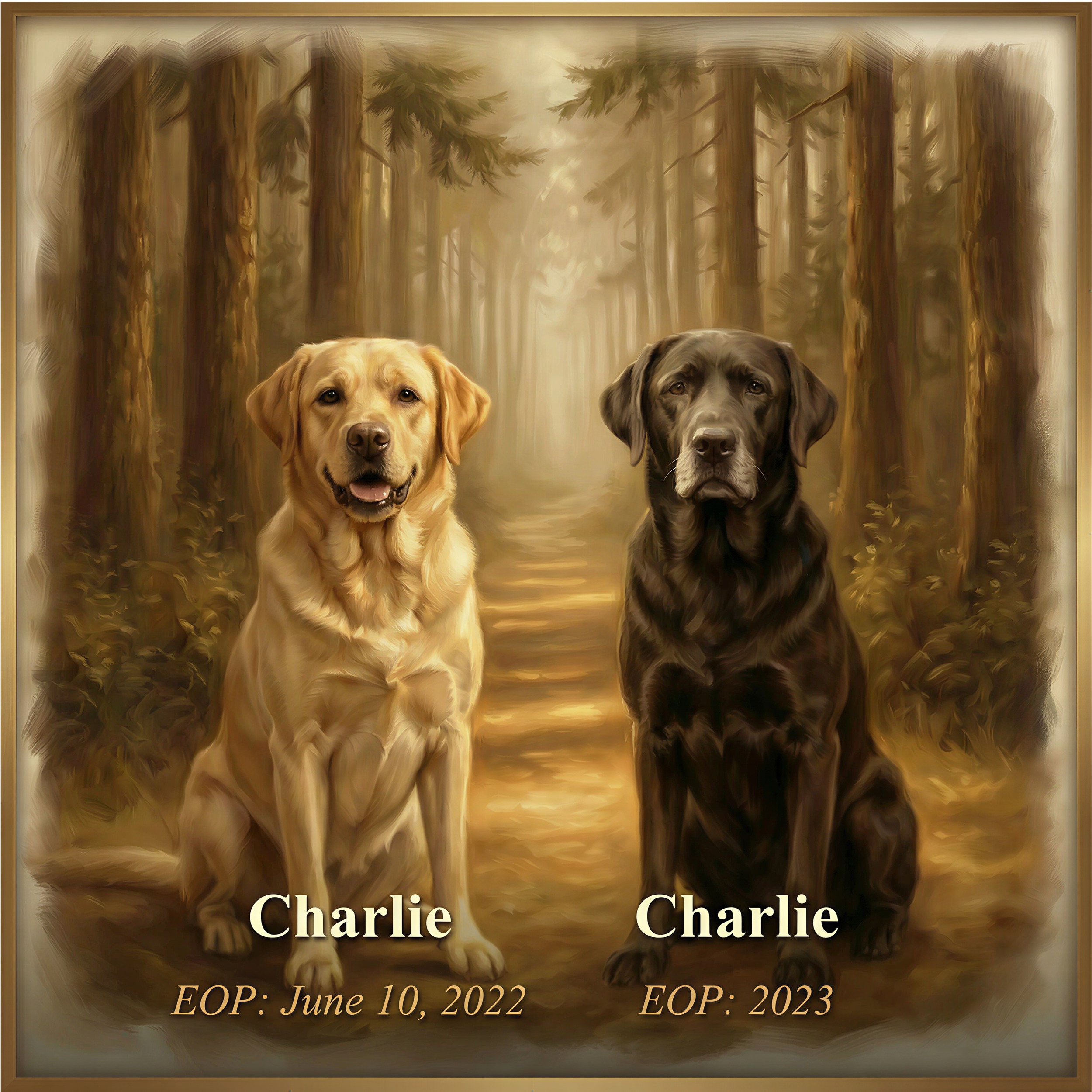
The End of Paw Prints movement — K9 Hearts' honor for the day a dog's paw prints stop — was created because heart dogs deserve a formal acknowledgment. The kind that says: this was not just a pet. This was a once-in-a-lifetime love, and it will be remembered here, in this gallery, for as long as this space exists.
If your heart dog is still here, an EOP Legacy Portrait can be created now — before the loss — while you can still see the light in their eyes and hand the photograph to someone and say: this is who they were.
If they are already gone, the portrait is still possible. Because this is what I have come to know about a heart dog — about Charlie, about every dog whose story has found its way to K9 Hearts:
The paw prints stop. The love never does.
Pet Loss Support Resources
If you are in the anticipatory grief stage and looking for people who understand, or if you are navigating the loss of a heart dog and the grief has become too heavy to carry alone, these free resources are here.
Association for Pet Loss and Bereavement (APLB) — aplb.org Free online chat support groups, including a dedicated anticipatory grief group on the first Thursday of each month, 8–10pm EST.
Rainbow Bridge Pet Loss Grief Center — rainbowsbridge.com Online forums, chat options, and grief resources available any time.
Cornell University Pet Loss Support Hotline — 607-218-7457 Staffed by veterinary students trained in pet loss support.
988 Suicide & Crisis Lifeline — Call or text 988 If the grief has moved into thoughts of not wanting to be here — please reach out.
You do not have to explain why a dog's loss could feel this big. You just have to make the call.
Frequently Asked Questions
What is a heart dog?
A heart dog is the once-in-a-lifetime dog — or perhaps twice, if you are among the fortunate — who takes up residence not in your home but in the deepest part of who you are. Sometimes called a soulmate dog, a soul dog, or a spirit dog, a heart dog is not necessarily the only dog you have ever loved. They are the one whose presence quietly reorganizes your entire life — and whose loss leaves a specific, named emptiness that other loves do not fill. Research confirms that the strength of this attachment bond is directly predictive of grief severity. This is not sentiment. It is science (Kurdek, 2009; Field et al., 2009).
How do you know if you had a heart dog?
Most people who have had a heart dog describe a sense of mutual recognition from early in the relationship, a level of communication that felt specific to the two of them, and a life that quietly organized itself around the dog's presence — the early departures from gatherings, the decisions made around where they could go, the shape of every ordinary day. If the loss of this dog has left a specific, named emptiness that other relationships have not filled — that is information worth trusting.
Is it normal to grieve more intensely for a heart dog than other dogs you have loved?
Yes. And it is documented in peer-reviewed research. The strength of the attachment bond is directly predictive of grief severity — not as a measure of how much you loved your other dogs, but as a reflection of the specific nature of this bond (Field et al., 2009). You are not overreacting. You are grieving in proportion to what was real.
Can you have more than one heart dog in a lifetime?
Yes. Many people have two. Some have more. The heart dog is not a category that closes when one dog leaves it — it is a description of a particular quality of bond, and some people are fortunate enough to experience that quality more than once in a life with dogs.
What is the difference between a heart dog and a regular dog?
Every dog you love matters. The heart dog is not more loved — it is differently bonded. Research suggests that some owner-dog relationships function as true primary attachment bonds, where the dog becomes one of the central figures a person turns to in times of emotional distress (Kurdek, 2009). Not every beloved dog reaches that place in the attachment hierarchy. A heart dog does.
Why does losing a heart dog feel so much worse than other losses?
Because the bond was different in nature, not just degree. The heart dog was woven into the architecture of your daily life, your sense of self, and — for many people — a specific season of healing or survival. Losing them is not just losing a dog. It is losing a primary attachment figure, a daily structure, and sometimes a piece of the story of how you got through something hard. Research validates that grief at this level of intensity is clinically significant and real (Lykins et al., 2023).
What does anticipatory grief feel like for someone losing a heart dog?
Anticipatory grief is the grief that arrives before the loss — in the space between a serious diagnosis and the final goodbye. For heart dog owners, it often brings a sudden, painful clarity about everything the dog has been holding in place. Many people in this stage find themselves thinking they will not have a reason to continue without their dog. Those thoughts are a measure of the depth of the bond — and they deserve to be named. Support resources are listed at the bottom of this post, and the companion post addresses what to do when the grief becomes too heavy to carry alone.
How do you honor a heart dog after they are gone?
In whatever way feels equal to who they were. Writing their story. Creating a memorial that holds their image. Allowing yourself to grieve without a timeline. At K9 Hearts, the End of Paw Prints movement was created specifically to honor heart dogs — because a once-in-a-lifetime love deserves a once-in-a-lifetime acknowledgment. The paw prints stop. The love never does.
References
Field, N. P., Orsini, L., Gavish, R., & Packman, W. (2009). Role of attachment in response to pet loss. Death Studies, 33(4), 334–355. https://doi.org/10.1080/07481180802705783
Hughes, B., & Lewis Harkin, B. (2022). The impact of continuing bonds between pet owners and their pets following the death of their pet: A systematic narrative synthesis. OMEGA — Journal of Death and Dying, 90(4), 1666–1684. https://doi.org/10.1177/00302228221125955
Kurdek, L. A. (2009). Pet dogs as attachment figures for adult owners. Journal of Family Psychology, 23(4), 439–446. https://doi.org/10.1037/a0014979
Lykins, A. D., et al. (2023). Attachment styles, continuing bonds, and grief following companion animal death. Death Studies. https://doi.org/10.1080/07481187.2023.2265868
Wu, Y., & Song, J. (2025). The relationship between pet attachment and pet loss grief in Chinese undergraduates: A conditional process model. Behavioral Sciences, 15(4), 431. https://doi.org/10.3390/bs15040431
K9 Hearts does not provide clinical mental health services. If you are experiencing grief that significantly impacts your daily functioning, please reach out to a licensed mental health professional. If you are in crisis, call or text 988. K9 Hearts updates their Resources page for additional support at https://www.k9hearts.com/pet-loss-and-grief-support.