

As an Amazon Associate, I earn from qualifying purchases. This helps support K9 Hearts' mission to provide grief support resources for those who have lost their beloved dogs. We only recommend products we genuinely believe may help you on your journey.
About six months after Charlie died, someone told me I should focus on gratitude. "Think about all the joy he brought you," they said. "Be grateful for the time you had."
I wanted to throw something.
I was grateful. But I was also devastated. And being told to focus on gratitude felt like being told my grief was wrong, that I should skip past the sorrow and land on the silver lining.
Here's what took me time to understand: gratitude and grief aren't opposites. They're companions. The depth of my grief was exactly proportional to the depth of what Charlie gave me. I could be grateful for what he taught me about love while also being wrecked by losing him.
The challenge is learning to hold both without letting well-meaning people (or your own inner voice) use gratitude as a weapon against your grief.
If you're navigating the space between honoring what your dog gave you and being honest about how much it hurts to lose them, this is for you. Let's talk about genuine gratitude—the kind that coexists with grief instead of trying to erase it.
Why "Just Be Grateful" Feels Like Toxic Positivity
Before we can talk about authentic gratitude in grief, we need to address why the "just be grateful" message lands so wrong.
It Minimizes Your Loss
When someone says "at least you had him for X years" or "be grateful you got to love him," what you hear is: your grief is disproportionate. You're focusing on the wrong thing. Stop being sad and start being thankful.
This doesn't honor your loss—it dismisses it. It suggests that gratitude for what was should somehow cancel out pain about what's gone. That's not how emotions work.
It Implies You're Doing Grief Wrong
The gratitude mandate suggests there's a right way to grieve (focus on the good!) and you're failing at it by still being sad. This adds shame to grief, which is the last thing you need.
Grief doesn't follow a formula. Some days you can access gratitude easily. Other days you're drowning in loss and can't see past the pain. Both are valid.
It Rushes You Past Processing
Genuine healing requires moving through grief, not around it. When people push you toward gratitude too quickly, they're asking you to skip the messy middle part where you actually process the loss.
You can't think your way to gratitude. You have to feel your way through grief first. Only then does gratitude emerge naturally, without force.
What Your Dog Actually Taught You
Here's the truth that toxic positivity misses: your dog did teach you profound things about love. Those lessons are real. They're valuable. And acknowledging them doesn't diminish your grief—it deepens your understanding of why the loss hurts so much.
Love Doesn't Require Perfection
Charlie came into my life already broken. Four compromised legs at three years old. He wasn't the agility champion I'd imagined training. He wasn't the hiking partner I'd planned for. He was never going to be anything except limited and fragile.
And I loved him completely, exactly as he was.
Dogs teach us that love isn't about potential or performance. It's about presence. They don't need to achieve anything to deserve our love. They just need to exist.
This lesson transfers to how we love humans—and ourselves. We don't have to earn love through achievement. We're worthy just by being.
Presence Is the Greatest Gift
Charlie couldn't do much. But he could be with me. When I was sad, he'd rest his head on my lap. When I was working, he'd lie at my feet. He didn't try to fix anything. He just stayed.
That taught me that sometimes the most powerful thing you can offer someone is simply: I'm here. Not advice, not solutions, not toxic positivity. Just presence.
This is a lesson I carry into every grief counseling session I do now. People don't need me to fix their pain. They need me to sit with them in it.
Vulnerability Is Strength
Watching Charlie navigate the world with a body that didn't work right taught me something about vulnerability. He couldn't hide his limitations. He needed help. He had to accept support.
And there was a kind of dignity in that acceptance. He wasn't ashamed of needing assistance. He just allowed himself to be helped.
For those of us who've been taught to be strong and independent, this is revolutionary. Needing help isn't weakness. It's just the truth of being a limited creature in a world that sometimes exceeds our capacity.
Fierce Loyalty Is Possible
Despite his pain, despite his limitations, Charlie showed up every day with devotion. He didn't withdraw into his suffering. He stayed connected, engaged, loving.
That taught me that you can be hurting and still love. You can be limited and still show up. Your brokenness doesn't disqualify you from relationship.
Joy Lives in Small Moments
Charlie couldn't run. He couldn't hike. But he could still find joy in lying in a sunbeam, in getting his favorite treat, in the moment I came home.
He taught me that joy doesn't require big experiences. It's available in tiny, ordinary moments if you're present enough to notice them.
This is perhaps the most important grief lesson: even in sorrow, small joys still exist. A good cup of coffee. Sunlight through the window. A friend's text message. These don't cancel out the grief, but they remind you that your capacity for feeling isn't broken—it's just temporarily focused on pain.
How to Access Gratitude Without Bypassing Grief

If you want to honor what your dog taught you without forcing yourself into premature gratitude, here's a framework that respects both the loss and the love:
Wait Until You're Ready
There's no timeline for when gratitude should emerge. For some people, it surfaces quickly. For others, it takes months or years. Don't force it because someone else thinks you should be there by now.
You'll know you're ready when thinking about your dog's gifts doesn't immediately trigger crushing grief. You can still be sad, but there's space for other feelings too.
Use Specific, Small Remembrances
Instead of forcing yourself to feel grateful for everything at once, start small. Think of one specific moment. One thing your dog did that made you laugh. One way they showed love.
These concrete memories are easier to hold than abstract gratitude. And they're less likely to trigger the "but they're gone and I'll never have that again" spiral.
Journal the Lessons Without Judgment
Writing can help you explore what your dog taught you without the pressure of performing gratitude for an audience. This is just for you.
Prompts that might help:
"One thing [dog's name] taught me about love was..."
"A moment with [dog's name] that changed how I see the world was..."
"Because of [dog's name], I now believe..."
My guided journal, Charlie's Last Walk, includes specific prompts for exploring the gifts your dog gave you, designed to honor both the lessons and the loss without forcing premature healing.[YOUR-AMAZON-LINK-HERE]
Create Meaning Without Requiring Purpose
You don't have to believe your dog's death happened "for a reason" to find meaning in their life. The meaning isn't in the loss—it's in what they gave you while they were here.
This distinction matters. You're not grateful they died. You're grateful they lived. Those are very different things.
Allow Bittersweet Feelings
True gratitude in grief isn't pure and shiny. It's bittersweet. You're grateful for what was and heartbroken it's over. Both feelings can coexist.
When you think about what your dog taught you, it's okay—expected, even—to feel joy and sorrow simultaneously. That's not confused. That's honest.
Turning Lessons Into Legacy
One way to honor what your dog taught you is to carry those lessons forward intentionally. This isn't about "making their death meaningful"—it's about letting their influence continue.
Love More Openly
If your dog taught you unconditional love, practice extending that to others (and yourself). Notice when you're withholding love until someone proves they deserve it. Challenge that impulse.
Be More Present
If your dog taught you about presence, work on actually being where you are. Put down the phone. Notice the sunbeam. Feel the moment.
This doesn't mean you won't grieve. It means you're honoring what they taught you about how to live.
Accept Vulnerability
If your dog taught you that needing help isn't shameful, practice asking for support when you need it. This is especially important during grief, when isolation can deepen suffering.
Find Joy in Small Things
If your dog taught you to notice small moments of happiness, keep practicing that awareness. Not because it will fix your grief, but because it honors how they lived.
Creating Memorials That Celebrate What They Gave You
Some people find that creating physical memorials helps them hold gratitude alongside grief:
Memory Books That Capture Lessons
Consider creating a photo book that's not just pictures but also written reflections on what your dog taught you. Include specific stories that illustrate those lessons.
This becomes both a keepsake and a document of their influence on your life. [Amazon affiliate link for photo book creation services]
Memorial Art That Shows Their Spirit
Rather than memorial art that focuses on loss, consider pieces that capture your dog's personality, energy, or the joy they brought.
At K9 Hearts, our Legacy Art is specifically designed to celebrate your dog's spirit and the love you shared, not just mark their absence. The Forest Healing Portrait places your dog in a peaceful, beautiful setting that reminds you of what they gave you, not just what you lost. [Link: https://www.k9hearts.com/healing-legacy-art]
Wearable Reminders
Some people find comfort in wearing jewelry that reminds them of their dog—not as a grief marker, but as a daily touchstone for the lessons they're carrying forward.
Rainbow bridge memorial bracelets or paw print necklaces can serve as gentle reminders of the love you shared and the lessons you're honoring. [Amazon affiliate link for memorial jewelry]
Donation or Volunteer Work
For some people, honoring their dog's legacy means supporting other dogs. Donating to rescues, volunteering at shelters, or helping other pet parents navigate end-of-life decisions can transform grief into meaningful action.
This isn't required for healing—but for some people, it helps. Only you know if this feels right or feels like you're trying to replace what can't be replaced.
When Gratitude Feels Impossible
Sometimes, despite your best efforts, gratitude just won't come. Especially in early grief or on particularly hard days, trying to access thankfulness might feel like trying to squeeze water from a stone.
That's okay. You don't have to be grateful right now.
Grief Gets Priority
In the hierarchy of emotions during loss, grief gets to be first. Gratitude can wait. Your job right now is to survive the loss, not to mine it for lessons.
The lessons will still be there later. Your dog's influence doesn't disappear if you're not actively cataloging it during acute grief.
Anger Is Also Valid
Sometimes what surfaces isn't gratitude—it's rage. Why did this happen? Why couldn't they live longer? Why does love have to end in loss?
This anger is part of grief too. Don't skip past it trying to force yourself into gratitude. Feel the anger. It's valid.
Numbness Is Protection
If you feel nothing—not grief, not gratitude, just blank emptiness—your nervous system might be protecting you from overwhelm. That's not wrong. That's your brain being kind to you.
The feelings will come back when you're ready. In the meantime, just be gentle with yourself.
The Gratitude That Emerges Naturally
Here's what I've learned: when gratitude is real—not forced, not performed, not prescribed by well-meaning people—it emerges quietly, without announcement.
One day you'll think about your dog and smile before you cry. You'll remember something they taught you and feel warmth instead of just ache. You'll notice yourself doing something differently because of what they showed you, and you'll feel grateful without trying.
That's the gratitude worth having. Not the kind that tries to erase grief, but the kind that lives alongside it—proof that love doesn't end when life does.
What Charlie Taught Me (Now That I Can See It)
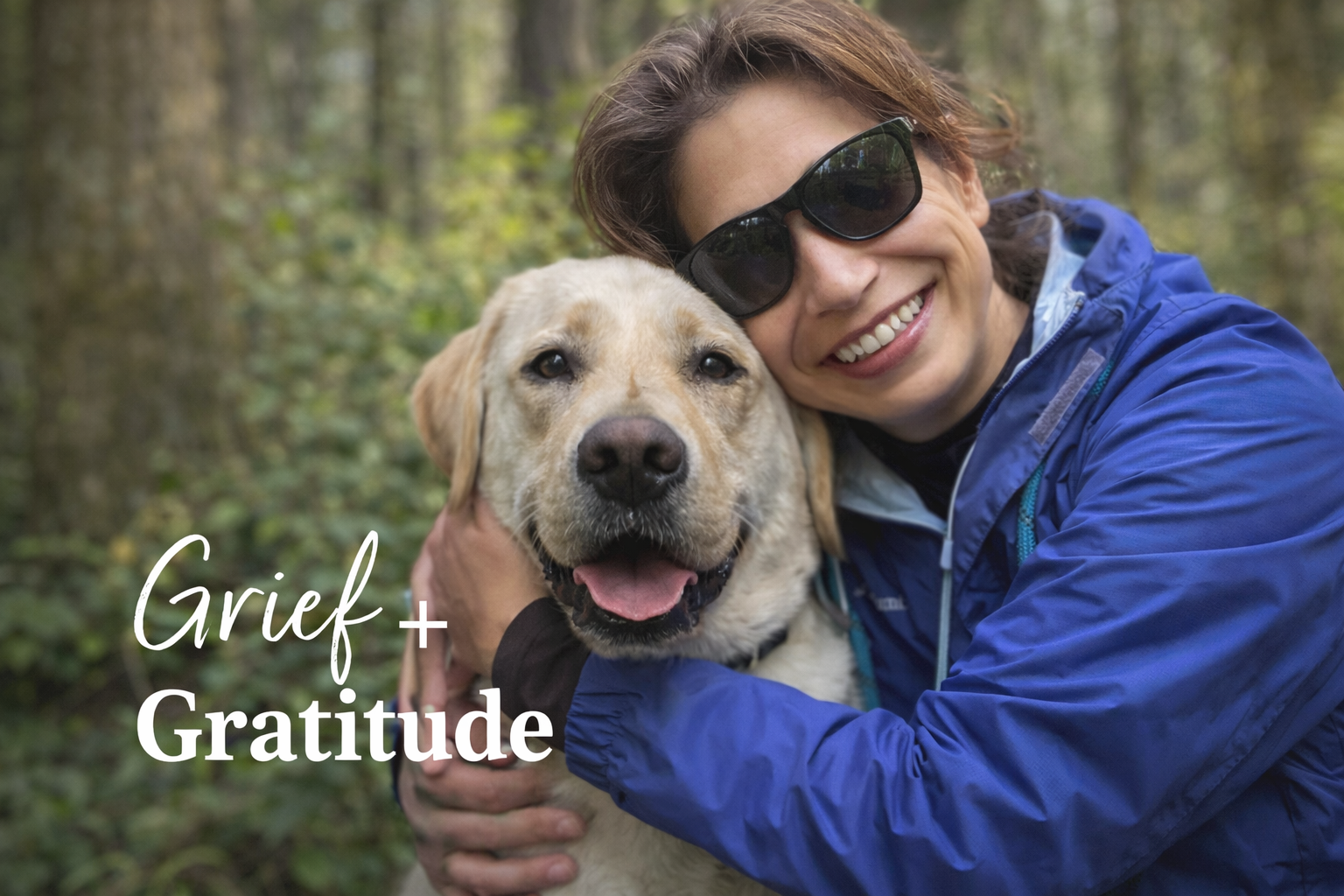
It took me more than a year to be able to articulate what Charlie taught me without falling apart. Here's what I see now:
He taught me that three years of deep love matters more than a lifetime of shallow connection. He taught me that bodies break but spirits don't. He taught me that making impossible decisions with love is still making them with love, even when they feel wrong.
He taught me that I'm capable of holding more pain than I thought possible. And that I'm also capable of more love.
Those lessons live in me now. They inform the work I do at K9 Hearts, supporting others through impossible losses. They shape how I show up in relationships, how I make decisions, how I define what matters.
Charlie is gone. The grief is real. And the gratitude is real too. Both things are true.
About K9 Hearts Memorial Services
Based in Port Orchard, Washington, K9 Hearts offers compassionate grief support and healing legacy art specifically designed for those navigating the loss of a beloved dog. Founded by Paige, who holds a B.S. in Psychology and M.A. in Forensic Psychology with nearly 30 years of experience working with children and families through crisis, trauma, and loss, K9 Hearts combines professional expertise with deep personal understanding of pet loss grief.
Learn more at www.k9hearts.com